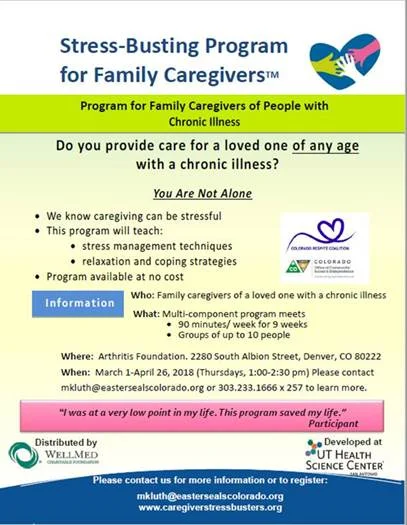
Stress- Busting Program for Family Caregivers

stress relief (1).jpg

The Colorado Respite Coalition (CRC) offers resources and information to family caregivers throughout the state of Colorado. CRC provides training opportunities, respite vouchers, community grants, advocacy, an online respite locator, and more. CRC strives to increase access to and awareness of quality respite services across the lifespan.

Call Meghan Kluth at 303-233-1666 x 257 or email at mkluth@eastersealscolorado.org

Stress Busting.jpg

Chelsea's Success Story

Courage.png

Brave & Courageous Jean

Thank you Heather with PHP and Mary Beth at Centers at Northridge.

I recently was introduced to a lovely lady named Jean* who had recently been admitted to rehab after a fall and identified infection. Her two sons were in the process of looking into more care at home and identifying when that is no longer an option. Maintain Me often gets involved early on to help keep seniors in their home and be prepared if that ever becomes to much. 

The family, like most families, were struggling to get all the resource information they need while also juggling full time jobs and working the primary hours when these companies are open. One of the son's even lived out of town and had flown in to try to help his brother while he was working. Due to the limited time and family being all together we were able to meet on a Saturday to make sure both brothers were available. 

While at the rehab, I completed a medical, financial and social assessment on Jean. Her results were one of many. 

There are two different reasons a senior may transition to senior living. One being that they are needing more care and they functionally are unable to care for themselves the way they used to. This could be bathing, dressing, showering, incontinence care, medication management, and so on. This is a common reason to transition and is very understandable. Its when the functional part is intact yet the financial situation is not, that it becomes more challenging.

Now don't get me wrong, Jean was not by any means broke, which is where the misconception lies. She had a beautiful home, social security, savings, and her and her husband had done all that they needed to set her up in life had she never needed any care. 

One thing that Maintain Me does is make sure that the senior is set up for life. Make sure that families and seniors know ALL options and can financially plan for the future as they age and require more help. 

Jean would only last 2 years with care if she decided to received the type of hours she needed to be safe. This was a BIG SHOCKER and VERY HARD TO HEAR. There are wonderful programs for seniors like Jean therefore I educated the family of how we can transition her into a nice facility that she would be able to get 24/hour care and then stay there for the rest of her life due to us planning ahead. 

I wasn't sure what Jean and her family were going to choose but I left them that Saturday with every bit of information they needed to make an informed and confident decision. They called me the next day stating they want to make sure they set Jean up to live a life where she can get all the care she needs and never have to worry about not having the money to do so. 

I could go on an on about this transition and the bravery Jean had to make a decision to leave home and find a home that she can properly age in place. It was a scary change and she graciously shared her fears and held my hand as we addressed each one through the process. Jean is now in her new place, she has care in the areas she needs and is respected in the areas she would like to remain independent. As she needs more care it will not cost her anymore to be there and if she were to ever run out of money, she could stay there til end of life. Jean and I will be sharing a coffee together in a week or so as she gets settled in and I cant wait to see her smiling face again. 

***Names have been changed for privacy of our clients. 


Chelsea Sweeney, RN

 Maintain Me

Senior Placement Services

SAVE THE DATE- Nutrition Conference

healthyfood-1050x629.jpg

Everybody’s Table

Boulder County Agency on Aging is organizing their first-ever Nutrition Conference for seniors.
Seniors, caregivers, professionals, curious...all are welcome!
 

Meal & Food Services for Seniors

Speakers & Demonstrations 

On-site Nutritional Consultants


March 15, 2018
9am- Noon
Jewish Community Center
6007 Oreg Avenue, Boulder
 
- Continental Breakfast Provided -
 
$20 for Organizations
FREE to the public—registration is required!
RSVP by Feb. 28
 

For more information contact Teresa DeAnni at 303-441-4995
tdeanni@bouldercounty.org
 

To register or find our more visit the Event Page:
https://www.eventbrite.com/e/everybodys-table-tickets-39463941712
 

The Surprising Benefits of Hen Keeping

01-The-Surprising-Benefits-in-Keeping-the-Company-of-Hens-PHOTOGRAPHS-BY-JANE-HILTON-760x506.jpg

The UK based Henpower was set up by the charity Equal Arts in 2011 with the aim of using hen-keeping to tackle social isolation, reduce depression and improve people’s wellbeing. Equal Arts’ director, Douglas Hunter, explains how the project began.


“We had been working in a care home when a resident with dementia was talking about his girls. It turned out ‘the girls’ were his hens. He missed the routine of caring for them.”

So Equal Arts spent £300 on a secondhand hen house and six hens. By the time the hen house needed replacing, four months later, the staff were so convinced of its value they paid for a new one out of their own pockets.
 
HenPower comes over as light-hearted and quirky – and Equal Arts clearly encourages this with its copious hen- and egg-related punning – there’s “hensioners”, “henthusiasm”, “getting the day off to a cracking start”, and the word “henpower” itself. But the intent behind it is serious. A 12-month study of the project by Northumbria University in 2012-13 found that HenPower is improving the health and wellbeing of older people, and reducing depression, loneliness and the need for antipsychotic medication in care homes.

 
“Thanks to the hens I’ve made friends with people from four to 94,” says Alan Richards, a former taxi-driver, who in March 2015, received a “Points of Light” award, given by the British government to volunteers who make a difference in the community.
 

 Now in more than 40 care homes, HenPower creatively “hengages” older people in arts activities and hen-keeping aiming to:

  • Empower older people to build positive relationships through hen-keeping with improved wellbeing, reduced loneliness and reduced depression
  • Help care settings offer relationship centered care meeting older people’s needs and embrace ‘living with care’ as opposed to ‘caring for’
  • Create lasting change by supporting older people in care settings to get involved with schools, festivals and community events
  • Support Resident and Relative Committees within care settings to be aspirational and provide meaningful activities which embrace creative ageing
  • Provide social care staff with excellent skill transfer and professional development opportunities.

 
“HenPower is innovative because it is not just brief ‘petting’ of the hens, but also taking responsibility for them. There’s a huge range of roles with shared responsibilities, with diverse ways to interact with the project.”
 

Time and again the pensioners say how the hens have given them a new lease of life. But it’s Ossie Cresswell who sums it up best. After he’s described his role in the HenPower roadshows he says, “The best thing is it keeps me from getting down. If you’re on your own you’ve got virtually nothing. But if I’ve given people happiness then my life has been worthwhile.”


To Learn more about HenPower and read additional stories:
https://www.equalarts.org.uk/our-work/henpower
https://www.rd.com/health/wellness/company-of-hens/
https://www.theguardian.com/society/2015/jul/28/hen-keeping-therapy-older-people

older-people-hens-008.jpg

Morgan's Story: Adopted Grandparents

images.jpg

There have been times in the past where I have had trouble describing all the possible help that can be provided to a family when they hire Maintain Me as their case managers. But I recently coined a term in conversation with a friend, 'It's like, they are my adopted grandparents" I said describing my client meeting for that day. (Of course without giving any personal information.) 

A light went on for me! That is it, that is a great way to describe what we can do! These particular clients live in town, but their families all live out of state. They received my information from the social worker at their doctor's office. 

I have been able to get them home care in place, help them devise a plan and tasks for their home care providers, accompany them to doctor appointments, and all the while keeping their families in the loop after each one of my home visits. 

Every day I spend with them, I get to know more about them and their remarkable lives, and I take great joy in this. The goal at Maintain Me Senior Services is to meet our clients where they are at, not push any hidden agendas.


We offer private pay case management in addition to our transition services because this is what our clients need us to provide for them. 


Morgan Leigh Jenkins, MA

Transition Director

FREE Alzheimer's Association 8 week early stage Support Group

hero-Alzheimers-Caregivers-Support.jpg

Early Stage Support Group


Early Stage support groups are for people living with dementia and their care partners
 

The Eight Week Early Stage Support Group provides an excellent opportunity for people to discuss topics such as receiving and disclosing a diagnosis, changing relationships, future planning, legal and financial matters, and much more!


Holy Comforter Episcopal Church
1700 W 10th Ave
Broomfield 80020
Mondays 2:00 - 3:30pm
8 weeks Feb 12 - Apr 2, 2018
No cost to attend!


The support groups are a safe and supportive environment where those sharing this journey can connect and offer emotional support to one another. Sometimes the entire group meets together, and at other times caregivers meet separately from those with the diagnosis. This group is very popular and fills up quickly, so if you are interested in attending please contact Ralph Patrick at 303.813.1669 x362or rpatrick@alz.org to schedule an initial consultation.


For more information and to schedule a screening interview contact Ralph Patrick at 303.813.1669 ext362 or rpatrick@alz.org


Thousands of CO Seniors Eligible for Help with Medicare Premiums

960x0.jpg


DENVER, CO.   On January 1, most Medicare beneficiaries were expecting an increase in their Social Security check.  However, many seniors did not see any of the increase as the Medicare Part B premium also increased to $134.  The end result is that for many Medicare beneficiaries, the Social Security increase was used to pay the increase in the Part B premium.
 
                The Medicare Part B deductible increased to $183 per year and the Part A deductible increased to $1,340 per benefit period.  The co-pay for days 1-20 in a nursing home for skilled care stayed at zero; while the co-pay for days 21-100 increased to $167.50. 
 
State and federal officials estimate that as many 70,000 Coloradoans might be eligible for the Medicare Savings Program.  Many Colorado Medicare beneficiaries are eligible for assistance with all or some of the Medicare Part A and B costs through the Medicare Savings Program.
 
 If your income from all sources such as Social Security, pensions, interest, and wages is less than $1377/month ($1847/month for a couple) and you have resources (savings, stocks, bonds, whole life insurance) of less than $8590 ($14,090/couple), then you may be eligible for help with your Medicare Part B premium and possibly other costs as well.
 
Individuals who receive assistance are allowed to own their home and cannot have a lien placed against the home according to federal law.  You can also own a term life insurance policy, a car, and a burial plan and/or plot.  Personal items and household goods are not counted.
 
You may already be receiving the Medicare Savings Program.  To check to see if you are receiving help, either call the County Department of Human Services or check on your Social Security benefits statement.  If your benefit statement indicates that the Part B premium is being paid by the State of Colorado, you are already signed up for the Program.
 
If you wish to apply for the Program, you must complete the application for Medicaid with the County Department of Human Services and submit documentation on your income and resources. Completing the form can be complicated and overwhelming.  Finding all of the documentation can take time, but is worth more than $1600 per year in income that you can use for other necessities.
 
If you are approved, you will not get a check, but your Social Security check will be increased by as much as $134 per month.  The longer you wait to apply, the less money you will have to spend on other living expenses. 
 
If you were receiving help, but are not currently receiving help, you may have missed the re-determination deadline.  Each year, you must update your information with the County Department of Human Services.  To start receiving the Program again, you will need to re-apply.
 
Sometimes when people apply, they are denied.  Frequently, these denials are the result of processing errors.  If you think you might be eligible, contact our office to have a counselor review your application.
 
Individuals who are eligible for the Program, are also eligible to receive help with prescription drugs through the Extra Help program.  To apply for Extra Help, you must apply through the Social Security Administration.  Extra Help can pay for Part D premiums, co-pays, and deductibles, often saving as much as $4000 per year according to Medicare officials.
 
Don’t miss out on receiving help any longer.  If you need help applying for either Program, lost your benefits, or are not sure if you are eligible, call a counselor at 303-333-3482 or 1-855-293-6911


Eileen Doherty, MS is the Executive Director of the Colorado Gerontological Society.  Her areas of expertise include management and administration of nonprofit organizations, education and training on issues related to older adults, advocacy and policy development on senior issues, and clinical practice in working with seniors and families to manage their lives in the later years. She has been the Director of the Society since 1982.  She teaches Nonprofit Management for Fort Hays State University. She can be contacted at 303-333-3482 or doherty001@att.net


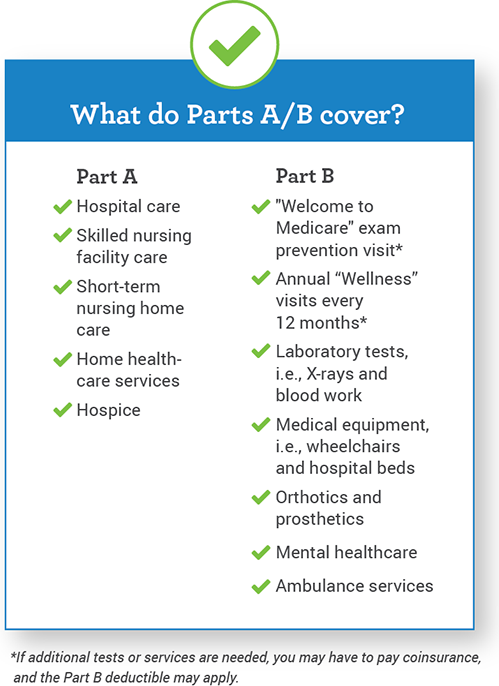
1.2.1-parts_ab_cover.png

Chelsea's Recent Success Story

image.png

"When you know, you know!"

A big thank you to Jess at St Joseph Hospital for allowing Maintain Me to Connect with Jim* and his amazing father. When I had first heard from Jim, he was in quite a bind being a primary caregiver for his father. He had told me that his dad was diagnosed with dementia and had recently moved in with him and his wife. In 8 short months his father's dementia had progressed significantly and he was starting to experience sundowning. 

Sundowning is symptom of Alzheimer's disease and other forms of dementia. It's also known as “late-day confusion.” If someone you care for has dementia, their confusion and agitation may get worse in the late afternoon and evening.

This was truly the case of Jim's father and it had gotten so bad that Jim had not slept in over 4 days. He was waking up each night with his dad to cue him to go back to bed and orienting him in order for his dad to realize it was not morning. This is very common with dementia and Jim was aware due to the fact that he was a retired CNA (certified nurse assistant). 

There is nothing wrong with being honest with yourself as a primary caretaker and asking the VERY IMPORTANT QUESTION..."Can I care for my loved one the way they truly need to live a happy life?" 

It’s so easy to get stuck in the SHOULDS. "I should take care of my mom/dad, after all they raised me for all those years" or "I won’t give up on them, I can’t, they are family". These are all perfectly normal, in fact its ok to feel that no one can take care of mom and dad as good as you. YOU’RE PROBABLY RIGHT. No one can take place of that family member. 

Maintain Me is here to be sure that we find second best. We want our families to walk out of their mom/dad's new place thinking to themselves "if not me, I am so glad it's them". 

I had a full day set up with Jim to tour as Maintain Me believes in having choice and options for families. We arrived at the first place and showed Jim around. We stayed for about an hour, got all of our questions answered and then were heading off to the next place. Right as I was telling Jim to follow his heart, and that if it feels good then there is something to that, Jim stopped me right before walking into the next place. 

He said "You know what Chelsea I don't want to see anymore. If I truly followed my heart I would know that the first place is the right place for my dad". I was shocked. Usually I am able to really find a good place within the first day of touring, but to have found it in the first hour? I encouraged him to make sure and remind him that I didn't mind how many places we saw, I wanted him to feel that he made the best decision. He said "when you know, you know!"

Jim's father moved in that weekend and Jim is bringing his band by to play for all the other residents as the weather allows. Jim's happy, his dad is happy, therefore Maintain Me is happy!

Thank you Jim for allowing Maintain Me to be part of your journey with your family. I look forward to hearing you play and watching all the other residents enjoy your gift of music!

***Names have been changed for privacy of our clients. 


Chelsea Sweeney, RN

 Maintain Me

Senior Placement Services

12 things Dementia Caregivers wish they had known sooner

Elderly-Couple.jpg

Caring for someone with dementia isn’t intuitive and doesn’t come naturally. There’s a lot to learn, but you don’t have to figure everything out the hard way.

This advice isn’t meant to add pressure or expectations to your already tough job. They’re tips from caregivers who have “been there and done that” that can lighten your load, reduce stress, and help you cope with the challenges.


12 dementia care tips from experienced caregivers

1. It’s not worth it to argue with someone who has dementia
Alzheimer’s and dementia causes your older adult’s brain to malfunction. When they say things that don’t make sense or are clearly untrue, they believe what they’re saying because it’s what their brain is telling them.

It’s frustrating to hear things that aren’t true and instinctive to try to correct or remind. But that will only lead to both of you arguing or getting upset. And you simply can’t win an argument with someone who can no longer use reason or logic consistently.


2. Ignoring symptoms won’t make them go away
When you notice your older adult struggling with memory, thinking, or judgement, it’s scary to think that they might have dementia. Because it can be so hard to accept, many people hope that the symptoms will go away on their own or that they’re mistaken.

But the situation isn’t going to fix itself.

The best thing to do is have them see their doctor for a thorough exam. First, there are many treatable health conditions that cause dementia-like symptoms. Second, even if dementia has no cure, early diagnosis means that treatments will be more effective and could delay progression, reduce symptoms, and improve quality of life.

 
3. Too many medications can make people feel and act more confused
Medications prescribed to relieve symptoms can sometimes make dementia symptoms worse or create new problems, like increasing disorientation or agitation.

This can happen because seniors are at higher risk for problems related to medication side effects or drug interactions. Dementia can also change how certain medications affect the brain.

To reduce medication-related problems, call the doctor if you suspect that a new medication is causing a problem and ask them to find alternatives that could work better. It’s also essential to have the doctor regularly review all medications and supplements to make sure every single one is still needed.

 
4. Use validation therapy or therapeutic fibs to respond kindly
Dementia care experts recommend joining your older adult in their reality rather than trying to force them back into ours. Trying to get them to understand facts or our reality usually causes confusion, anxiety, fear, and anger.

Someone with dementia may insist that they’re children waiting for their mother to pick them up, they need to get to the office even though they’re retired, or they’re going to visit a relative who passed away long ago. Instead of telling them that they’re wrong, use validation therapy or therapeutic fibs to kindly respond to their version of reality.

Gently ask an open-ended question about the person they’re going to see or activity they want to do. Or join their reality by saying OK, going along with the scenario for a while, then redirecting to a different activity.

Validating their reality and allowing them to express their thoughts helps them feel calmer and happier.

 
5. It’s never too late improve brain health
After finding out that your older adult has dementia, it might seem like improving brain health would be useless. But healthy habits can truly help a brain with dementia. It’s possible to slow the progression of the disease, reduce symptoms, and improve quality of life.

Getting regular physical exercise, doing things that are mentally stimulating, and participating in engaging activities all help to improve brain health.

 
6. Share your challenges and get help
Caregiving, especially dementia care, can be a lonely and exhausting job. Instead of doing everything alone, talk about your challenges and reach out to people who can help.

It can be difficult to seek out or accept help, but caregivers who have gotten help often wish they’d done it sooner – it’s worth a try. Knowing that you’re not the only one going through this or getting a few hours of rest can make a big difference.

That could mean asking family or friends to step up, hiring in-home care, moving to a care community, using respite care, or joining a caregiver support group.

If you’re not sure where to start, call the Alzheimer’s Association or contact your local Area Agency on Aging to connect with local caregiving resources.

7. Choose one small thing to do for yourself
When caring for someone, it’s instinctive to focus 100% on them…until you get burned out. But that’s not good for you or your older adult.

It’s not realistic to take long vacations or hours for yourself each day, but you’d be surprised at how effective short breaks can be. Doing something for yourself, whether it’s 30 seconds, 5 minutes, or an hour will help you recharge and reduce the risk of burnout.

Get 10 practical ideas for short breaks here. 
http://dailycaring.com/10-ways-caregivers-can-take-a-quick-break-right-now/

 
8. Choose your priorities and let the rest go
Because you care so much about your older adult, you want to do as much as you can, as perfectly as you can. But holding yourself to those unrealistic expectations causes frustration, resentment, and exhaustion.

Instead, save your mental and physical health by picking your battles. Choose the top priorities and let the less important things go. Think about how important that thing will be in a week, month, or year.


9. Have the tough conversations about medical decisions and choices
Taking care of important legal documents like a will, living will, or power of attorney is something that many people want to put off.

But talking about end of life choices and getting the paperwork done before a health emergency saves you from making hard choices or running into legal problems in the middle of a crisis.

Plus, many older adults have greater peace of mind when they know their wishes will be honored.

 
10. Remember that they truly can’t control their behavior 
Dementia can’t be seen from the outside, so many people assume that the person can actually control their difficult or irritating behavior. It’s natural to think their actions are personally directed toward you.

That’s not true. Dementia physically damages the brain, which can affect personality, behavior, decision-making, and judgment.

Knowing that it’s the disease talking can help you take things less personally, reduce the sting of hurtful accusations, or help you stay calm when they’ve asked you the same question for the 37th time.

 
11. 20 minutes later can feel like a whole new day
If you’re helping your older adult with an activity of daily living and they get agitated or combative, it can help to stop and take a short break.

Rather than fighting through and making the situation worse, stepping away to give them (and you) time to calm down can make a big difference. Make sure they’re safe on their own and go to another room for 20 minutes. When you come back and approach calmly, they’ll often be more cooperative.

For example, if mom starts yelling and pushing you when you announce that it’s time for a shower, give her some space and come back to it in a little while, perhaps using a different approach.

This won’t always work, but it often does so it’s worth a try.

 
12. Quality of life is still possible
It isn’t easy to cope with dementia, both for you and your older adult. But finding ways to enjoy life and having good quality of life is still possible.

You don’t have to pretend that the challenges and pain don’t exist. Try to focus on the positives, no matter how small, and adapt activities for the abilities they still have.


Other great resources for Caregivers include:
https://www.alz.org/care/
https://www.caregiver.org/dementia-caregiving-and-controlling-frustration

 
Esther's Original Article is featured here:
https://www.verywell.com/12-things-about-dementia-people-wish-they-d-known-earlier-4138631

A Dementia Friendly Performance!

10.jpg


You are invited to a special performance for older adults with dementia and their care partners by high school music honors students from Peak to Peak Charter School.

Jan, 20, 1:30 p.m.
Lafayette Senior Center, 103 Iowa Ave.
Lafayette, CO 80026


As part of a Dementia Friendly Community Initiative taking place in Lafayette, the Boulder County Area Agency on Aging, Lafayette Senior Center, and Peak to Peak Charter School are working together to make this performance available. Research has shown that music provides a profound avenue for engagement and satisfaction for people with dementia, including positive impacts on alertness, mood, engagement, and cognition. Caregivers find connection, community, a sense of normalcy, and positive support for their relationship with their loved one. The performance lasts less than an hour, with time for visiting following the entertainment.

Please come and enjoy!
There is no charge, but seating is limited, so please RSVP to 303-678-6116, orInfoCaregiver@bouldercounty.org.

Information & Assistance for Aging Well  www.BoulderCountyHelp.org

Resolve to get your Body & Mind active in 2018!

The New Year is all about resolutions. Make yours easy and keep it simple!

Staying active is important. A study at Hebrew University Medical Center and Hebrew University Hadassah Medical School reported that seniors who do any amount of exercise appear to live longer and have a lower risk of disability. In addition, the benefits associated with physical activity were seen not only in individuals who maintained an existing level of physical activity, but also in those who began exercising between ages 70 and 85. So it’s never too late!

Socialization is still a key to healthy aging. Harvard School of Public Health (HSPH) researchers found evidence that elderly people in the U.S. who have an active social life may have a slower rate of memory decline. In fact, memory decline among the most sociable was less than half the rate among the least sociable. Previous studies have also shown that people with many social ties have lower mortality rates.


Denver and surrounding areas has a rich network of both social and physical senior activities. Both Denver Parks & Recreation as well as the YMCA have tons of amazing options.


Chorus group, technology classes, wood carving, and so many more. In addition, yoga, cardio, and classes oriented for specific diseases such as Parkinson’s are offered. And there are multiple day trips and luncheons that are less than $10 to attend. Most recently Denver Parks & Recreation has launched, MY Denver PRIME, a new program that provides residents ages 60 and older with FREE access to Denver’s recreation centers and pools, including drop-in fitness classes and clubs, beginning on January 2, 2018.

 
https://www.denvergov.org/content/denvergov/en/denver-parks-and-recreation/activities-programs.html
https://www.denverymca.org/healthy-living/active-older-adults
 
Don’t forget to reach out to Independent Living Communities near you. They typically offer great classes and events for non-residents.

Capture your 2018 Maintenance Expenses

housecalculator--621x414.jpg

Many families are aware of how quickly healthcare and living expenses can add up for an older loved one who is still at home. Those expenses are typically monitored and budgeted. But many seniors neglect to track the expenses to maintain their home.


Start 2018 off right by creating a system to record what it takes to keep your senior safe in their home.


To Start: Address Safety Hazards that exist in the home

-          Throw Rugs

-          Clutter

-          Poor Lighting

-          Pets. The emotional benefits of keeping a pet as a companion usually far outweigh the safety risks but simple things like adjusting where food/water is served and having an easy, slip free path to let them in and out, are small changes that can fend off accidental falls.

-          Old or unstable furniture

-          Extension cords across walkways

-          Cracks in sidewalk

-          Bathroom!!!  The CDC reports the bathroom is the most dangerous room in the house. Falls were the cause of 80 percent of all bathroom accidents, causing serious injuries like hip fractures. Older Americans had the highest fracture rates and were hospitalized most often. Many of these accidents could be prevented with the installation of grab bars to aid with balance. Adjusting toilet seat height and adding bathtub mats or nonskid strips to help reduce bathtub falls are also helpful.

In addition, inventory all the one off repairs that need to be done. Putting the most urgent repairs at the top of the list.

Finally, make a list of weekly, monthly upkeep items that need to be done to maintain the home. Remember that for some homes this list will be seasonal.

-          Spring sprinkler start-up/ Fall blowout

-          Summer Mowing/ Landscaping

-          Fall Leaf clean up

-          Winter Snow Removal

Try reaching out to family members (even extended) and neighbors to help with seasonal items. A kid from the neighborhood may want to make some extra money over the summer mowing once a week. There are also programs exclusively geared towards connecting volunteers with seniors in the community.


Tips to succeed:

-          Be sure to build this list with the help of the senior homeowner, not for them. They likely have input about things you wouldn’t think of, after all it is their home. They will be more likely to embrace the process if they are actively involved.

-          Update the list quarterly. Some items may not need to be done weekly and can be rescheduled to bi-weekly. New items may come up that need to be added.

-          Track all expenses. Not just the scheduled items but more importantly the unexpected ones that pop up too.


By the end of 2018 your family should have a detailed picture of what it takes to properly maintain your loved ones home throughout the year. It can be reviewed annually to source additional help, aid in budgeting for the year to come, and more importantly make sure that maintenance costs aren’t eating away at your senior’s savings.


Still trying to come up with your New Year's Resolution???

volunteer.jpg

If you're still stumped on that New Year's Resolution..... volunteering may be exactly what you're looking for and it doesn't involve a gym membership!

If you have ever volunteered, you may have noticed that you felt fantastic afterward. Maybe you saw a little boost in your mood, or that you felt like part of a team. You felt like you made a difference! Sure, we know that volunteering makes us feel good. Yet, did you know that, when you volunteer, you are improving your life and maybe even your health?


The benefits of volunteering are countless. But there definitely are social, emotional, physical, and professional perks.


Volunteering is a great way to give back to your community and there are tons of ways to help out seniors. Shoveling snow, yard work, handyman services, food banks, even a poker dealer for Vets (how fun)!


 DAY PLACE

ADULT DAY CARE PROGRAM

NEEDED: VOLUNTEERS

If YOU LOVE SENIORS!!

Position to include assisting Activities staff with

activities, meals, & member engagement

typically-2 mornings or early afternoons a month-

   Inquire at 303-435-9948 or adayplace2017@gmail.com


Check out these links to lots of other great Volunteering opportunities in the Denver area! 

https://www.volunteermatch.org/search/index.jsp

https://www.bessieshope.org/

https://www.senioradvisor.com/denver-co/denver-volunteer-opportunities-for-seniors


If you would like to read about all 15 Unexpected Health Benefits of Volunteering click on this link https://www.thebalance.com/unexpected-benefits-of-volunteering-413


Prepping Children for Holiday visits

nursing home child.jpg


It’s important to remember that children should be prepared before being brought to visit a grandparent. There are often changes in health your loved may have experienced since last visit. These changes are sometimes drastic like a feeding tube, partial paralysis, impaired speech, loss of mobility, further advancement of dementia. Seeing a familiar face act out of character, not remember their name, or the simple addition of an oxygen tank can be scary.


So how should you prepare child?
 
Explain without over explaining. You can tell your child about any new health issues grandma/pa may currently have without going into details they don’t understand. For example: If Grandpa has Alzheimer's, describe it as "Grandpa has a problem remembering things.”

Faced with a grandparent who has had a stroke, for example, reassure children that it's OK to feel shy around a person who suddenly doesn't feel familiar anymore. Parents should brief a child on what to expect — Grandma can't talk or Grandpa has to stay in bed — before a visit.

Hearing a child out lets parents figure out a child's fears and concerns, which may be completely different from what the adult expects. "Premature reassurances don't let the child unburden his heart,". "Don't respond until you have the full picture."

When children do have questions, keep it simple. "Even a lot of teens don't understand what's in their bodies," said Dr. Jeffrey Wright, medical director of the Pediatric Care Center at the University of Washington Medical Center and a UW professor of pediatrics. "Parents are better off describing the symptoms, rather than the disease itself." "Try to make it as practical and real — how it relates to the child's life.”


If you are visiting someone in a Hospital or Assisted Living Facility how old should your child be?

The child's age, personality and temperament, as well as the grandparent's condition, should determine whether a child visits. Children who are sensitive, prone to nightmares or have vivid imaginations might find all the machines, tubes, sounds and smells too frightening. Babies and toddlers who are full of grinning energy make good visitors. For toddlers, make sure they've had a nap beforehand and are fed.
Give older children the option of going along, making sure there is a backup who can drive them home early if they find they're uncomfortable and you need to stay at the hospital. Explain the function of some equipment ("the machines give medicine," "the tubes help him breathe") before children go in.


Before your visit:
Talk about what to expect during a visit to a nursing home (e.g. residents in wheelchairs, unfamiliar smells, some residents may not seem responsive, etc.). Answer any questions or concerns children may have.

Call the facility in advance to ask what the best time of day to visit is. There are lots of daily occurrences such as bathing, maintenance/cleaning of medical devices, administration of medication that are best to work around. This is especially important with Dementia as some parts of the day may be better or worse for someone to handle visitors.

Typically mid-morning from 10:00-11:30 am (after breakfast), 2:00-4:30 (After Lunch & Nap), sometimes in the evening from 6:00-7:30 pm. are a good framework to work off of.

Children can bring gifts, like drawings or colorful, handmade cards. Or work on a project beforehand like making a scrapbook of funny cartoons (which children have either drawn or cut out of the newspaper) to share. Bringing something to keep children occupied after they have had their turn to chat so you have time to talk and catch up is always a good idea too. 

Children may need some gentle encouragement to get past their shyness. Children can talk about what they like to do in school, or what hobbies they have or sports they play. This might lead into questions about sports or hobbies the older adult might be interested in, or their memories of their schooldays. Young children might bring a favorite stuffed animal to "introduce".

Don't be in a hurry. Most residents have time on their hands and your visit will probably seem short no matter how long you stay.
 
Before children visit a nursing home, you may want to read and talk about some of these books:
A Little Something by Susan V. Bosak; Sunshine Home by Eve Bunting;
My Grandma's in a Nursing Home by Judy Delton;
Loop the Loop by Barbara Dugan; Wilfrid Gordon McDonald Partridge by Mem Fox;
Always Gramma by Vaunda Micheaux Nelson;
Remember That by Lesléa Newman;
A Visit to Oma by Marisabina Russo;
Old People, Frogs and Albert by Nancy Hope Wilson.
 
After a first visit to a nursing home, always talk about what happened and how children felt.

Visits these sites to read more:
http://community.seattletimes.nwsource.com/archive/?date=20031011&slug=grandill110

http://www.legacyproject.org/guides/visitnursinghomes.html

child nursing home.jpg

Many Thanks & Warm Wishes from Maintain Me!

holiday-thank-you.jpg

During the holiday season our thoughts turn sincerely to those who have made our progress possible.

The Maintain Me team would like to thank the senior community for an amazing year. We appreciate you taking time to read our stories, provide feedback, referrals, and kind words. We feel the love and will continue to be your partner!

It is with much appreciation we say Thank You and Best Wishes for the holidays and a happy successful New Year.

Kristi, Morgan & Chelsea

Kristi, Morgan & Chelsea

Holiday Gift Ideas for Seniors

elderly-christmas.png

Struggling with gift ideas for your elderly loved one this holiday season??? 

Finding the perfect gift for an elderly family member or friend can be challenging. People in their later years of life may have downsized or live in group homes with limited personal space. Many times, comfort, practicality, and improvement in the quality of life may outweigh novelty when picking a gift for an older adult. 

We've compiled a list of great ideas to help you in a pinch. They range from spendy to homemade, so take a look, there should be something for everyone!


Gifts to reduce anxiety and promote
calm and relaxation


1. Weighted blanket- these have been scientifically proven to relieve anxiety. They’re great for any older adult who has trouble sleeping, feels anxious, or would just enjoy feeling more relaxed. 

2. Heated blanket – keep seniors warm and eases aches and pains

3. Wheelchair lap blanket – keeps knees warm and conveniently attaches to the wheel chair warm and eases aches and pains

4. Humidifier- this is a must for our long dry winters here in Colorado!

5. Essential Oil Diffuser- they bring a lovely fragrance to any room, increase air quality, and some come with light features that can provide a soothing light therapy while sleeping.

6. Sound Machine- this would be most helpful for a senior who has recently transitioned from their home. Sleeping in a new place comes with unfamiliar new noises and a lack of old ones they might have come to find comforting. 

7. Electric Fireplace- wood fireplaces might not be the best idea for the elderly due to fire hazard, however, an electric fireplace could be the perfect solution! It adds both warmth and ambiance to an otherwise boring room.


Gifts that Warm the Belly

1. Fruit of the Month Club - this is amazing for so many reasons. Sending fresh, seasonal fruit is such a fun AND healthy option versus a large candy gift basket. Not only do they look forward to the new arrival each month but also enjoy sharing it with their friends. Another great option is Flower of the Month Club!

2. Gift Card to their favorite Restaurant- most seniors are on a budget and as much as they enjoy to get out and about they usually won't dine out without a reason. A Gift Card burning a hole in their pocket is often times is all the motivation they need to treat themselves to a nice dinner.

3. Home cooked meal- whether your senior is still at home or in a facility, saving them a trip to the grocery store, all the clean up, or providing something that has the comforts of home is always a hit.


Gifty Gadgets

1. Magnetic clasps for jewelry- taking jewelry on and off with those teeny weeny clasps, especially lobster clasps can be very difficult. Just attach them to each end of the normal necklace or bracelet clasp, get the magnetic ends in close proximity and SNAP! 

2. Key-less Door Lock- this is not so much a great gift for very elderly senior citizens as it’s a great gift for those who might be caring for a senior citizen. Sometimes there may be multiple care givers coming and going from the home. If there is a change in staff, there is no tracking down the key or changing the locks, just set a new code.

3. Time of Day Clock- these clocks have a large display with time, time of day (Morning, afternoon, evening), date, and day of the week. The use of a day clock also establishes a bit of independence for your elderly loved one as the information they might be seeking multiple times a day is right there on that handy dandy clock.

4. iPad- this will definitely require an initial investment of time and money to get your loved on up to speed but the uses are endless. Magazine subscriptions, Audio book subscriptions, memory games, sleep sound apps, Facetime calls, photo sharing. All provided on a large well lit screen. There are lots of online resources with setup tips for seniors, such as deleting all the unnecessary preloaded apps to declutter and simplify the interface.  


Gifts for Fun

1. Adult Coloring Books- per a USA Today report, a 2006 study found people over age 65 who engaged in creative activity had better overall health than those who didn't. Many coloring books can have very intricate designs, so be sure to choose one that is suited for your seniors dexterity and eye sight level. Don't forget to include a set of colored pencils or crayons!

2. Grandparent Talk game- this is game grandparents play with their grand kids. the game is a set of 100 cards attached to a ring. Each card has a life question for grandparents to answer. Such as "where did you hang out as a teenager?" It helps to connect and cement the bond between generations. Also helps seniors recall memories they may not have thought about for decades. 


Sentimental


1. Memory Journal- a memory journal is a book that contains all kind of memory-jogging questions about person’s life, and makes it easy for a senior to write his or her life story by answering those questions right in the book. This is a great way for them to record their life stories and pass them to the next generations. *** LifeBio makes an amazing hardcover book with jacket. Once the book is complete, multiple copies may be made using LifeBio's website. Each copy is about $20 and can be personalized.

2. Make a Photo album or Calendar- grandparents love to be sentimental and brag about their kids and grand kids and there are tons of great sites such as Shutterfly that help you create photo albums, calendars, blankets, cups, ect, that you can bedazzle with your favorite family photos. 


Check out these sites for more great ideas and direct links to products:

http://seniors.lovetoknow.com/Gift_Ideas_for_the_Elderly

https://holidappy.com/gift-ideas/Original-Gift-Ideas-Grandparents-Elderly-Parents

http://dailycaring.com/big-list-gift-ideas-for-seniors/

 

Our Podcast episode is LIVE!!!

joy_of_healthcare_logo_site.png

The Joy of Healthcare is a podcast that seeks to help existing and aspiring healthcare professionals and entrepreneurs unravel the many mysteries of the healthcare ecosystem. 

Our owner Chelsea was recently interviewed.

Listen as she shares:

  • What keeps her motivated to drive towards success.

  • How she balances the various healthcare business’s she is running with her family.

  • And how to make sure you get a great deal on fire safety equipment!

You can visit www.JoyofHealthcare.com to hear all episodes.

Having trouble with the audio? Check out the direct link to Chelsea's interview here: http://joyofhealthcare.com/podcast/episode-3-chelsea-sweeney-care-management/

You can also find the episode on any podcast player such as iPodcast (on every iPhone), PocketCast, Stitcher etc....you download the app, search for Joy of Healthcare, subscribe and listen!  

FREE Memory Screening!

unnamed.png

Who Should be Screened?

Memory screenings make sense for anyone concerned about memory loss or experiencing warning signs of dementia; whose family and friends have noticed changes in them; or who believe they are at risk due to a family history of Alzheimer's disease or a related illness. Screenings also are appropriate for anyone who does not have a concern right now, but who wants to see how their memory is now and for future comparisons.

These questions might help you decide if you should be screened. If you answer "yes" to any of them, you might benefit from a memory screening.

  • Am I becoming more forgetful?
  • Do I have trouble concentrating?
  • Do I have difficulty performing familiar tasks?
  • Do I have trouble recalling words or names in conversation?
  • Do I sometimes forget where I am or where I am going?
  • Have family or friends told me that I am repeating questions or saying the same thing over and over again?
  • Am I misplacing things more often?
  • Have I become lost when walking or driving?
  • Have my family or friends noticed changes in my mood, behavior, personality, or desire to do things?

Learn more about memory screening at http://nationalmemoryscreening.org/memory-screening-who-should-be-screened.php
 

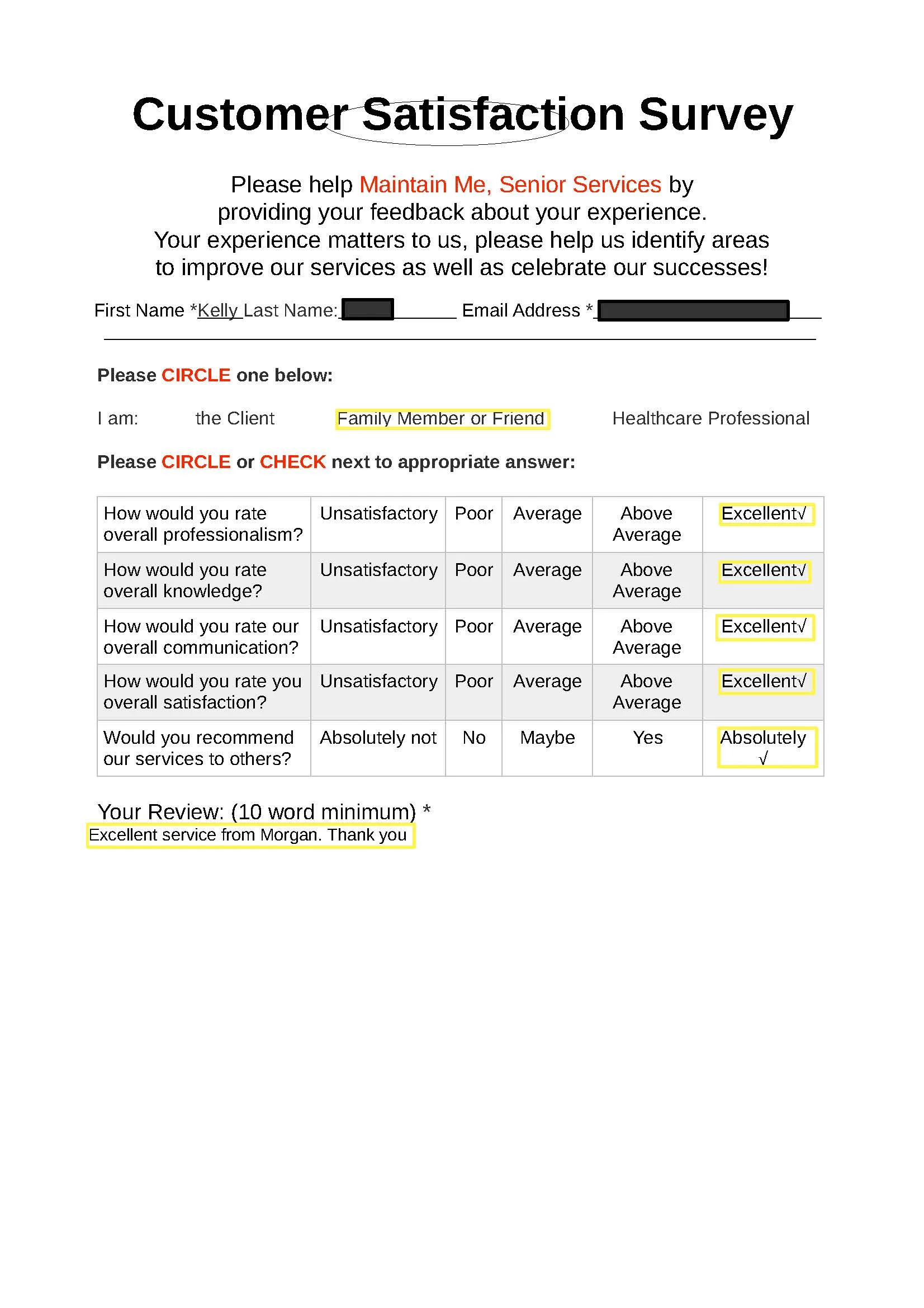
Excellent Customer Review!

Thank you for all of the wonderful feedback!

Excellent-Customer-Service.jpg

Maintain Me requests customer surveys be completed for any service we provide to seniors and their families. We're constantly looking for opportunities to improve how we serve the senior community and these reviews are an invaluable part of that process.

Thank you to all the families who take the time to complete our surveys and many thanks for our most recent stellar review!

maintain_me_customer_satisfactionKelly D- Morgan.jpg

Colorado gives Day!

Parkinsons Logo.png


Join our community for Colorado's largest and most generous day of online giving. 
 

Today is the day that Coloradans will come together to raise millions of dollars for nonprofits directly serving those in our community, and we need your help to reach our goal of raising at least $30,000 in 24 hours for the Parkinson Association of the Rockies. 


CLICK HERE TO PRE-SCHEDULE YOUR CONTRIBUTION!


The Parkinson Association of the Rockies is not affiliated with any national organization and is dedicated to enhancing lives and connecting communities. 
 

We provide programs and services which are a lifeline to those living with Parkinson's, their care partners and families in Colorado. 
 

With your support, we provide the care that counts on the way to a cure!


CLICK HERE TO PRE-SCHEDULE YOUR CONTRIBUTION!


24 Hours to Give Where You Live

Colorado Gives Day is more than just a day. It's a movement that inspires and unites thousands of donors to support their favorite causes online through www.ColoradoGives.org. Plus, when you give during the designated 24 hours, the value of your donation will be increased by the one million dollar incentive fund, provided by the Colorado Gives Day partners: Community First Foundation and First Bank.
 

For more information visit www.ColoradoGives.org
 

Special thanks to all of those who have already scheduled their donation to the Parkinson Association on Colorado Gives Day! 

What difference will your donation make?

  • $25.00 = Connects one individual to resources, programs and events via the ParkinsonVoice and enews throughout the year to give the power of knowledge to take control of Parkinson's.
  • $50.00 = Creates a community through support groups for people to come together and share ideas.
  • $100.00 = Funds an in-home visit where a lifeline is discovered to reduce fears and map out new directions.
  • $150.00 = Subsidizes cost of one non-contact boxing class to empower 15 Parkinson's boxers.
  • $200.00 = Provides a one-hour class, a powerful tool, to learn how to thrive with their disease.
  • $500.00 = Purchases a U-Step Walker for the free equipment loan program, providing the precious gift of mobility.
  • $1,000.00 = Ensures conferences will have keynote speakers which inspire living vibrant and healthy lives.

Whether large or small, every donation directly helps those living with Parkinson's in our community. 
 

It is never too late to give and every dollar makes a difference!

unnamed.jpg