
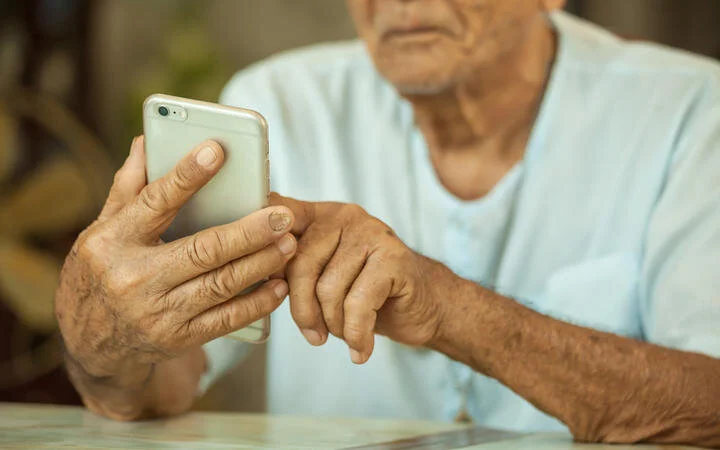
As hospitalization and deaths from Covid-19 continue, many of the nation's 50 million seniors over 65 are struggling to navigate a confusing digital landscape of vaccine distribution plans that can differ from state to state and in some cases, county to county.
Here was the original plan. In December, the US Centers for Disease Control and Prevention's Advisory Committee on Immunization Practices recommended a phased process for states to follow.
Phase 1a was to vaccinate the most at risk -- health care workers and elderly in long-term care facilities.
In Phase 1b, vaccines would be given to people ages 75 and older and non-health care frontline/essential workers, according to the committee.
Phase 1c would include people over age 65 and anyone between 16 and 64 years old with high-risk medical conditions, as well as any essential workers not already vaccinated.
Phase 1a has been underway for the last month in all 50 states and Washington, DC, according to an analysis published this week by the Kaiser Family Foundation (KFF). In many cases, hospitals and clinics took on the task of vaccinating workers, while CVS and Walgreens tackled the long-term care facilities.
Immediately, however, some states went their own way. In Florida for example, where the Simons live, Gov. Ron DeSantis included all people over 65 into the 1a group. Other states added police and firefighters, while others included the incarcerated and homeless. Thirty states have tweaked the guidance and added in additional groups, KFF found.
While most states are still in some version of phase 1a, 10 states and Washington, DC have moved into Phase 1b, and Michigan has begun to implement 1c, according to KFF.
Communication to the public on which phase a state is in, how to find a vaccine and where to go to get the shot is left up to the state, typically the state health department, which may then leave it up to the county level to organize and administer.
In Georgia, for example, there are different phone numbers, websites, vaccine distribution centers and appointment links for each county. Yet people can book an appointment across counties, creating a confusing patchwork of detective work for the individual.
Then there is the issue of supply.
"What is challenging for our local health departments is the complete unpredictability of supply at this moment in time," said Lori Freeman, the CEO of the National Association of County and City Health Officials.
"Even when you have vaccination efforts going on, what we're seeing across the country is they're coming and going because this supply is not predictable," Freeman said. "They're being canceled at the last minute, and that sort of thing, so the predictability of the vaccine supply is at issue here."
That could mean the vaccine could be scarce for some weeks, said Dr. Marcus Plescia, chief medical officer for the Association of State and Territorial Health Officials.
"We are hearing there is not a stockpile of vaccine for second dose but that it was more of a 'paper exercise,'" Plescia said. "Until there is a more robust supply we need to be clear with the public that opportunity to get the vaccine is limited."
Colorado has launched new COVID-19 vaccine hotline
1-877-CO VAX CO (1-877-268-2926)
Currently staffed, 24 hours a day, 7 days a week
https://covid19.colorado.gov/
Article sourced from:
https://www.cnn.com/2021/01/15/health/senior-vaccine-struggles-wellness/index.html