Feds crack down on Elder Fraud

older-person.jpg

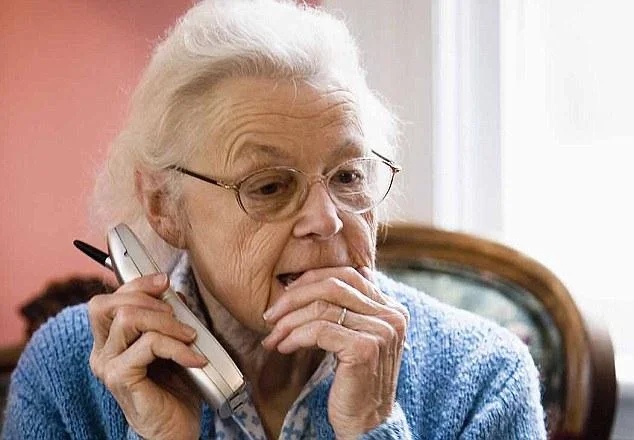
When a scammer called Dorothy Lambing of Louisiana claiming she had won a prize worth thousands of dollars, Lambing and her husband were desperate and battling cancer. All she had to do was purchase a six-month supply of vitamins.
 

"I felt like the bottom had dropped out. You know, all the hope we had was gone," Lambing told CBS News' Paula Reid. "I checked with the Better Business Bureau and he was not listed with any complaints and so I said, well, OK, it might be something true."
 

She gave the scammer $2,500. Dorothy is one of over a million older Americans targeted by scammers. The Justice Department says fraudsters reach out with calls, emails or regular mail promising cash, valuable prizes or good fortune if the recipient sends back a payment for processing fees. According to the department, scams targeting senior citizens are increasing dramatically. An estimated $3 billion is stolen from seniors each year.A scheme by one network of scammers mailed more than 950,000 fraudulent solicitations to people in 38 states, according to court records. One promised a prize of $3.3 million. It reads, "A day you may remember for the rest of your life...tell nobody." Since 2011, victims have sent them  approximately $10 million.

On Thursday, Attorney General Jeff Sessions announced criminal charges against 200 scammers who mostly target the elderly. He wants people to know there is help. The Federal Trade Commission has a hotline (1-877-382-4357) and a website with more information.

Angela Stancik's grandmother Marjorie committed suicide with just $69 in her bank account after investing her savings in a scam. She wishes her grandmother had reached out to her family sooner and urges others who may be caught up in a scam not to be ashamed to ask for help.

"There's someone who can help you and if you don't feel like it is your family then call your local police department," Stancik said.
 
She urges family members to monitor elderly relatives to help protect them from financial predators.
 
"Watch what they're doing, watch how they're spending their money. …Check their phones, check their mail," she said.  
 
Dorothy's money is gone, but she hopes her story will help other victims come forward.

"We've got to stop these people from hurting other people and it hurts so much – it hurts more than people know," she said.

Another common type of elder exploitation: "grandparent schemes," where scammers convince seniors that a grandchild has been arrested and needs bail money. Sessions said that one of his own staffers got a call from her distraught grandmother, afraid that her granddaughter was in jail. The FBI urges people to check with law enforcement before sending money to anyone they don't know.

Link to CBS article
https://www.cbsnews.com/news/scams-targeting-elderly-americans-increasing-justice-department/
Seattle Preschool in a Nursing Home 'Transforms' Elderly Residents

150616_abc_present_perfect_trailer3_16x9_992.jpg

Seattle Preschool in a Nursing Home 'Transforms' Elderly Residents
By GENEVIEVE SHAW BROWN


What would happen if you paired the very young with the very old?

It's being done at a preschool in Seattle, where child care takes place throughout a campus which is also home to more than 400 older adults.

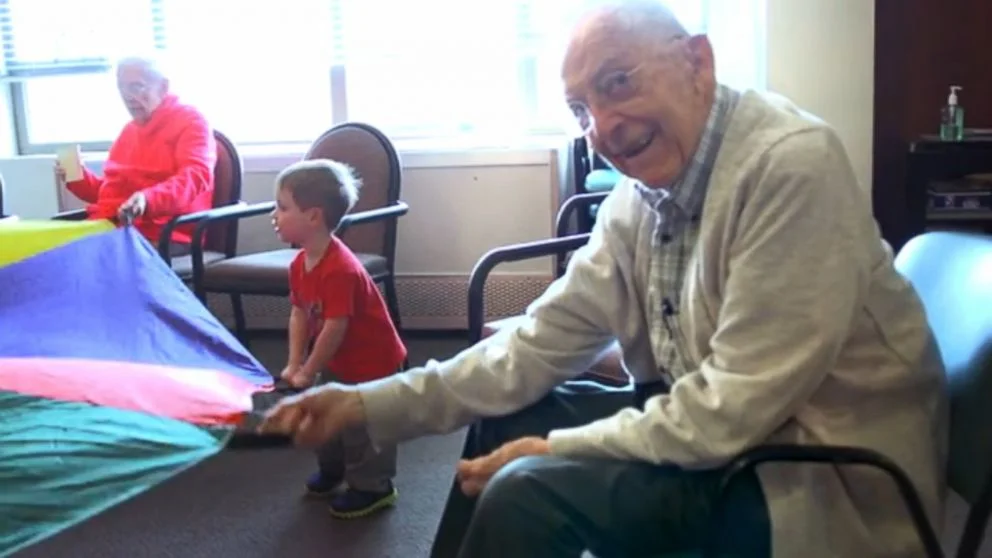
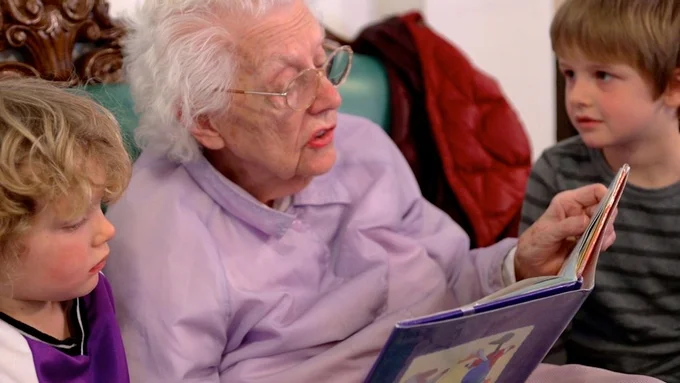
Called the Intergenerational Learning Center, the preschool is located within Providence Mount St. Vincent, a senior care center in West Seattle. Five days a week, the children and residents come together in a variety of planned activities such as music, dancing, art, lunch, storytelling or just visiting.

And now this incredible place is about to have its own film. Called "Present Perfect," it was shot over the course of the 2012-2013 school year by filmmaker Evan Briggs, who is also an adjunct professor at Seattle University. Funded completely out of her own pocket and shot by her alone, Briggs has now launched a Kickstarter to fund the editing of the movie. She has more than $45,000 of her $50,000 goal with 15 days to go.

Residents of "the Mount," Briggs said, did a "complete transformation in the presence of the children. Moments before the kids came in, sometimes the people seemed half alive, sometimes asleep. It was a depressing scene. As soon as the kids walked in for art or music or making sandwiches for the homeless or whatever the project that day was, the residents came alive."

The kids, she said, took everything in stride. She talked of a moment at the beginning of the film trailer when a young boy, Max, is meeting an elderly man named John. John has to repeatedly ask Max his name, calling him Mack, Matt and Match. "That scene actually went on far longer that what you see in the trailer. But Max was just so patient, he just kept repeating his name over and over."

Interestingly, the parents of the students don't send their kids to the Intergenerational Learning Center primarily for the experience with the seniors. "It's got a great reputation and great teachers," said Briggs. But parents of kids who were in the class that she embedded herself in for the school year now tell her they see the benefit of the model. "One father told me that he especially sees it now that his own parents are aging."

She named the film "Present Perfect" she said, as a reference to the fact that these two groups of people — the preschoolers, who have almost no past and so much future and the elderly who such rich past but very little future — really only have a few years of overlap in their lives.

"It's also about being in the present moment," Briggs said, "something so many adults struggle with."

Briggs said the moments between the kids and the residents "sweet, some awkward, some funny — all of them poignant and heartbreakingly real."

Briggs hopes her film will open a conversation about aging in America. She writes on her Kickstarter, "Shooting this film and embedding myself in the nursing home environment also allowed me to see with new eyes just how generationally segregated we’ve become as a society. And getting to know so many of the amazing residents of the Mount really highlighted the tremendous loss this is for us all."

She called the preschool a "genius" idea that is "well within our reach" on a larger scale and hopes the idea expands to other schools around the country. "It's a great example of how we integrate the elderly into society."


Link to original feature of article
https://abcnews.go.com/Lifestyle/seattle-preschool-nursing-home-transforms-elderly-residents/story?id=31803817

clark-howard_554944243.jpg

Colorado Program connects Senior Pets with Senior Citizens

senior-dog-bed.jpg

Bette Cyr reached a point in her life when she realized she knew more people who had died than were still living on this Earth. Loneliness set in, and she found herself trying to coax a neighborhood cat that hung out behind her studio home to love her, without any luck.

Cats are fickle creatures, but Cyr kept trying. She didn’t think she was a dog person. Dogs were messy and drooly, and they rolled in stinky things and smelled each other’s rear ends. They needed humans too much. But then, she heard about the Silver Whiskers Program run by the nearby Black Canyon Animal Sanctuary.
 
Debbie Faulkner, the founder of the sanctuary, started the program after discovering that old dogs and old people have a lot in common, and they benefit from each other’s companionship.
 
Silver Whiskers matches elderly dogs with elderly owners, includes veterinary care for the dogs and financial support for food and supplies if necessary, and Faulkner agrees to take the dogs back and care for them if something happens to the owners.
 
Cyr decided to give it a go, and adopted her first old dog, Ruby the miniature schnauzer. Ruby was rescued from an animal hoarder’s house, and she only had three legs. But they got along just fine, and Cyr discovered she loved dogs after all. They lived together for 1½ years until Ruby died, and then came Walter, another dog of the same breed, who lived for a year. And then she had Daphne for a short time, and now Cyr has Cassie and Sissy.
 
All these old dogs brought their own quirky personalities into Cyr’s life, something she can’t imagine not having now. She found she was comforted by their warm, furry presence, by the sounds of their breathing at night. She loved laughing at their antics, the way Sissy perpetually has bedhead in the morning and she always looks grumpy.
A few times a day, they go to the library or the post office and get out for short walks. Cyr, 67, has met neighbors she hadn’t known before, ones who lived around the block, because the dogs got her out of the house. “It’s opened my heart in a way that I might not have ever experienced,” she said.
 
Sissy is deaf, and Cassie’s tongue perpetually hangs out because there are no teeth on one side of her mouth to keep it from escaping. But no one minds, and Cyr just likes lavishing love on them as they nap on her settee in a sunny spot.
 
“My part’s the easy part. I just have to love them,” she said.
 
She and the dogs have similar needs, and Cyr said Faulker did a great job matching them. “They just need some peace and quiet and safety and love,” she said. “It’s such an important thing, in my mind, that these guys are not disposed of, discarded.” She said the improvement in her quality of life since she adopted the dogs is immeasurable, and it’s wonderful to have another creature who needs her.
 
“I hadn’t realized I was lonely until I wasn’t lonely,” she said.
 
Ken’s own dog had died and he refused to take his medication, he had no family and they just wanted a dog as a loaner to improve his quality of life. Faulkner brought him Hank, a lab-basset mix who was 8 years old at the time. Faulkner immediately saw a change in Ken, who she described as having a “somewhat curmudgeonly” personality.
 
“He was a whole different man all of a sudden,” she said, remembering that Ken’s face glowed with a grin and he smiled when he first saw Hank. The two were instant friends, and when Ken moved into the San Juan Living Center in Montrose, he brought Hank, who slept on his bed and also provided companionship for the other residents. Ken ended up living for two years after the dog entered his life, much longer than anyone expected. And when he died, Hank was there, lying on his bed with his paw on Ken’s arm.
 
Faulkner took Hank back and later placed him with a Fruita woman who is now 94 years old. The experience with Hank and Ken led Faulkner to form Silver Whiskers, which has a goal of matching mature animals with mature owners who might not otherwise adopt a pet for financial reasons or concerns about how long they will live.
 
Some of the animals in the program were rescued from puppy mills and spent their lives confined. Others had owners who died. Some were dumped in rural areas and brought to the sanctuary.
 
After the adoptions, in some cases, it’s hard to tell who rescued who.
 
In one case, a 75-year-old woman with a walker adopted a little Westie, and Faulkner was concerned that the new owner wouldn’t be able to get out and walk the dog as much as needed. Faulkner checked up on them later and found the woman had ditched the walker — she had been getting so much exercise with the dog, she no longer needed it.
 
“It gave her a reason to get up every day,” Faulkner said.
 
She often receives letters from doctors asking for companion animals for their patients, citing the need for a pet to improve their quality of life. Most of the 30 clients Faulkner currently has in the Silver Whiskers program prefer older dogs for a lot of reasons.
 
They don’t want to adopt puppies because they are a lot of work, they need a house-trained pet, and the prospect of adopting a dog that might live 12 or 15 years seems like a long-term commitment for an elderly person who might not live that long. The fear of outliving a pet or not being able to care for it if something happens is one of the hurdles Faulkner overcomes for elderly clients who want to adopt through the Silver Whiskers program.
 
She agrees to take the animals and board them for free if the owner is hospitalized or unable to care for their pet.
 
She has placed some dogs multiple times after the first owner died. She’ll also take animals back if a client’s living situation changes. Since 90 percent of her clients rent their homes, they sometimes have issues with keeping animals if they need to downsize or move to assisted living that doesn’t allow pets.
 
The fear of outliving a dog was the main reason Thelma and Jim Humphrey of Clifton were hesitant about getting another pet after their dachshund, Beth, died recently. He is 84 and she is 83, and at first, they said they wouldn’t do it again. But after always having dogs, their home felt empty without one.
 
Two weeks after Beth died, they visited the sanctuary and, while they were visiting with Faulkner in her office, a small 8-year-old Chihuahua mix, Joy, chose them. “She just came over the desk and ended up in Jim’s lap,” Thelma said.
 
This was just a few weeks ago, and so far, Joy has fit in just right. She’s a sweet little dog and they love her, and the couple is glad they adopted her after she was at the sanctuary for six years. It’s nice to be able to give her a home with creature comforts, and they want to spoil her a little bit as she ages.
 
“Everybody likes puppies,” Jim said. “But older dogs are just kind of like older people, they’re not paid attention to.” For Faulkner, it’s about improving the quality of life for people and animals, and she plans to expand the program in the Grand Junction area as resources allow.
 
It’s about companionship, love and caring, and she wants to help as many people and animals as possible. For Cyr, she’s eternally grateful to Faulkner for changing her life, her heart and her mind about dogs, the companions she never imagined would mean so much to her.
 
“I can’t imagine having gone through life without knowing dogs,” she said.

By ERIN MCINTYRE | The Daily Sentinel

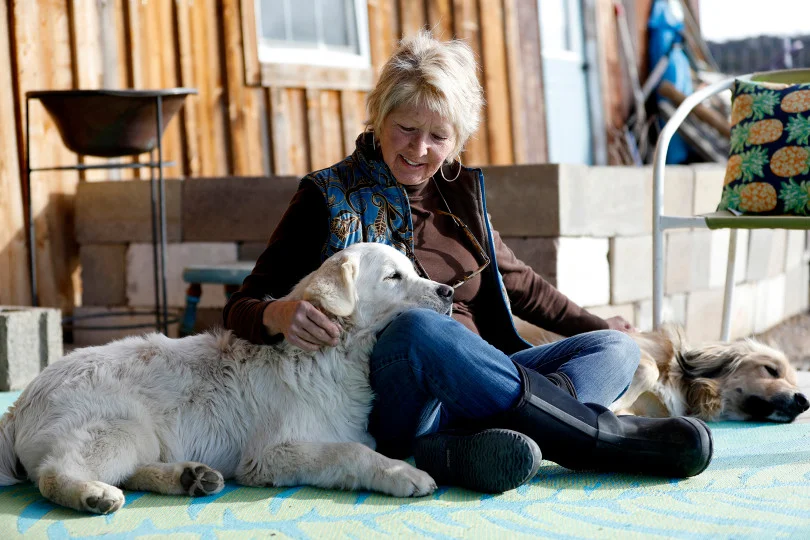
Debbie Faulkner shares a moment with her dogs that she has rescued at her ranch in Crawford, Colo. Faulkner is the owner of the Black Canyon Animal Sanctuary and founder of the Silver Whiskers program where senior pets are paired with senior citizen…

Debbie Faulkner shares a moment with her dogs that she has rescued at her ranch in Crawford, Colo. Faulkner is the owner of the Black Canyon Animal Sanctuary and founder of the Silver Whiskers program where senior pets are paired with senior citizens.

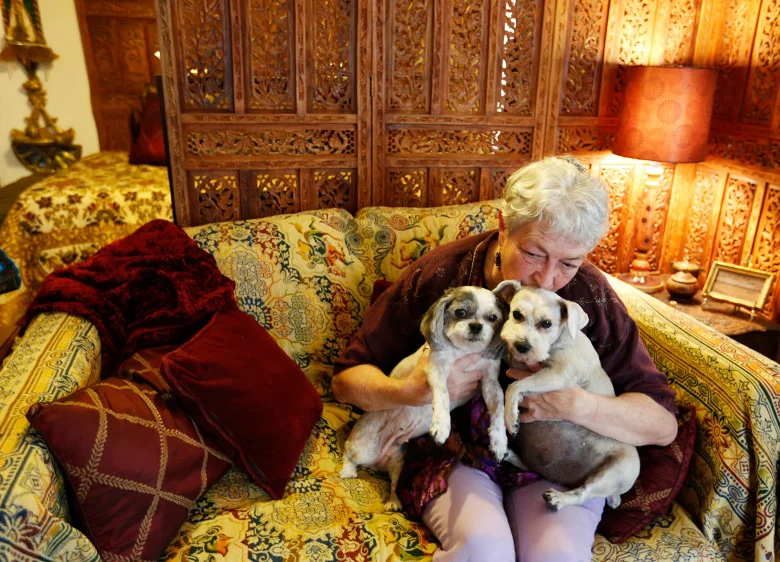
Bette Cyr gives attention to her dogs Sissy and Cassie at her home in Crawford, Colo. Cyr adopted her dogs from Debbie Faulkner,owner of the Black Canyon Animal Sanctuary and founder of the Silver Whiskers program

Bette Cyr gives attention to her dogs Sissy and Cassie at her home in Crawford, Colo. Cyr adopted her dogs from Debbie Faulkner,owner of the Black Canyon Animal Sanctuary and founder of the Silver Whiskers program

For more information about the Silver Whiskers Program visit   https://blackcanyonanimalsanctuary.weebly.com/about-us.html 


For Original Content please visit
The Daily Sentinel, http://www.gjsentinel.com
or
https://www.denverpost.com/2017/12/16/senior-pets-senior-citizens/

Why Seniors aren't taking Medication as Prescribed and How to Help

1140-senior-woman-looking-for-her-medication.imgcache.revf77de751a2ddda23e38539474d40641a.jpg

Missing medication doses seriously
affects senior health

 Taking medication as prescribed is one area of health that older adults and family caregivers can control. The number of people who skip medication doses on purpose is shockingly high. Studies show that 50% of medications for chronic diseases aren’t taken as prescribed.

This is a problem because missing medication doses has serious consequences for older adults. According to a top medical journal, it causes about 125,000 deaths and 10% of hospitalizations every year.

In her New York Times article, Jane E. Brody shares the 3 top reasons why people purposely don’t take their medicine and why it’s so important to take it as prescribed. We summarize the key points from the article and share suggestions for what to do if seniors aren’t able to take medication as directed due to financial or other reasons.
 

1. They don’t believe in taking pills
There are many people who just don’t believe in taking medication, even when they have serious health conditions like heart attack, kidney failure, or vascular disease.

Others find that taking medications remind them that they’re sick, so they avoid them altogether.

Some people try to use natural remedies instead. For example, taking fish oil instead of prescribed statins for heart disease. Unfortunately, the fish oil doesn’t work for that purpose and can’t prevent heart attack in someone who is at risk.

It’s great to use lifestyle changes and a healthy diet to improve overall health, but there are many situations where drugs are absolutely necessary because of a serious health condition.


2. They think not taking medication is harmless if they feel OK
Sometimes people will stop taking their prescribed medication for a few weeks to see what will happen or how they feel. When they feel fine, they assume the medication isn’t needed because it wasn’t doing anything.

Unfortunately, patients won’t be able to tell if drugs that treat diseases like heart disease or high blood pressure are working. That’s because those types of health conditions have no noticeable symptoms. They’ll only find out that the medication was truly needed when they have a heart attack or stroke – when it’s clearly too late.


3. They think it’s not worth the cost
Medication can be expensive, but even when it’s affordable, some people think it’s not worth it. They may feel like their health condition isn’t a big deal, so why spend money on medicine?

When medication is expensive, some people feel even more strongly about not taking it. Or, if money is tight, some will take less than the prescribed dose to make the pills last longer.

Unfortunately, that just makes the medicine less effective. In the short run, it might seem like not taking medication is a good way to save money. But in the long run, it will likely cost significantly more in hospital and medical bills when a health crisis hits.


What to do if seniors aren’t able to take medication as prescribed
If side effects, financial problems, or other issues prevent your older adult from taking their medicine, discuss it with their doctor right away.

They can help your older adult find the right treatment and refer you to resources that can help.

For example, there are programs that help with prescription costs, tips for convincing seniors with dementia to take medication, pill organizers to keep track of doses, and reminder services so seniors won’t forget.


Full article in the NY Times
https://www.nytimes.com/2017/04/17/well/the-cost-of-not-taking-your-medicine.html

Link to Daily Caring feature
http://dailycaring.com/3-reasons-why-seniors-arent-taking-medication-as-prescribed/?utm_source=DailyCaring&utm_campaign=85948835da-DC_Email_2018-06-22&utm_medium=email&utm_term=0_57c250b62e-85948835da-123200633

FREE Alzhiemer's Awareness: RSVP Deadline is today!

0001.jpg

What is Alzheimer’s?

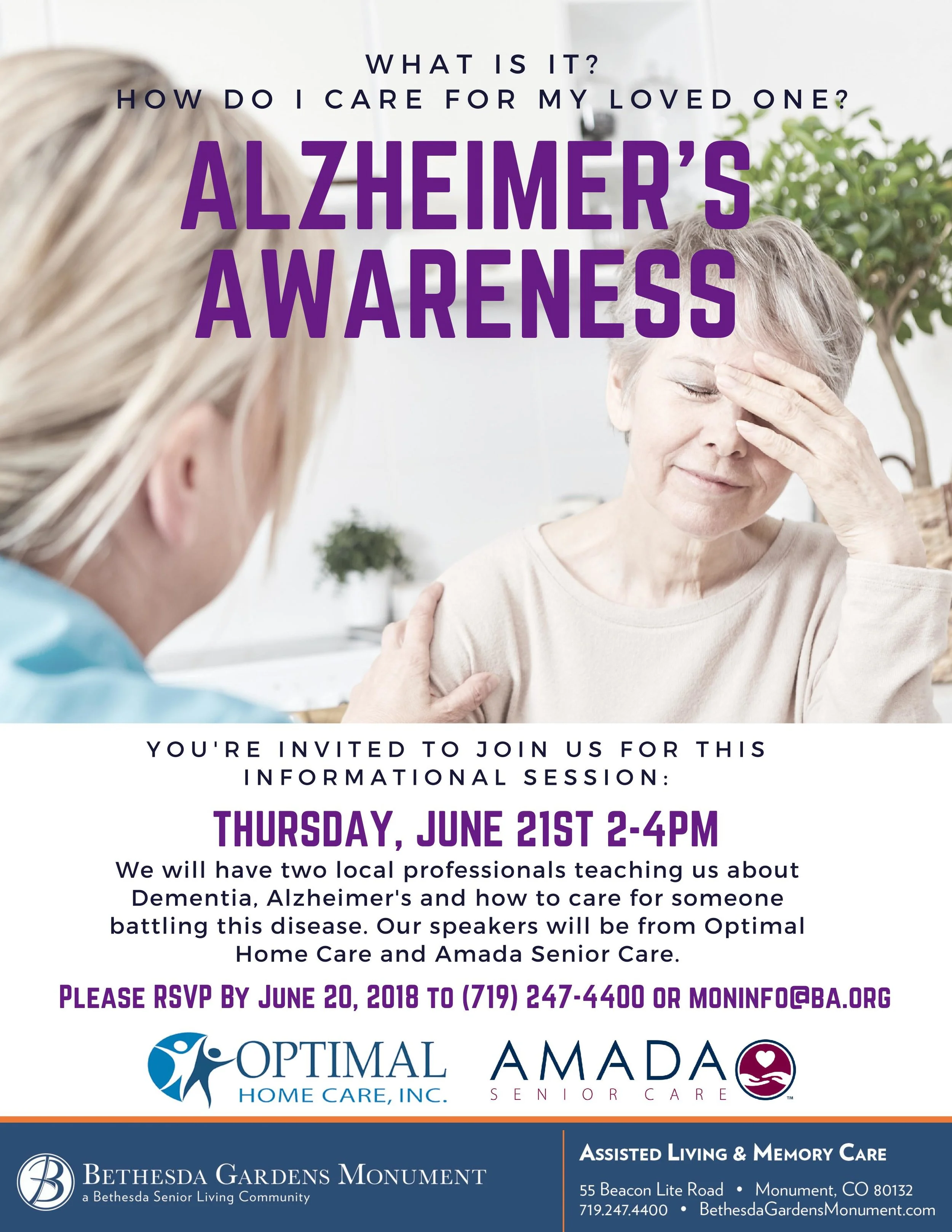
You’re invited to join us for this free informational session on
Thursday, June 21st 2-4PM.

Bethesda Gardens Monument
Beacon Lite Road,
Monument, CO 80132
 

We will have two local professionals teaching us about Dementia, Alzheimer’s and how to care for someone battling the disease. Our speakers will be from Optimal Home Care and Amada Senior Care.

Please RSVP by June 20, 2018 to
(719) 247-4400 or moninfo@ba.org.

The New Retirement, Near the Kids

06SENIORS-slide-EHWO-jumbo.jpg

Last year Ms. Bowers, 87, started having trouble getting around, and Ms. Ruben felt that helping her mother from across the country was at best a difficult prospect. In January, Ms. Ruben moved her mother to Sunrise at Mill Basin, in Brooklyn.
“Just in case she fell, I know that there’s something here, versus ‘how am I going to help her when she’s in Walnut Creek, Calif., and I’m in Brooklyn?’ Peace of mind — that has been a huge gift,” Ms. Ruben said.
 
Ms. Ruben and her mother are an example of a phenomenon that is driving an increase in the construction of senior housing across the United States. More assisted living, independent living and continuing care retirement communities are being built — not necessarily in the warmer climates where seniors have traditionally retired, like Florida and Arizona, but wherever economies are robust and booming, in places like New York, Denver, Chicago and Atlanta.

It is not uncommon for today’s seniors to live well into their 80s, 90s, even past 100. And when they can no longer be entirely independent, many are moving to be near their adult children for help in the last stage of their lives.
The need for more of this kind of housing is also driven by the need to combat what many see as a growing problem of isolation among people in this older generation. Of Americans age 65 and older, 28 percent — 11 million people — live alone, according to the United States Census Bureau. And the National Council on Aging estimates that eight million adults over the age of 50 are affected by isolation, which can harm both mental and physical health, said Lisa Marsh Ryerson, president of the AARP Foundation, which introduced Connect2Affect in 2016 to help raise awareness and offer solutions to senior isolation.

Ms. Ryerson said that the health effects of prolonged isolation have been found to be the equivalent of smoking 15 cigarettes a day, according to a study in Perspectives on Psychological Science. A study in the Proceedings of the National Academy of Sciences of the United States of America also found that social isolation and loneliness are associated with higher risk of mortality in adults 52 and older. Senior living communities, where people of similar ages and abilities live together, can help combat that isolation, as can moving closer to adult children, who can then more easily help take care of their parent’s needs.

“It’s often the case that the adult child — and usually adult daughter — visits their parent and finds there’s something that’s not completely copacetic,” said Beth Burnham Mace, chief economist and director of outreach for the National Investment Center for Seniors Housing & Care. “They left the stove on, or have ambulatory needs, or trouble with meds. Something sets off an alarm bell that they need some type of assistance.”

As Ms. Ryerson pointed out, “We need meaningful connections.” When senior parents move closer to their adult children, those connections are often more frequent, and more personal.
 
Erickson Living, based in Catonsville, Md., has 20 senior properties, including Cedar Crest, and is developing seven more, said Adam E. Kane, the organization’s senior vice president of real estate acquisition and corporate affairs.

The company looks to two types of areas when deciding where to build new facilities, he said. The first is “infill markets” — places that are already densely populated, like Northern New Jersey — for seniors who either want to stay in the area where they have lived or move closer to adult children.

The second is what Mr. Kane calls “growth corridor markets,” where the company sees population moving even if “there’s really not a plethora of aging demographics in the local area, but it’s a growth market where you have a lot of adult children moving to and living there.”

In 2008, for example, the company opened Ashby Ponds in Loudoun County, Va. When construction started, “it was not considered a densely populated area, but it attracted mostly younger families seeking to get newer homes and larger homes,” Mr. Kane said. The facility was successful in attracting seniors from the inner Washington suburbs, he said, “either because they have family there or are looking for newer product and more value.” Erickson is currently going through the zoning process to build a similar facility in Fairfax, Va., for the same reason.

No matter what the economy does, Ms. Mace said, senior housing is going to be needed in the future, especially as the baby boomer generation ages. According to the Census Bureau, the percentage of the American population 65 and older will increase by 6 percent — up to 75.5 million people — by 2030. Ms. Mace predicted that the kinds of facilities that currently exist will continue to be in demand. But there may be other kinds of housing as well, including cogenerational and even “Golden Girls”-type setups, where single older adults can choose to live together.

“We’ve seen the values of living in senior housing: socialization, hospitality, better nutrition, better exercise,” Ms. Mace said. And when it is the baby boomers’ turn, she added, they will already be familiar with the model — and ready to move in.


Read full article at
 https://www.nytimes.com/2018/05/04/realestate/the-new-retirement-near-the-kids.html 
 

FREE Checkups: Go Back to Basics to Help Aging Drivers be Safer on the Road

CarFit_470x255-470x255.jpg

ROAD Kicks Off Summer CarFit Event Schedule


For the last two years, the Reaching Older Adult Drivers (ROAD) program has partnered with a number of organizations in the Denver metro area to provide CarFit®, an educational program that offers older adults the opportunity to check how well their personal vehicles “fit” them for greater comfort, control and safety.

The list of partners for the summer spans Adams, Arapahoe and Denver counties, and includes: Cook Park Recreation Center, Aurora Center for Active Adults, AAA Colorado-Southglenn, Thornton Active Adult Center and Heather Gardens.

ROAD, funded by the National Highway Traffic Safety Administration and administered by the Colorado Department of Transportation, was formed in response to research indicating that the current and future population of aging road users will drive more and longer than any generation in history. Older drivers are often the safest drivers in that they are more likely to wear their seatbelts, and less likely to speed or drink and drive. However, older drivers are more likely to be killed or seriously injured when a crash does occur due to the greater fragility of their aging bodies.

During a CarFit® event, trained technicians work with drivers to make small adjustments to basic things such as proper settings for their side mirrors and seat positioning which can make a big difference in a driver’s comfort level and help protect them and those around them. CarFit® was created by the American Society on Aging and developed in collaboration with AAA (American Automobile Association), AARP (American Association of Retired Persons) and the (AOTA) American Occupational Therapy Association.


The 20-minute checkup is free, registration is preferred. Interested drivers should call 303.991.5740 to make an appointment.
See current calendar below:


June 20, 9-11am: Cook Park Recreation Center, 7100 Cherry Creek Dr. S, Denver, 80224

June 22, 2-4pm: Aurora Center for Active Adults, 30 Del Mar Cir, Aurora, 80011

June 28, 10am-2pm: Heather Gardens, 2888 S Heather Gardens Way, Aurora, 80014

July 10, 10:30-12:30pm: AAA Colorado-Southglenn, 7400 S. University Boulevard, Centennial, 80122

July 18, 9-11am: Cook Park Recreation Center, 7100 Cherry Creek Dr. S, Denver, 80224

Aug. 15, 9-11am: Cook Park Recreation Center, 7100 Cherry Creek Dr. S, Denver, 80224

Sept. 10, 10:30-12:30pm: AAA Colorado-Southglenn, 7400 S. University Boulevard, Centennial, 80122

Sept. 14, 2-4pm: Aurora Center for Active Adults, 30 Del Mar Cir, Aurora, 80014


Article originally published at
 http://www.myprimetimenews.com/road-kicks-off-summer-carfit-event-schedule/


Simplified Tablets Designed for Tech-Challenged Seniors

I’m interested in getting my 78-year-old mother a tablet for video calls and email but want to get one that’s super simple to use. What can you recommend?

There are several different ways you can go about getting your mom a simplified tablet that’s easy for her to use. Depending on how much help she needs and how much you’re willing to spend, here are some different options to consider.


Simplify a Tablet
If you or your mom already has a tablet, but it’s too difficult for her to use, you can install a free senior-friendly software application on it like Oscar Senior, which works on Apple iPads and Android tablets.

This app will change the appearance and performance of your tablet into a simplified device with big understandable icons to only commonly used features (video calls, photos, instant messages, Internet, news, weather, reminders, contacts, etc.) for easy navigation, with no clutter. It even offers remote access capabilities so you can gain access to your mom’s tablet from your smartphone, so you can see what she sees, and help her if she gets stuck.


Limited Tech Skills
If you’re interested in purchasing your mom a new tablet that’s specifically designed for seniors, you have options here too, depending on how simple it needs to be.

For seniors with some, but limited computer/tablet skills, there’s AARP’s RealPad, which is an Android Intel tablet with a 7.85-inch touchscreen that provides a simplified home page with large text icons to frequently used functions. It also comes with 24/7 phone support, and a “Real QuickFix” tool that connects users to technology support agents over the Internet who can access the tablet and fix problems. Available at AARPrealpad.org for only $60, AARP recently announced that the RealPad will be discontinued when inventory sells out in a few months, but they will continue offering customer/technical support throughout the life of the product.


No Tech Skills
If your mother is completely unfamiliar with technology, two simpler options are the grandPad and Claris Companion.

GrandPad is a 7-inch touchscreen Android tablet that is designed for seniors, ages 75 and older. It comes with a stylus, charging stand and Verizon 4G LTE built-in so it works anywhere within the Verizon network - home Wi-Fi is not necessary.

This tablet provides a simplified menu of big colorful icons and large text, to only essential features, giving your mom clutter-free, one-touch access to make phone calls and video calls, send voice emails, view photos and videos, listen to personalized music, check the weather, play games and more. But, to simplify usage and avoid confusion, it does not offer Web browsing.

GrandPad also has a “Help” button that offers 24/7 phone/tablet remote assistance to help your mom with any facet of her tablet, and it provides damage and theft insurance so if your mom breaks or loses her tablet it will be replaced at no additional cost. Available at grandPad.net or call 800-704-9412, a grandPad leases for $60 per month, or $53/month if you pay one year in advance.

Another good option to check out is the Claris Companion, which offers Wi-Fi and 4G tablets that costs $549 and $649 respectively, plus a $29 and $49 monthly subscription fee.

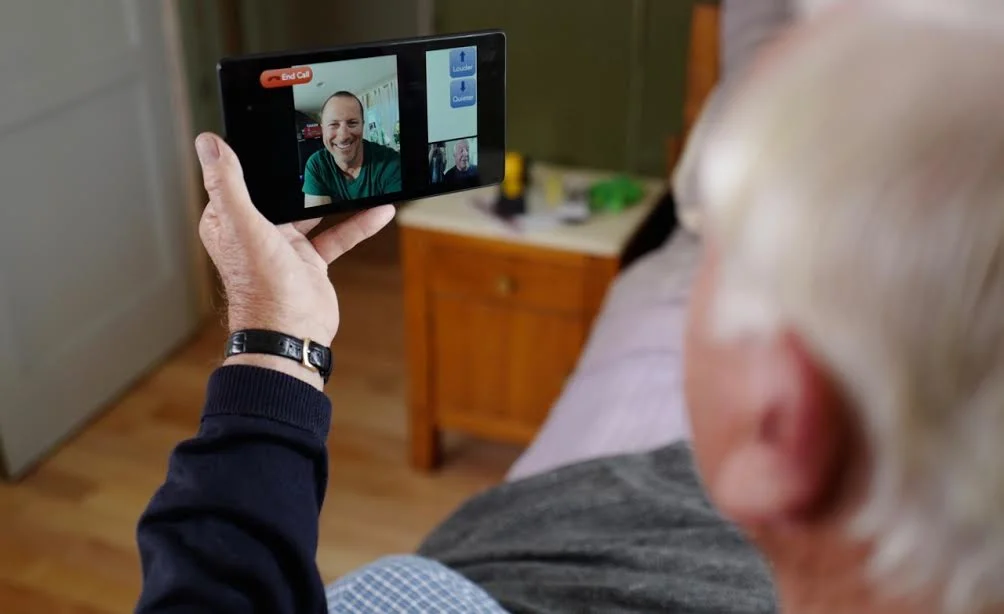
These tablets are designed specifically for elderly seniors living at home so their family can connect with them socially via video calls, email, text messages and photos. It also gives caregivers the ability to receive alerts and monitor compliance with medications, treatments, and important appointments.

Claris Companions are 10-inch Android tablets that have big buttons and text to only essential functions. They come in a thick bamboo frame, with a charging stand that prop them up, and can be customized to fit your mom’s needs and abilities. Claris also offers a lower cost tablet option for $349 and an Android app for $29.

Written by
Jim T. Miller
Syndicated columnist, NBC Today contributor and creator of SavvySenior.org

Link to original post https://www.huffingtonpost.com/entry/simplified-tablets-design_b_9990486.html

Father's Day Gift Ideas

smart-father-846x541.jpg

Father's Day is this weekend. Here are some great gift ideas and activities to show him you care. 

Activities for those who like going out
Many older adults enjoy activities like golfing, fishing, or bowling. And don’t forget about low-key activities like mini golf, horseshoes, bird watching, or lawn bowling. Another good option for sports fans is to enjoy a live game together.
 
More ideas:

  • Take a walk through nature – in the park, on an easy hiking trail, or through the neighborhood.
  • Visit a local museum, photography exhibit, or well-known sightseeing spot.
  • Attend a local car show – classic cars, muscle cars, or whatever revs their engine!
  • Go to a history-themed event. Some people might be interested in something like these Civil War exhibits or reenactments.
  • Treat him to an old-fashioned professional shave!
  • Stroll through an indoor shopping center. It’s a pleasant, air-conditioned place to chat, people watch, and do a little shopping. Plus, there are plenty of bathrooms and seating areas.


Activities for those who enjoy staying in
It’s not always easy for older adults to leave the house. For those who prefer to stay in, there are a number of fun activities you can try.
 
Some suggestions:

  • Watch their favorite sports on TV with plenty of tasty snacks.
  • Get family or a few of his buddies together for a poker game.
  • Invite family and friends for a relaxed get together. Have a potluck meal or backyard BBQ!
  • Bring home a takeout meal from his favorite restaurant.
  • Watch an old favorite movie or a new release he’s sure to enjoy.
  • Play cards or a board game together.


Thoughtful, senior-friendly gift ideas
It’s always nice to receive a thoughtful gift. Here are some your older adult is sure to love.
 

  • A few novels or audio-books by his favorite author or on a favorite topic
  • A new deck of large-print playing cards
  • History-themed gifts: books, movies or documentaries
  • Music! Check out our picks for every age group from 65 to 90+
  • A comfy pair of non-slip house slippers
  • Buy him a meal delivery or meal prep service like Chefs for Seniors that we featured last week.
  • Subscription to My Grandbox: Grandbox is a monthly subscription box just for seniors. The company selects a few gifts each month like puzzles, snacks, and toiletries, and lets you include personal photos and letters in each shipment. $33 per month.


Original content featured at http://dailycaring.com/celebrate-fathers-day-with-18-activities-for-seniors/

Chefs for Seniors

1255976_LswIetqQCun01lJiL80Zr7tMpvyONc8RdbeZbGGmQH6CvvYsWUmimB6-C5U1wbJZZ8FCkzUBGEb95fEbrucOCQ...JPG

Executive Chef and Food Service professional Denise Huff, of Arvada, has opened a Chefs For Seniors (chefsforseniors.com) franchise that takes the stress and guesswork out of meal planning for older adults.

The company’s locally based professional chefs prepare affordable meals for the week in the home using the freshest ingredients, while offering a fun interactive experience for elderly clientele. Menus are fully customizable, reflecting the food preferences and dietary concerns of the individual client.

“We are not just dropping food off, Chefs for Seniors works in the homes of people who need help or are tired of cooking. Knowing that I am helping my clients continue to enjoy their freedom and independence is the most fulfilling part of my work” says Denise.

With 95% of seniors reporting that they want to remain in their homes as they age and the senior population in the US expected to increase 30% between 2020-2030, the demand is growing for services like Chefs For Seniors that enable the elderly to remain independent.

Long-time restaurant owner Barrett Allman started the original location of Chefs For Seniors in 2013. In addition to the North Denver area, the company also has locations in 6 other states.

“We are excited to begin offering the service in the North Denver area and believe this will help us reach even more seniors needing help with meals and wanting companionship. Over the last five years we’ve proven this service fills a need for our clients and provides great opportunities for chefs,” says Chefs For Seniors founder and CEO Barrett Allman.

For more information contact Denise Huff, the local Chefs For Seniors franchise owner, at 720-355-0615.

Original article published at
http://www.myprimetimenews.com/chefs-for-seniors/

Food-pic-3-500x274.jpg

June is Alzheimer's & Brain Awareness Month

Facebook_SharedLink_thunderclap02_(1).jpg

We encourage you to take the Purple Pledge to support the 47 million people worldwide who are living with Alzheimer's disease and other dementias.

You can also join us in Alzheimer's & Brain Awareness Month as we celebrate The Longest Day, a sunrise-to-sunset event symbolizing the challenging journey of those living with Alzheimer's and their caregivers. To learn more about The Longest Day or to start a team, contact us at wvinfo@alz.org or call our 24/7 Helpline at 800.272.3900.


Ideas to Celebrate Alzheimer's & Brain Awareness Month
Go Purple

  • Go purple at your school or office! Encourage your coworkers or students to wear purple on Monday, June 20.  
  • Decorate your break room or common area in purple. Hang some streamers and balloons. If you need some Alzheimer's Association posters, contact us at 800.272.3900. 
  • Post facts about Alzheimer's disease at your workplace to raise awareness. We can provide you with fact sheets on the ten warning signs, how to be a healthy caregiver and more. Request fact sheets by emailing wvinfo@alz.org or by calling 800.272.3900. 
  • Go Casual for a Cause and wear purple. Everyone loves a casual work day! Host a Casual for the Cause day on Monday, June 20 by ordering Casual for a Cause stickers and selling them for $5 to your coworkers. Contact Kaarmin Ford at kford@alz.org or 800.272.3900 to purchase your stickers today. Make sure to post your purple on social media using the hashtags #GOPURPLE and #ENDALZ. Don't forget to tag us in your Twitter and Instagram posts, @fightalzwv.


Host your own event
Do you like to entertain? Put the mission into your meal by holding a dinner to make a difference. Host a dinner party and ask your guests to donate what they would have spent on a night out on the town to the Alzheimer's Association. Call the Alzheimer's Association, West Virginia Chapter for a toolkit to put the mission into your meal. You can also check out our Brain Healthy Menu.

Praise in Purple
Church families are often an important source of comfort and support for families facing Alzheimer's disease. On Sunday, June 19, encourage your congregation to wear purple for Alzheimer's awareness. Make sure to post your purple using the hashtags #GOPURPLE and #ENDALZ and tag @fightalzwv in your Twitter and Instagram posts.
Make a 67 second moment of silence in honor of those currently facing and who have faced Alzheimer's disease, because every 67 seconds someone in the United States receives a diagnosis of Alzheimer's.
Host an education workshop at your church or provide fact sheets for your congregation. To schedule a workshop or get fact sheets and other resources, contact us at wvinfo@alz.org or 800.272.3900. 


 Be sure to visit the official Alzheimer's Association website for more information, support, and resources
 https://www.alz.org/wv/in_my_community_17085.asp 

To attract Boomers, Senior Living Providers must give them Purpose

senior-hobby-iStock-868424916-848x477.jpg


To Attract Baby Boomers, Senior Living Providers Must Give Them Purpose


May 18, 2018 by Tim Regan

Over the next decade, when baby boomers finally start to age into senior housing en masse, they’ll bring with them a host of new needs and desires—and if senior living providers don’t take heed, they’re at risk of becoming obsolete.

That’s because, unlike some of their predecessors, many baby boomers simply won’t be happy with “three hots and a cot,” so to speak. In addition to high-quality accommodations and care, they’ll also want to continue exploring their passions and making a difference in the world, according to Robert G. Kramer, founder and current strategic advisor at the National Investment Center for Seniors Housing & Care (NIC).

“I think in the future, state-of-the-art communities for our elders will be known by what the residents presently do, not by what they did,” Kramer told Senior Housing News.

That’s not to say care needs aren’t important, however. As people age, it’s a simple fact of life that they’ll need more help. But that doesn’t mean senior living communities need to focus solely on medical or health care.

“No one wants to be defined by their health needs, their health problems, or their functional limitations,” Kramer said. “We have to deliver both quality of care and quality of life.”

Instead, senior living providers should learn their residents’ backstories and preferences, and then create personalized programming that takes those things into account. That way, they can provide opportunities for meaningful engagement without having to appeal to the masses or implement “dumbed-down” activities, as Kramer said in March.

Already, some senior housing and programming providers—such as Front Porch and EngAGE—have experimented with this approach.

Senior living specialization

It’s not always easy to take every resident’s personal stories into account, especially when communities might have hundreds of unique individuals living under one roof. One possible solution is to specialize in attracting certain kinds of people, like artists, educators or military members.

Specifically, Kramer envisioned a day when many more senior living communities have activities or programs meant to give those likeminded groups of people a chance to pursue their passions. Those communities would offer not only high-quality care, but also plenty of opportunities for real, purposeful engagement—even perhaps part-time jobs with paychecks.

“These might be people that are not only artists, but they’re also the movers and shakers in philanthropy and for the arts,” Kramer mused. “They might have four or five artists in residence who are not only teaching, but also being mentored by elder artists in the community.”

The next decade will be a time of trial-and-error in the senior living industry, with providers testing creative new approaches to meet the demands of the baby boomers, he said. But while most are still trying to come up with the right formula for long-term success, there are some examples of senior living providers that have applied these forward-thinking concepts today.

One example of a community that currently caters to specific kinds of people is Villa Gardens, a Front Porch continuing care retirement community (CCRC) in Pasadena, California. Front Porch is headquartered in Glendale, California, and manages and operates 10 retirement communities throughout the state.

The community was founded in the 1930s as a home for retired teachers. Even now, almost one third of Villa Gardens’ more than 200 residents are retired professors, teachers or people who previously worked in the field of education, according to Dmitry Estrin, the CCRC’s executive director.

“I always refer to Villa as an intellectual mecca of Pasadena,” Estrin told Senior Housing News. “That has always been the main attraction, and what Villa Gardens has been known for.”

Villa Gardens’ administrators have nurtured the CCRC’s ties to the teaching community. At the heart of the building lies a library stocked with books, a space that also serves a hub for lifelong learning and socialization. The community also offers its residents many ways to share their knowledge, such as lectures, resident-led research and education-focused summer camps with local kids.

To Kramer’s earlier point, these are not activities arranged for show or to appeal to the masses. These are real opportunities for residents to continue doing the very things they were passionate about during their careers.

“When you allow the residents to continue to be relevant, and not dictate what they do on a daily basis, you truly are able to have a prosperous community,” Estrin said. “We are just there to facilitate it.”

Specialization in senior living doesn’t need to revolve around professions, either. EngAGE, a non-profit organization that provides arts and wellness programming in 45 senior, affordable and intergenerational housing properties across three states, helps older adults focus on their creative side.

EngAGE partnered with Meta Housing on the developer’s affordable “artist colony” projects for seniors, of which there are currently seven in operation. In those communities, residents have an outlet for their creative pursuits, such as writing, painting, performing or drawing.

One of the main advantages of offering robust creative programming is that it helps battle social isolation, according to Tim Carpenter, founder and CEO of EngAGE.

“Art is the easiest way that I’ve seen to create deep, social connection within your community and with your neighbors,” Carpenter told SHN. “It’s really… feeling you’re part of something that gives you a sense of purpose.”

Like Kramer, Carpenter, too, envisions a day when more senior living communities foster their residents’ lifelong passions.

“Retirement doesn’t necessarily mean going away and living in a desert and getting a golf cart,” he said. “Retirement has a lot of different faces now, like encore careers and volunteerism. The longer you create things, and have access to those programs and activities, the better health outcomes you have.”


Originally featured https://seniorhousingnews.com/2018/05/18/attract-baby-boomers-senior-living-providers-must-give-purpose/?utm_campaign=SHN%20Daily%20Email&utm_source=hs_email&utm_medium=email&utm_content=63068462&_hsenc=p2ANqtz-8_tqARJ8LjEBmu3PBoG9pBraiHWeN6fpCFUsS-VxhXC3leo0T0EfPhnalo5tAyNw9snT_hUF5vAvnO1e58SvywALhVxA&_hsmi=63068462


June 13th- FREE Seminar: Senior Living Options

advice_for_seniors_moving_to_a_smaller_home_or_retirement_community.jpg

Are you looking to move or downsize and wondering what is the right step for you? What are the right steps to keep the equity that you have worked so hard for? What are some worry-free and hassle-free options to sell some of your possessions? Don't miss out on this FREE Seminar to get many of your questions answered and arm yourself with empowering information.


  • What are the Right Steps re: Medicare?

  • What about a Will?

  • Who can help me decide?

  • How do I de-clutter and get my home ready?

  • Is there a complete solution?


DATE AND TIME
Wed, June 13, 2018
6:30 PM – 8:00 PM MDT


LOCATION
Keller Williams Realty Success
2650 W. Belleview Ave, Suite 300
Littleton, CO 80123

Visit the Eventbrite site for more details
 https://www.eventbrite.com/e/free-seminar-senior-living-options-tickets-44647603183

Check out My Denver Prime this Summer!

MYD-Prime-poster.jpg

Denver Parks & Recreation's Active Older Adults (AOA) program engages adults ages 50+ in wellness, exercise, and leisure activities that support healthy aging. AOA programming includes aquatics, fitness, outdoor day trips, lunch trips, drop-in activities, clubs, arts and crafts, dance lessons, and more!


Check out all of their great programs
 https://www.denvergov.org/content/denvergov/en/denver-parks-and-recreation/activities-programs/active-older-adults.html

Memorial Day Observances across Colorado

shutterstock_250524325-1527092547-5982.jpg

In the excitement of summer’s unofficial arrival, it is easy to overlook what Memorial Day really is. Beyond the barbecues and neighborhood gatherings lies the real meaning of this day: remembrance.

The Memorial Day holiday is a time to reflect on those who served during wartime and on family members who lost their lives serving our country. For our elders who have lived through and fought in multiple world wars this specific holiday can provoke many emotions and is not to be overlooked.

There are numerous ceremonies being held on Memorial Day weekend across Colorado to honor those who have given the ultimate sacrifice for our country.


SATURDAY

Veterans Memorial Day Tribute — Denver
Denver's annual observance of Memorial Day will be held at the POF Hall just south of the state capitol at 1340 Sherman. The tribute runs from 10 a.m. to noon. The tribute will feature inspirational music, a Reading of Names, the U.S. Navy Bell toll, Remembrance Wreath laying and presentations of Tribute banners and Pins to Gold Star families. This event is free and open to the public.

Colorado Remembers Ceremony at Colorado Freedom Memorial — Aurora
You only get one chance to celebrate a 5th Anniversary and the Colorado Freedom Memorial’s ceremony this year will be one to remember on Saturday starting with a free pancake breaking at 8:30 a.m. The 5th annual Colorado Remembers event at 10 a.m. will include a tribute to the 100th anniversary of the end of WWI and the dedication of a new flag pole that permanently flies the Merchant Marine Flag. Performers include the Sound of the Rockies Men’s Chorus, The Beverly Belles Vintage Singing Trio and America The Beautiful Men’s Barbershop Chorus. This event was first published by MileHighOnTheCheap.com. For more local deals and discounts go to MileHighontheCheap.com.

Fort Logan National Cemetery Flag Pinning — Denver
Volunteers will be decorating all 110,000 headstones at Fort Logan National Cemetery with a flag on Saturday starting at 8 a.m. More information is available at MissionContinues.org. It is recommended you bring something that will help you carry the flags with you as place flags to honor the fallen.

Memorial Day Run & March 2018 — Castle Rock
The Memorial Day Run and March will be held at the Douglas County Fairgrounds on Saturday. Civilians, veterans and military members are invited to challenge themselves in friendly competition while helping feed homeless veterans. There are three routes: 5K Run/Ruck, 10K Run/Ruck and 30K Ruck March. There will also be a concert from Buckstein and vendors inside the Douglas County Fairgrounds Events Center with food, drinks, activities and more.

Westcliffe Memorial Day Parade — Westcliffe
The annual Memorial Day weekend parade in Westcliffe is scheduled to begin at 10 a.m. on Saturday. The parade will travel down Main Street.


SUNDAY

Fairmount Cemetery Colorado Veterans Tour — Denver
Fairmount Heritage Foundation will hold a free tour around Fairmount Cemetery which will highlight the many veterans buried in the cemetery. Visitors will learn about Orlando Ward, Fairmount Cemetery's most decorated veteran. The tour is free and will begin Sunday at 10 a.m. at the Ivy Chapel. Donations to the Fairmount Heritage Foundation are welcomed.

Fairmount Cemetery Service of Remembrance — Denver
A Memorial Day Weekend Service of Remembrance is scheduled for 1 p.m. on the steps of the Fairmount Community Mausoleum at Fairmount Cemetery.

Wings Brick Ceremony — Denver
The Wings Over the Rockies Museum will be honoring veterans from all military branches by placing commemorative bricks in its Runway of Honor under the B-52. There ceremony will run from 1:30 p.m. to 2:30 p.m. with the National Anthem being sung by Leslie Tom and color guard by the Civil Air Patrol.


MONDAY

Memorial Day Parade — Commerce City
Commerce City will hold its 54th annual Memorial Day Parade on Monday at 10 a.m. The 1.5 mile parade route begins at E. 64th Ave. and Newport St. and ends at 6060 E. Parkway Dr. The parade will last approximately two hours and will feature military units, bands, floats and antique car clubs. The parade is held rain and shine and is free to the public.

Memorial Day Commemoration — Colorado Springs
The Evergreen Cemetery Benevolent Society will hold its annual Memorial Day commemoration at Evergreen Cemetery in Colorado Springs on Monday beginning at 9:30 a.m. with historic WWI and WWII displays. A 10th US Cavalry Buffalo Soldiers Commemoration will take place at 11 a.m. and a butterfly release is scheduled for noon. Light refreshments will be served and the event is free to the public.

Elmwood Cemetery Memorial Day Celebration — Brighton
Elmwood Cemetery will host a special observance for the families and friends of lost veterans buried at Elmwood and Fairview cemeteries. There will also be church services at the cemeteries on Memorial Day and flags will line the cemetery courtesy of the VFW.

Memorial Day Ceremony — Berthoud
The Justin Bauer Memorial Berthoud American Legion is hosting the annual Memorial Day Ceremony in Berthoud Cemetary starting at 9 a.m. on Monday. The guest speaker will be Staff Sargent Corinne Hogg, United States Marine Corp from 1987 to 1997.

Memorial Day Ceremony — Dillon
The annual Memorial Day of Remembrance Ceremony is presented by Dillon's Cemetery Advisory Committee and will feature music by the Summit Concert Band. Local Boy Scouts will present the colors of the United States and hold a flag retirement ceremony afterwards. The public can bring old flags that need to be retired. The Memorial Day ceremony begins at 10 a.m. at Dillon Cemetery.

Memorial Day Service — Fort Lupton
Fort Lupton's 2018 Memorial Day Service on Monday will begin with a flyover at approximately 9:20 a.m. The service will take place at 9:30 a.m. at Hillside Cemetery at 13750 County Road 12.

Memorial Day Celebration — Hudson
A Memorial Day Celebration will be held at Hudson Memorial Park in Hudson, Colorado. The ceremony begins at 4 p.m. and is free and open to the public.

Memorial Day Parade & Ceremony — Grand Lake
The Grand Lake Memorial Day Parade and Ceremony honors those who served to protect and defend our country. The parade will begin at 10 a.m. and traverse Grand Ave. with veterans, service groups, horses and lots of patriotism. Immediately after the parade there will be a ceremony in Town Park with live music.

10th Mountain Division Memorial Day Ceremony — Leadville
The 10th Mountain Division Foundation will host the 59th annual ceremony at the 10th Mountain Division Monument located at Tennessee Pass at the entrance to Ski Cooper. The ceremony will honor the fallen members from World War II and the modern 10th Mountain Division. The event is open to the public.


See original post at https://www.9news.com/article/life/style/colorado-guide/list-of-memorial-day-observances-in-colorado/73-557497281
 

After His Wife Died, this 98-Year Old Man Baked 144 Pies

573b77b870071.image.jpg

When Leo Kellner lost his wife after 72 years of marriage, he felt empty. So, he started baking.

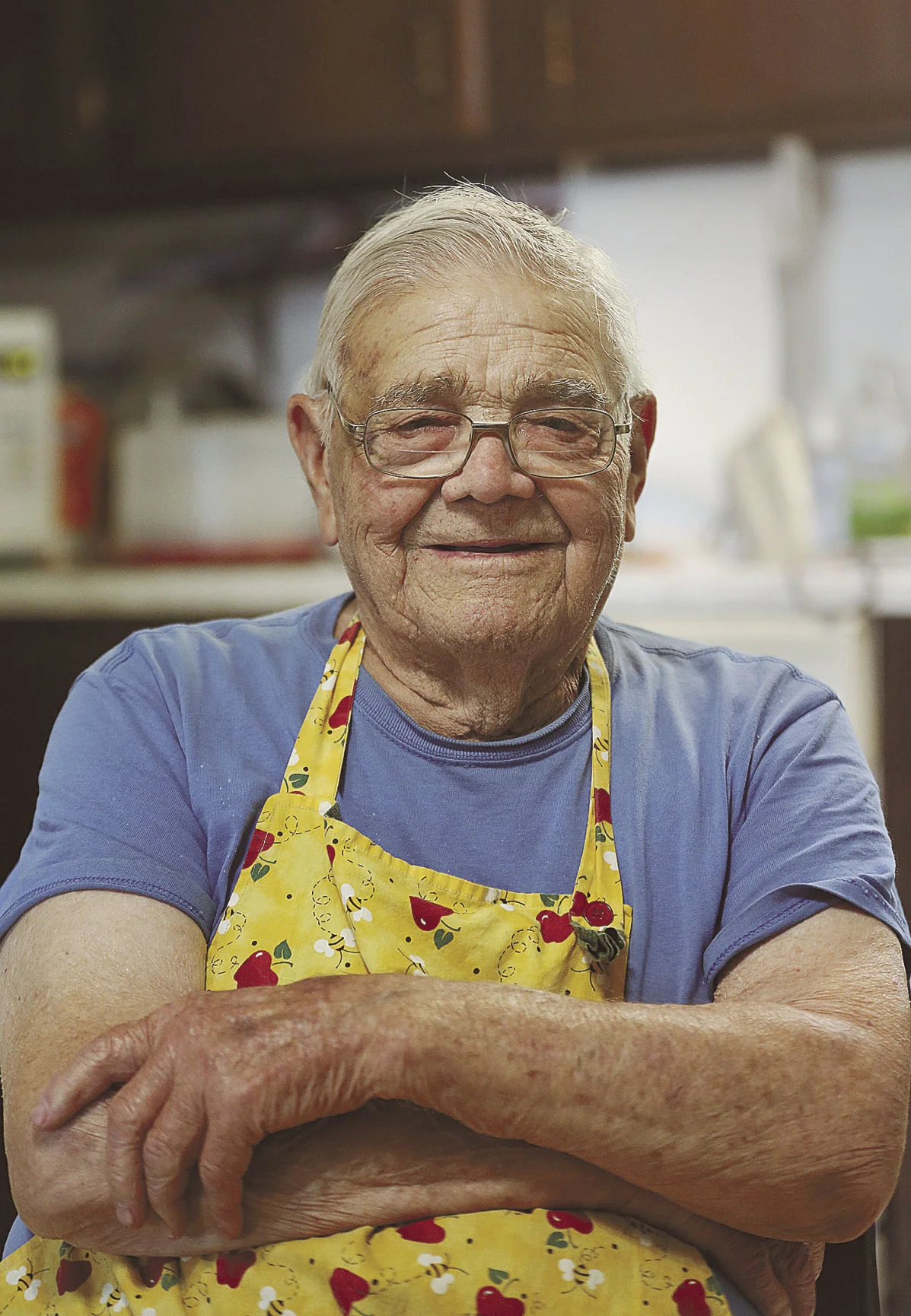
The 98-year-old resident of Hastings, Nebraska recently told NTV News Nebraska that he baked 144 apple pies the year after his wife Madelon died in 2012. The year after that, he began making cakes as well. “After I lost my wife I didn’t know what to do. So I said, ‘Well I can bake,’ so I started baking,” Kellner said. “Everything I do, I do it with love. That’s my secret ingredient is love.” 

As a young man growing up on his parents’ farm in Dimock, S.D., Leo Kellner got a taste of what it was like to go without.

Watching the family farm reduced to dust by some of the most extreme drought conditions in U.S. history during the 1930s, he soon found the once-ample treats prepared and served by his mother, Mary, scratched from the family menu.

It was all his father, Eony, aka Tony, could do to keep his family of seven from starving when he took on a new career as a brick and cement layer, using skills taught to him by his missionary father.

“We hardly had nothing,” Kellner said. “I made up my mind if I ever could, I would help people, do good things for people, because I knew what it was to be poor.”

Fast forward to the present, where, for more than three years, the 97-year-old has found a way to bring back those treats that disappeared from the family dinner table during the disastrous dust bowl era.

Drawing from skills passed on by his mother when times were good, Kellner puts his aging confection oven to good use almost daily, baking homemade cakes and pies from the same home he has occupied in Hastings for more than 62 years.

 He enjoys making chocolate, yellow and angel food cake and says he’s even made a wedding cake, though he would prefer not to. Kellner also has a special, sugar-free pie for people who are diabetic. Everything he makes he gives away for free ― whether it’s for a funeral at his church, hospice workers who used to help his wife, or family and friends in his congregation. 

“They’re pretty darn good, they really are,” Kellner’s pastor, Rev. Michael Houlihan of St. Michael’s Church told the Tribune. “Every time we have a funeral here, he has one brought over. And every time one of us goes over there he gives us one. He’s always been that way.” 

He added, “Some look inward, he looks outward. If you say ‘hi’ to him, he’ll probably give you a pie.” 

As for Kellner, baking helps him keep busy and puts a smile on people’s faces.  

“I try to help everybody I can,” he told the Tribune. “It makes me feel happy. God left me here for a reason and this is why I think he did.” 


Article Originally published at
http://www.hastingstribune.com/news/baking-at-age-a-piece-of-cake/article_f250096a-1c68-11e6-aec3-83b19bbae84c.html


https://www.huffingtonpost.com/entry/98-year-old-man-bakes-144-pies-after-his-wife-dies_us_58dd6a62e4b08194e3b88238
 

Helping Aging Parents live Independently

hendricks-family.top.jpg

Your parents want the independence and privacy of being in their own house. They want food from their own kitchens, their own furnishings, and their own routines.

Yet, the older they get, the more you’re finding that they are unable to complete the everyday tasks necessary to keep up with a house.

Maybe you’ve discovered they’re having difficulty keeping up with yard care. Or maybe you’ve noticed more dirty dishes in the sink or dirty laundry in the hamper.

You want them to be happy in their own home. Yet you may be worried that they aren’t able to keep up with the chores and tasks of living independently.


So how do you balance their wants with their needs?


1. An Honest Conversation
First, set up a quiet comfortable environment and have a simple conversation with them about how they are doing. Make sure they feel at ease talking about the topic, and try to ensure they don’t feel threatened, defensive, or sad.

If they know you want to help them, but not control them, they might be more apt to talk about any issues they are having. Some parents also don’t want to feel like a burden, so if that is the case in your family, try and ease these feelings.

Consider asking questions about specific household chores and tasks so that you can get an idea of how your parents are handling these different responsibilities.

 
2. Household Assessment
Try and do your own assessment of how the household tasks are being completed.

Is there a lot of dirty laundry? Is the house getting a bit dusty more frequently? Has it been weeks since the hedges were clipped and the lawn was cut? Have they forgotten to pay a bill or write a check?

These types of responsibilities seem like second nature to many of us. They’re just part of the day-to-day tasks of running a home or a family, but to an aging parent, the responsibilities may be unintentionally forgotten or too physically demanding to do frequently.

 
3. Covering the Basics
As you are assessing, take note of the basic areas where your parents may need extra help.

Maybe they need some extra assistance with the cleaning and the laundry, and if that is the case, then consider a visit with them where you also spruce up the house periodically or you bring laundry back and forth when you visit.

Or even consider hiring trustworthy help to periodically check in, clean up the house, and do the laundry.

If they need help with lawn care, reach out to family and see if you can set up a schedule where you can alternate taking care of the yard. Some times of the year, the yard will likely need more or different maintenance than others, but if you divide up the work, it won’t seem like much extra.

Or if you have the means, consider hiring a lawn service or a trustworthy neighbor to come by, cut the grass, and clean up the yard on a regular basis.

If your parents are forgetting to pay bills and send checks more frequently, consider setting up their bank account so you can also sign. Then you can take over some of their bill paying, so payments arrive on time and bills won’t be forgotten.

Lastly, if you’ve noticed that your parents have stopped cooking or making hot meals as frequently, then consider a program like Meals on Wheels. Meals on Wheels is the nation’s oldest and largest senior nutrition community organization. Depending on your location, Meals on Wheels offers community meals and even delivery in some place to seniors who have limited mobility.
 

4. Considering the Costs
As you begin to create your assistance plan, keep the costs in mind.

If you are doing much of the work yourself, your costs may be low, but your time will need to be readjusted.

If you are hiring out some help, then be sure to figure these costs into your parents’ budgets or your own budget.And if you have others in your family that are willing to help, then make sure you set up a plan for costs and payment.
 

5. Periodic Reevaluation
Lastly, try to set up periodic opportunities to reevaluate what help your parents might need.

Maybe they only need help with the yard now, but in six months, they may need a little help with laundry. Ask them every so often how things are going and make sure they know you are there to help make things easier.

There are ways to balance both your parents’ desire to live independently, and meeting their household needs. Hopefully these tips will provide ideas for ways to start up a conversation about both comfort and assistance.


This article was originally posted at http://dailycaring.com/boomers-helping-aging-parents-live-independently/?utm_source=DailyCaring&utm_campaign=894a496f4f-DC_Email_2018-05-18&utm_medium=email&utm_term=0_57c250b62e-894a496f4f-123200633


Pedaling 4 Parkinson's is just one month away!

Home-page-image11.png

Pedaling 4 Parkinson’s draws hundreds each year to join the fight against Parkinson’s Disease. This year we will be starting at Sweetwater Park in Lone Tree, CO. With multiple distances to choose from, there is a route for participants of all levels.  All money raised from riders will be donated to The Michael J. Fox Foundation for Parkinson’s Research. Whether you’re a rider, sponsor, or volunteer, every effort counts.


Started by three Denver area women whose lives have been affected by Parkinson’s disease, Pedaling 4 Parkinson’s is quickly becoming a favorite ride for both serious and not-so-serious cyclists. “A lot of our riders are not hard-core cyclists,” said Laura Fiske, P4P’s president, “but they ride to support a family member with Parkinson’s.” Cyclists this year can choose among three routes: ten, forty, or sixty miles. Moreover, the expo has lots to offer the dozens of non-cyclists, with sponsors’ exhibits, food, live music and other activities for all ages.

Parkinson’s disease affects over one million people nationwide, and around 17,000 here in Colorado. Recent research has shown that cycling can have some amazing benefits for people with Parkinson’s, including reduced symptoms and a slower rate of progression. Increasing awareness of those benefits is an important goal of Pedaling 4 Parkinson’s.

The Michael J. Fox Foundation has had an enormously positive influence on research and treatments for Parkinson’s disease, having raised over $700 million since 2000. Moreover, because of the relationship with the Foundation, 100% of the money raised by P4P cyclists goes straight to research. A representative from the Fox Foundation will also attend this year, with information about their work and Parkinson’s disease.

For many people with Parkinson’s, cycling more than short distances can be very difficult. To enable them to participate in P4P, the “Tandem Bike Project” was introduced a few years ago. This initiative pairs a strong “captain” on the front of a tandem bike, with a person with Parkinson’s on the back. For people with PD who thought their cycling days were over, the Tandem Bike Project gives them an opportunity to join the fight against the disease they deal with every day. And in keeping with the goal to support these people, they ride for free.


Check out the official site to learn more, sponsor, or volunteer
http://pedaling4parkinsons.org/


Kristi's recent Success Story

download (8).jpg

Thank you PHP!

When I begin working with a new client, I can never be certain of the outcome.  Sometimes, days turn into weeks; weeks turn into months.  As one prepares for a new journey in life, especially at the end of life, challenges present in all varieties from physical to medical to family to financial and so much more.  I can be certain in one thing though and that's the confidence in knowing I will be here for you and your loved one along this ride.  


Making the decision to move a loved one is difficult and pulls at heart strings all the while combating logic.  It is easy to put off moving a loved one.  It is easy to exhaust every avenue all the while exhausting yourself.  The challenge comes when faced with crisis and needing to make that difficult decision in a moment.   


My dear client, Kay, was "living the good life" in her daughter's home, receiving good care, and being stimulated through a day center program almost everyday of the week.  Her struggle was with dementia.  Kay's family was not ready to move her although they knew they were nearing the need for a decision.  


After many, many months, ongoing conversations, and touring different residential settings, a crisis occurred and now her family had to act fast.  Thankfully, Kay's daughter had the utmost confidence in one of the residential homes and felt that was the best fit for her mom.  She had toured many months prior to this crisis and was able to make a decision quickly and with ease.  


At Maintain Me, we strive to help our clients and their families begin this process early, so if faced with a crisis, they are prepared to take action. Thank you to Kay and her family for allowing Maintain Me to help in this time of need and be by your side in making a difficult decision.

Thank you!

Kristi Yakel, LSW
Case Manager
Maintain Me