Dementia Friendly Home: 4 ways to make things easier to see

ah_livingroom_main_img_qmarks (1).jpg

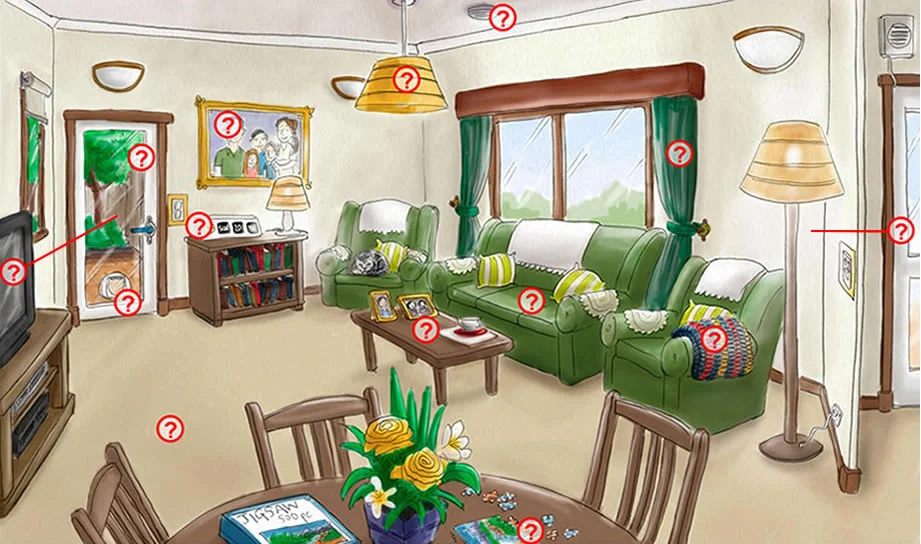
This Daily Caring article features some simple yet effective changes you can make at home to help your loved one with Dementia.

Everyday tasks are often challenging for people with Alzheimer’s or dementia. But small changes at home can have a big impact in making their life easier.

As the disease progresses, your older adult will have increasing difficulty remembering, thinking, processing, and reasoning. The top priority is to keep them safe as well as help them be as independent as possible.

We’ve got 4 ways to create a more dementia friendly home by making it easier to see and recognize commonly used items. These suggestions make everyday tasks easier, boosting confidence and reducing frustration and stress.


1. Avoid reflective surfaces and keep lighting even
Shiny or reflective surfaces on floors or tabletops can cause confusion because they create glare and shadows.

For floors, stick to bare hardwood or plain carpeting. If floor coverings are needed, use light colored, non-patterned coverings that are well-secured and non-slip.

For shiny tabletops or counters, cover with light-colored mats or tablecloths. Dark colors may seem like holes, so avoid those colors on areas you do want your older adult to use.

Try to make lighting as easy as possible by reducing glare and shadows. Add sheer curtains to mute bright sunlight and use brighter lighting for darker spaces.

 
2. Add pictures to identify things that aren’t in full view
When someone has memory problems, it can be difficult to remember where things are. That could mean they need to open every cabinet to find a mug, open all the drawers to find a sweater, or not know where the toilet is.

To help someone with dementia find the things they use often, it helps to add large, easy-to-see pictures on the outside of doors or drawers to identify what’s inside.

For example, put a picture of a toilet on the bathroom door, making sure it stands out from the door’s color. On a kitchen cabinet, put a picture of the mug they always use.

Be sure to prioritize which items to label because too many pictures could add to their confusion.
 

3. Use contrasting colors to highlight important things
Careful use of contrasting color also helps seniors with dementia see things better.

For example, a red plate makes it easier to eat because the plate stands out from a light-colored table or mat and many foods stand out against the red plate. When your older adult can clearly see what they’re eating, they’re better able to eat independently.

Using the toilet can be quite a challenge because most bathrooms have light colored floors, wall, and toilet. That can make it tough for someone with dementia to find the actual toilet and could cause them to accidentally go somewhere else, like a wastebasket or the tub. Changing the toilet seat to a colored one makes it easier to quickly see where to sit.

If your older adult has trouble finding an important room like their bedroom or the bathroom, you could paint that door a contrasting color. Or, personalize their bedroom door with a large photo of themselves. That could also keep them from accidentally wandering into other people’s rooms when looking for their own.

To make it easier to turn on room lights, you may want to change the light switch plates. If the walls are white, get colored switch plates, like this single switch or this double switch. Anything goes as long as the switch stands out clearly from the wall.

 
4. Make large panes of glass more visible
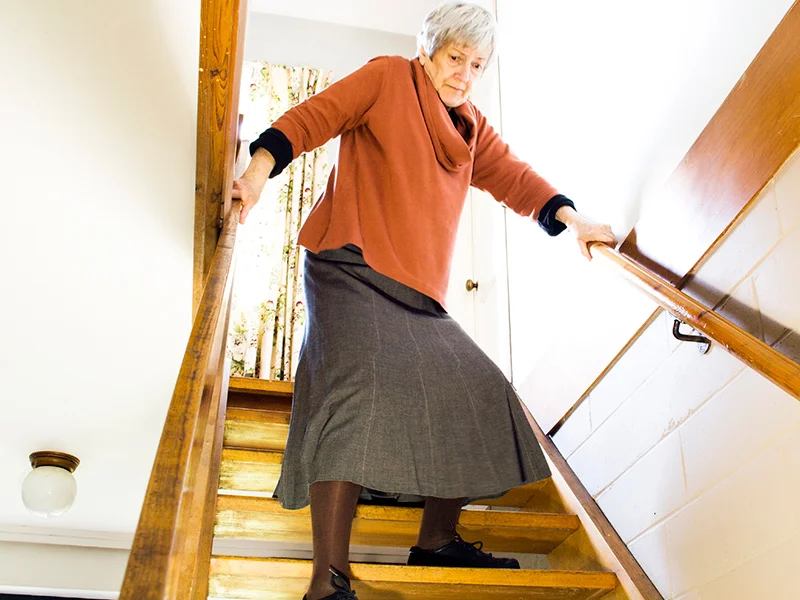
It can be more difficult for people with dementia to see large panes of glass. That can lead to accidents and injuries.

To make glass more visible, add non-adhesive decals, pictures, or posters on shower doors, patio doors, or picture windows. This can also be a fun way to decorate!


Check out these other related articles:

Link to original article:
https://dailycaring.com/dementia-friendly-home-4-ways-to-make-things-easier-to-see/?utm_source=DailyCaring&utm_campaign=09bf7fa0e7-DC_Email_2019-03-04&utm_medium=email&utm_term=0_57c250b62e-09bf7fa0e7-123200633


Be a Snow Buddy!

370de889-01e6-4c02-a4e1-05be30195dba-6533538_G.jpg

Did you know that March is the snowiest month in Colorado? 

Snow Buddies Program

Snow Buddies is a partnership between the City and County of Denver and Volunteers of America. The Snow Buddies program connects healthy volunteers with anyone 60+ in the metro area who cannot shovel their own walk. Volunteers are paired with seniors within a 2-mile radius of one another, helping clear their walkways after two or more inches of snow has fallen.


Why Volunteer

When you sign up to be a Denver Snow Buddy, you are strengthening our community, improving someone else’s life and transforming your own life through service. The Snow Buddy program was initiated to keep seniors safe from falls on snow or ice during the winter. The program also keeps seniors from accruing city fines for not being able to shovel their snow from the sidewalks.


How to volunteer to be a Snow Buddy

You can fill out an application to volunteer at www.voacolorado.org/Volunteer/Snow-Buddies or contact Tiffany Harris of Volunteers of America Colorado at 303-297-0408.
Please note, there is a one-time fee of $25 for a background check.


General ways to help your community

  • Get to know your neighbors - keep a list of phone numbers on hand for emergencies.

  • Check on elderly and/or disabled neighbors during major snow storms to be sure they do not need help.

  • Always clear your sidewalk of snow as soon as possible - it is difficult for pedestrians to walk down sidewalks full of snow and ice but it is nearly impossible for wheelchairs.

  • Go the extra step to make sure the sidewalk on your block is clear of snow so it can be accessible to all.

DenverLogo.png

Pallative Care vs. Hospice Care

bigstock-Female-Doctor-Talking-To-Senio-55984178.jpg

This is a great article from Daily Caring about the differences between Pallative and Hospice Care and how each could benefit your senior.

Could palliative care or hospice care help your older adult?
These two services are often confused, so it’s important to understand the key differences and benefits of palliative care vs. hospice care. Depending on their health conditions, one or both of these services could significantly improve your older adult’s quality of life.


What is the difference between palliative care and hospice care?

Palliative care
Palliative care can be used during any stage of a serious illness. It helps seniors and family cope with the side effects of medical treatments, fears, and caregiver stress.

By relieving symptoms, palliative care often improves someone’s ability to tolerate medical treatments and their ability to recover.

The palliative care team can also help families make difficult medical decisions, taking time to discuss pros and cons. This gives seniors and caregivers more control because they’ll have a better understanding of treatment choices.

Hospice care
Hospice care is for patients who are ill enough for a doctor to certify that they may not live beyond 6 months. (That sounds scary, but it doesn’t mean that it’s a death sentence.)

The main goal is to make your older adult as comfortable as possible. Hospice uses a combination of pain and symptom management plus emotional and spiritual support for seniors and families.

When your older adult has hospice care, visiting nurses eliminate the need to go to the doctor’s office and families can even get help with personal care tasks like bathing.

On-call help and support is also available – 24 hours a day, 7 days a week.


9 top questions about Palliative Care vs. Hospice Care
 

1. Who can get this type of care?
Palliative care: Anyone with a serious illness, no matter how long they’re expected to live.

Hospice care: Someone with an illness who may not live beyond 6 months. This doesn’t mean they’re definitely going to die, but they’re sick enough that it could be a possibility.


2. Can seniors continue to receive treatments to cure their illness?
Palliative care: Yes, seniors could receive palliative care and curative treatments at the same time

Hospice care: Generally no. Hospice focuses on treatments and medicines that relieve symptoms.

 
3. Is it covered by Medicare?
Palliative care: Some treatments and medications may be covered.

Hospice care: Yes, Medicare will pay for hospice care charges.

 
4. Is it covered by Medicaid?
Palliative care: Some treatments and medications may be covered.

Hospice care: In most U.S. states, Medicaid pays for all hospice care charges. Check with local hospice companies to make sure.


5. Is it covered by private insurance?
Palliative care: No. Palliative care services are flexible and based on what your older adult needs, so coverage will depend on what services or treatments they’re using.

Hospice care: Yes, most insurance plans cover hospice care.

 
6. How long can the care continue?
Palliative care: It depends on your older adult’s needs and their insurance coverage (Medicare, Medicaid, or private).

Hospice care: As long as your older adult qualifies for hospice.

 
7. Who provides the services?
Palliative care: Hospitals, hospice organizations, skilled nursing facilities

Hospice care: Hospice organizations, hospice programs based out of a hospital

 
8. Where are these services provided?
Palliative care: At home, in an assisted living community, in a skilled nursing facility, in a hospital

Hospice care: Wherever your older adult lives: at home, in an assisted living community, skilled nursing facility, or hospital. Some hospice organizations also have facilities where people can live (hospice residence) or get short-term care for severe pain or symptom management.

 
9. Is end-of-life care offered?
Palliative care: This depends on the provider – be sure to ask.

Hospice care: Yes, hospice organizations have end-of-life experts on staff.


Link to original post:
https://dailycaring.com/9-top-questions-about-palliative-care-vs-hospice-care/?utm_source=DailyCaring&utm_campaign=2dd028bf91-DC_Email_2019-02-26&utm_medium=email&utm_term=0_57c250b62e-2dd028bf91-123200633


Greater Denver Placement & Referral Alliance- First Membership Meeting!

unnamed.jpg

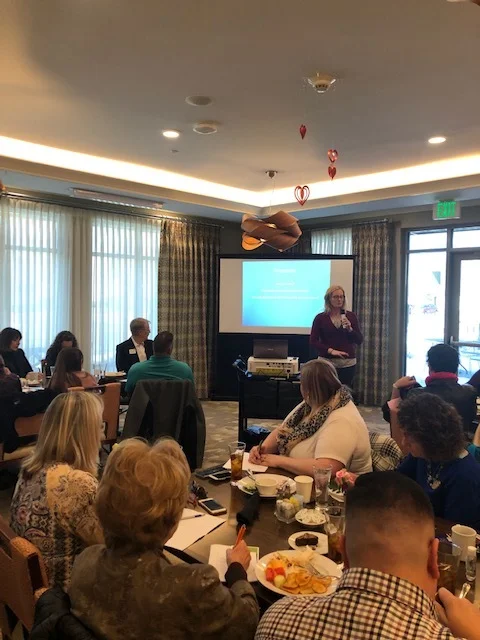
What an amazing turnout for the first membership meeting! 

Of the 74 expected, 90 people were in attendance. We learned a ton from our guest speaker Michelle who covered all the new regulations and how they effect the placement and provider industry.

Many thanks to Village at Belmar for hosting!

The Maintain Me Team was well represented with
Chelsea, Morgan & Julie in attendance.

IMG_0799.JPG
IMG_0798.jpg
IMG_0837.JPG
IMG_0845.JPG
IMG_0846.JPG

Longtime volunteers help share the love for Valentine's Day

The Colorado tradition of Remailing "with love from Loveland" goes on thanks to some very dedicated Volunteers.

The Colorado tradition of Remailing "with love from Loveland" goes on thanks to some very dedicated Volunteers.

The Loveland Valentine ReMailing Program


Loveland is perhaps best known worldwide as the home of the “Valentine ReMailing Program”. Every year, more than a hundred thousand Valentines are packaged inside larger envelopes and sent to Loveland, where volunteers hand-stamp them with a Valentine’s verse and send them on to the intended recipients. Each year a contest is held by the Chamber of Commerce and promoted through through the local newspaper, the Reporter Herald, for residents to submit their designs and verses.

A winning verse and design are chosen from all the competition entries and the two are combined to form the ‘Official Chamber of Commerce Loveland Valentine’s. Leading up to Valentine’s Day, the city authorizes the placement of red hearts with sponsored personal messages on light poles and other fixtures of the downtown streets.

The Loveland Chamber of Commerce and Loveland Post Office sponsor the Loveland Valentine Remailing Program. The Chamber & Visitor’s Center, located at 5400 Stone Creek Circle is the venue. At 9 a.m. approximately 60 volunteers gather to stamp a special message from the Sweetheart City on valentine cards sent to Loveland from all 50 states and more than 120 countries in 2014.

During the remailing program, the Chamber & Visitors Center becomes an official US Postal Service Sub-Station known as “The Valentine Station” with a Postmaster in residence for the duration of the remailing program.

If you want to give it a try next year, here's how:


How to Remail From Loveland – the ‘traditional’ way:
If you would like to have your valentine card stamped with the official Loveland Colorado cachet and stamp, please mail your pre-stamped, pre-addressed envelopes (envelopes should each have 49-cent postage; postcards should have appropriate postage), add extra stamps/postage for heavier/odd shaped valentines, mail in a large stamped envelope to the Loveland Remailing program at this address:

Postmaster
Attn: Valentine Re-mailing
446 E. 29th St.
Loveland, CO 80538-9998


If you would like to know more about the program such additional remailing options, mailing deadlines and volunteeropportunities please visit:
https://withlovefromloveland.com/the-valentine-re-mailing-program/


Stories not Forgotten: Pam & Kay

Screen Shot 2019-02-11 at 8.53.41 AM.png

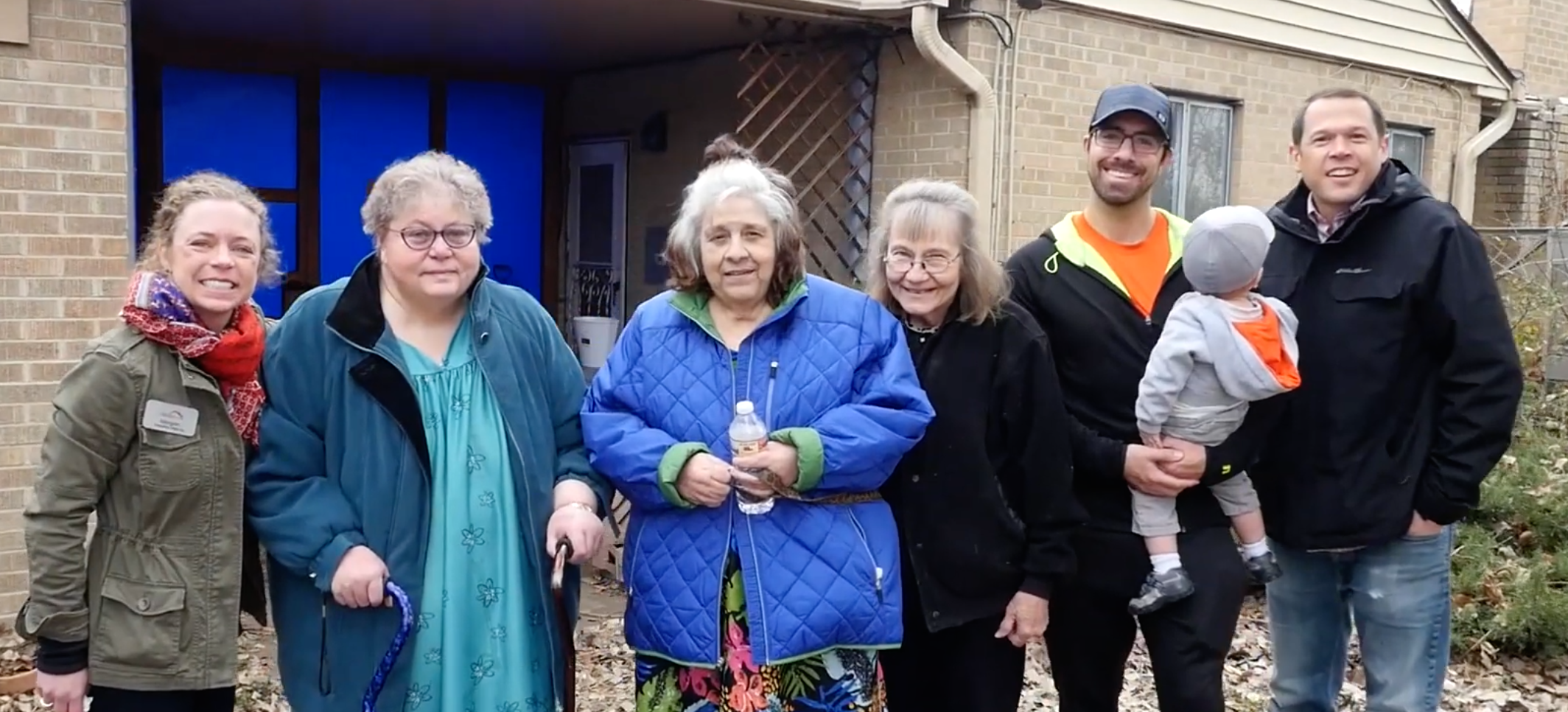
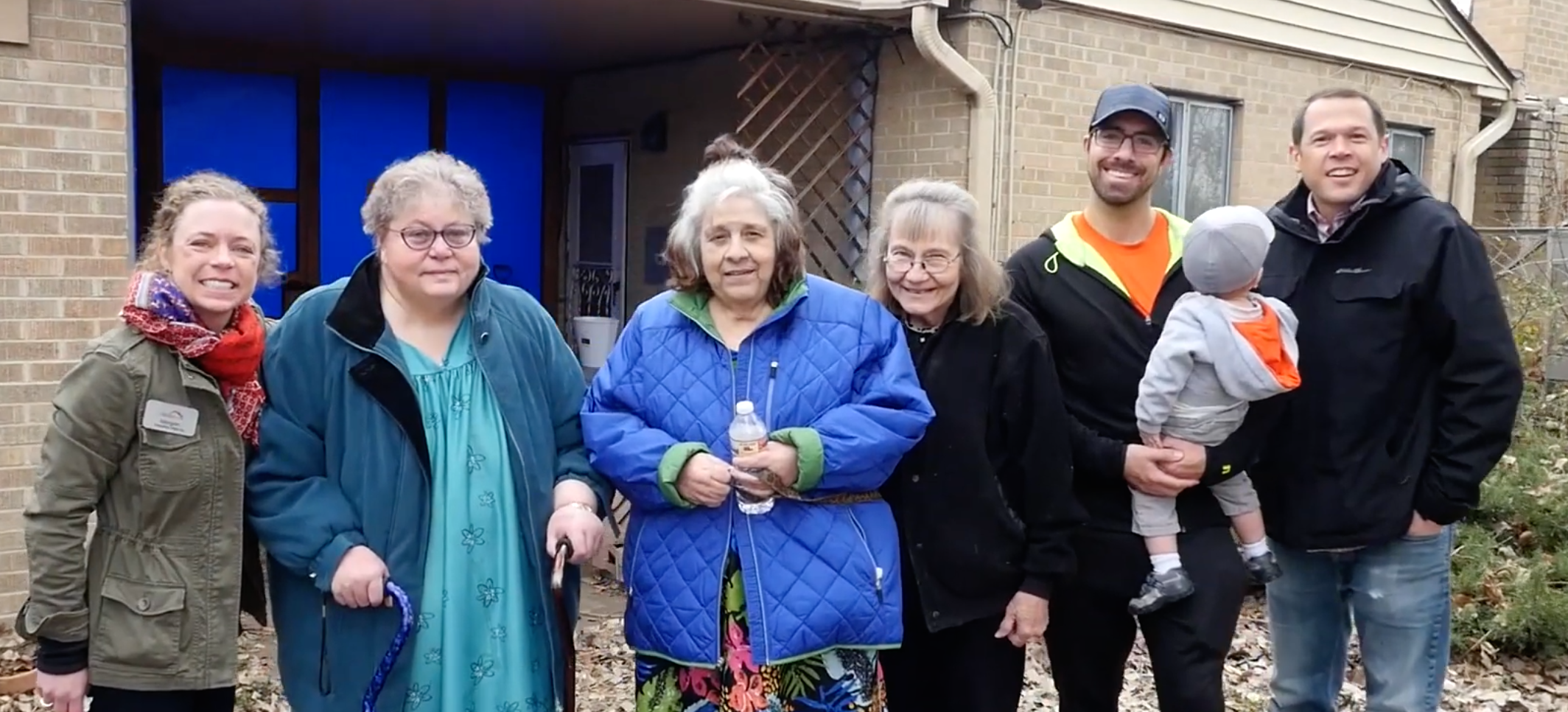
So many thanks are in order! Trish with Stories not Forgotten put together a beautiful video that captured the months of hard work that went into making sure these two wonderful women had a life of dignity that they deserve. We are so honored to be a part of their journey.

We couldn't have been as successful in this transition without the help of The Space Agency, tackling the sale of Kay's home as well as the high level of caregiving support provided by Touching Hearts.

Lastly, our amazing Morgan Jenkins, who went above and beyond to ensure Pam and Kay had a safe and successful move to their new home.


WHY GETTING A COPY OF MEDICAL RECORDS IMPROVES SENIOR HEALTH

VA-Claims-Medical-Records-VLB-AS.jpg

This is great article from Daily Caring. Such a practical thing to do but has multiple benefits for your own health or that of a loved one. 

Knowledge is power, especially when you’re caring for someone’s health.

If you don’t know what happened with your older adult’s medical care in the past, it can be more difficult, time consuming, or expensive to get them the best care now and in the future.

Gathering copies of your older adult’s health records means you’ll have the key facts about their medical conditions at your fingertips and will be able to share them with medical professionals as needed.

Here are 6 reasons why it’s a good idea to get a copy of your older adult’s health records and how it improves their health.


1. Get a better understanding of their health history
For most adults, a lifetime of health records are spread across multiple doctors, hospitals, and healthcare facilities.

It’s important to gather as many of your older adult’s health records as possible and keep it organized. The purpose isn’t just to have them, but so you can get a better understanding of their health history.

For example, your older adult could have had surgeries or significant medical treatments in the past that you’re not aware of. If you had that information, it could help you make care decisions or help their doctor better treat current conditions.
 

2. Find and correct errors
Unfortunately, medical records often contain mistakes. Having a copy of your older adult’s records means that you can find and correct any significant errors.

Then, when those records are being shared between doctors, you’ll know that they’re getting accurate information.
 

3. Have a clear understanding of current treatments
The information and instructions that doctors give during an appointment can be complex and take time to understand.

Having a copy of the record gives you something to review at home and compare your own notes against to make sure you heard and understood everything.

And if anything is unclear, you can follow up with the doctor’s office right away.


4. Have a complete medication list
If your older adult has multiple doctors, it can be tough to keep track of all the medications they’ve been prescribed.

Having their medical records means that you can put together a comprehensive list of their medications, prescribing doctors, when each was started, and what health condition each one treats.

Then, anytime your older adult has a doctor’s appointment, you can bring the complete list of medications for the doctor to review.


5. Review and track lab results
Lab tests provide a lot of useful information about your older adult’s health.

If you’re able to keep an eye on lab tests over time, you can see if your older adult’s health is staying steady, improving, or declining.

Plus, if their doctor didn’t go over all the results with you, now you’ll have a chance to mark the items you have questions or concerns about so you’ll be able to ask during the next appointment.

Also, you can usually request lab test results directly from the lab, so you don’t have to go through the doctor’s office to get them.

 
6. Provide better information during an emergency
In an emergency, having a copy of your older adult’s health records in your hospital essentials kit can give medical professionals the information they need to better treat them.

Plus, you’ll be confident of the facts when sharing basic information like height, weight, allergies, and medications.

Having the records available for reference might even cut down on the number of tests that are needed and can provide a baseline for comparison against current tests.

For example, having past EKGs on hand can be very helpful when doctors are treating someone for an emergency related to their heart.


To read original article please visit:

https://dailycaring.com/6-reasons-why-getting-a-copy-of-medical-records-improves-senior-health/?utm_source=DailyCaring&utm_campaign=ae2105a324-DC_Email_2019-01-15&utm_medium=email&utm_term=0_57c250b62e-ae2105a324-123200633
Tour at Cherry Hills Assisted Living & Memory Care

20190123_113548_HDR (1).jpg

What a great way to spend the afternoon on a snowy Colorado day.

As you can see from the candid photos I took during my tour, there are incredible views of the Park and Nature. Lots of natural light, thanks to the floor to ceiling windows.

That salt water fish tank in memory care is stunning. Both Memory Care and Assisted Living Apartments have kitchenettes, walk-in showers and lovely finishes. 

And that salon...gorgeous! 

Thank You Maury. You were a lovely Host!

https://assistedlivingcherryhills.com

Kristi's recent Success Story

17512-an-elderly-woman-washing-produce-pv.jpg

Thank you PHP and Kalee
with Simply Denver Homes!

At Maintain Me, we recognize the difficulty in acknowledging increased care needs.  We also do our best to support our clients in remaining as independent and safe as possible. Sometimes we have clients that truly need a higher level of care.  We also have clients who are in need of some guidance to their next move.  We are always here to lend a listening ear!

May came to me after having a discussion with her primary care provider.  She had identified some different needs and with the expertise of her provider, they came to the conclusion she and her sister needed more support.  

After reaching out to May and discussing her needs and wants further, May decided she wanted to remain independent in all areas and could continue her care regime for her loved one.  I was there to empower her in this decision and also provide support for future planning if she ever changed her mind.

She ended up not pursuing a transition through Maintain Me, but I was able to successfully get her the resources she needed to make her next move.  With the guidance of her heart and the support of her realtor, I am happy to report she has moved into her new, comfortable apartment and is feeling at ease!

As always, thank you to our wonderful community for allowing Maintain Me to help your clients along this journey!


Kristi Yakel, LSW
Case Manager
 Maintain Me
 

Federally Funded Companions Keep Seniors Connected To Their Neighbors

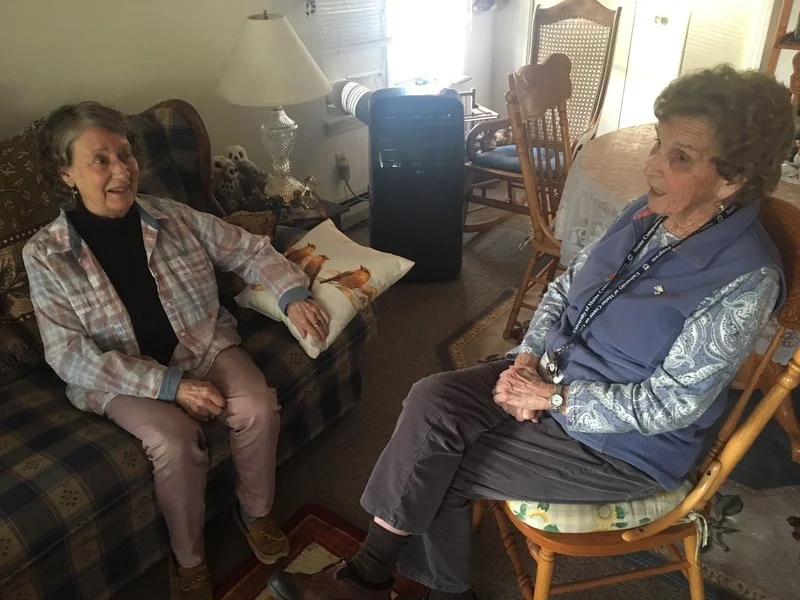
Client Wanetta Nurse (left) and senior companion Kitty Gee chat about topics like family, the good old days, and men.

Client Wanetta Nurse (left) and senior companion Kitty Gee chat about topics like family, the good old days, and men.

Isolation is an issue for many seniors, especially in rural places. It can lead to loneliness, which many experts consider a serious public health issue.

That's where Kitty Gee comes in.

Gee, a spry 87-year-old lives in western Maine, which is known for having picturesque rural mountain landscapes and an aging population. Five years ago, she decided to join a federal grant program that combats senior loneliness the old fashioned way: by sending visitors door to door.

The Senior Companions program has operated for decades in nearly every state, connecting isolated seniors to a friendly visitor every week. To qualify as a senior companion, volunteers must be at least 55 years old and serve between 15 and 40 hours a week.

The program is popular in Gee's home state, where the population is projected to have more senior citizens than young people by 2020. Around 600 seniors receive the service in Maine, and more than 300 are on the waitlist. As a senior companion, Gee makes house calls to seven clients each week — collectively totaling to around 25 hours.

She gets a federal stipend of $2.65 an hour, but also gains something priceless from the visits: a purpose. She decided to join the program after her husband died, and she needed something meaningful to invest her time.

"So I said, this will get me out among people, I'll have someone to talk to, and maybe I'll do some good," Gee told Maine Public Radio.


One of the clients she visits is 74-year-old Wanetta Nurse, who lives in Farmington, Maine. Though Nurse is 13 years Gee's junior, she has health issues that make it hard for her to walk, or even to pursue former hobbies like knitting and sewing.

In a recent visit, Gee greeted Nurse, saying, "How's my best girl today? You doin' good, eh? Looking pretty as always."

They've known each other for two years. Quickly the conversation turns to upbeat topics: family, the good old old days, and men.

"I've been trying to find a dancing partner. Hard to find," Gee tells Nurse. "Because ya know, people our age, they don't want to do much, ya know? And you and I, we're ready to roll. We want to get moving."

These visits give Nurse something to look forward to, and someone with whom she can laugh.

"Sometimes she's laughing so hard," Nurse said. "It's just so nice to see someone laughing. And to be included in that too. It means a lot."


This type of connection is essential for the state's aging population, said Kerry Faria, a community services specialist at the local non-profit Seniors Plus, which partners with the University of Maine to implement the Senior Companion program.

"Many times people will end up isolating themselves because their friends are dying around them. Their family, maybe their siblings have died off," Faria said. "They may be the only one left out of their generation. So they just find themselves kind of alone."

As Maine's population ages, demand is likely to increase, Faria said, but the waitlist isn't likely to shrink because the program's funding is capped. The program is always on the lookout for new volunteers, particularly men.


Bud Houghton, a former logger from Carthage, Maine, jumped at the chance to become a Senior Companion when he retired. Now 66 years old, Houghton had started volunteering in a different program when he was 40. The first program he volunteered with helped seniors apply for fuel assistance, and gave him an appreciation for working with seniors.

"I love the older people. They need that friendship," he said. "They need that companionship. You are their ticket to the outside world."

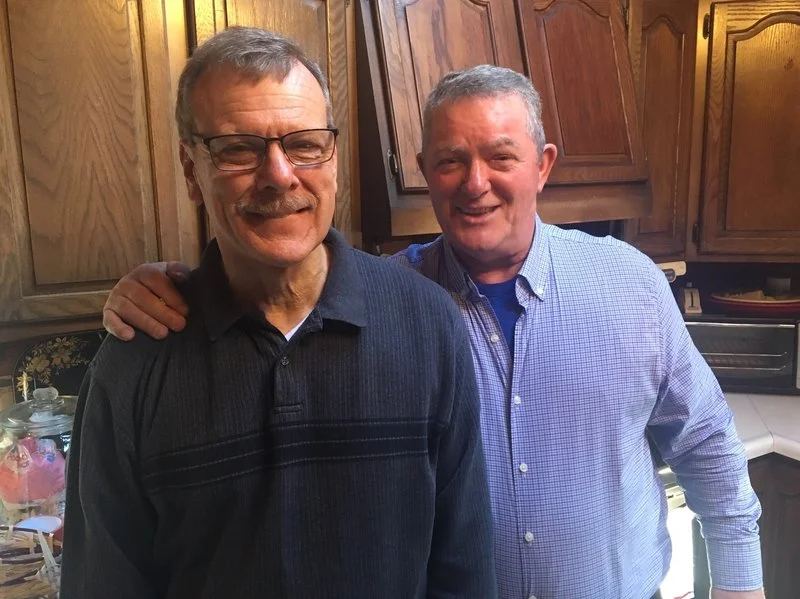
Houghton likes to take one of his clients, 61-year-old Bill Gates, out on drives to scenic outlooks. Gates has dementia. Houghton's visits help give Gate's wife some respite while also providing companionship.

It's not always easy to be a companion, Gates said. He's witnessed clients deteriorate. Some have passed away. But these relationships, he said, are deeper than his other friendships.

"It changes you. You end up doing things for other people," he said. "It's not you that's important. It's their well-being that's important."

As the pair winds along the roads of western Maine, they pass snow-covered trees, then tree-covered mountains. Gates starts to hum a familiar tune — "Silent Night." The humming, backed by the low rumble of the car, sounds peaceful, even haunting, but not lonely.

NPR's Amanda Morris produced this story for Digital.

January 20, 2019
Heard on Weekend Edition Sunday
https://www.npr.org/2019/01/20/686980905/federally-funded-companions-keep-seniors-connected-to-their-neighbors?utm_source=npr_newsletter&utm_medium=email&utm_content=20190125&utm_campaign=npr_email_a_friend&utm_term=storyshare

Senior Companion Bud Houghton (right) visits his client Bill Gates to take him out for a drive.

Senior Companion Bud Houghton (right) visits his client Bill Gates to take him out for a drive.

Greater Denver- Placement & Referral Alliance Kick-off Meeting

unnamed.jpg

Maintain Me is so happy to be part of NPRA!!!

 The kick-off meeting for the Greater Denver Chapter will be this February. We're excited to learn more about the regulations and how it effects placement agencies and providers of independent, assisted living and memory care.

The GDPRA will provide education, share best practices and promote ethical and professional responsibility for Senior Placement & Referral companies while protecting older adults, their families and the communities we serve. The GDPRA is a chapter of the National Placement & Referral Alliance (NPRA).

Want to learn more?
https://npralliance.org/our-mission/

Morgan's recent Success Story

150303-nursinghomebadge-stock.jpg

When your Friends are Family

I got a call from a very concerned woman. She was helping her friend who had recently been hospitalized for over a month after a surgery to repair deep brain stimulator leads had actually caused a brain bleed. Not only was this gentleman facing a debilitating disease, Parkinson's, now he was forced to overcome the devastating effects of a stroke. 

This friend of my client had studied under him in her professional career, he was her mentor. And they had become very close over the years. Now she was his power of attorney, and was feeling hopeless and helpless, but trying not to show Tom how very worried she was. 

Thankfully, Tom's primary care physician knew about Maintain Me! 

Tom's doctor referred his power of attorney to me. 
I met with Tom, his dear friend, a home care provider, and yet another friend who stood strong at Tom's side. 

This meeting was emotional. Tom frankly said he was ready to sell his home and move to assisted living. He was ready, even though he knew it was hard for his closest "family members" to hear. Tom no longer wanted to wait long hours in between visits. He could not continue to scoot around his home in his office chair on bad days when he legs were too weak to walk. He wanted to move to place where help was always there, and his friends could visit for laughs and jokes--not just trying to make sure his "basic needs" were met. 

Tom has the best sense of humor! He used laughter and humor to pull through adversity. He was grateful to be alive after his stroke, and felt that the best way for him to get back to his photography, cooking, and robust social life was to get more care. 

We found a beautiful home that Tom felt really good about. It was a move made with great strength and dignity, and I feel blessed to have been part of Tom's life during this new chapter. 


Morgan Leigh Jenkins, MA
Transition Director

Alumia Institute- Grand Opening!

20190117_085403.jpg

Julie was at the Grand Opening of Alumia Institute last night. What an amazing place! 

What is the Alumia Institute?

Alumia Institute brings current research and best practices together to create a brain-centered experience in a social setting for people living with the early stages of dementia. The Alumia Institute campus is a place for learning, growth, and interaction. We provide art, music, nutrition, movement and brain-training activities that attend to the whole person while stimulating cognitive function.

It was founded on the research-supported belief that those in the early stages of dementia can challenge the pace of cognitive decline. Every journey with dementia is different. At Alumia, the journey is guided by the most current research and science and is shared by people who understand.

Alumia Institute
9800 East Geddes Ave, Ste 50
Englewood, Colorado 80112


To learn more about their approach as well as enrollment visit:
https://alumiainstitute.com/
 

Monthly Team Leadership Meeting @ Boyer's

Chelsea & Morgan meet monthly to hash out new ideas for the company.

Chelsea & Morgan meet monthly to hash out new ideas for the company.

Many thanks to Boyer's Coffee for giving us a home away from home for team meetings. The monthly leadership meetings would be far less productive without a Boyer's Buzz!

2019011595112850.jpg

2019011595112944.jpg

Customers Are Unhappy About Cuts To SilverSneakers Fitness Program

silver_sneakers_main.jpg

A business decision by UnitedHealthcare, the nation's largest health insurance carrier, to drop a popular fitness benefit has upset many people covered by the company's Medicare plans.

John Garland Graves was taken aback when he walked into his McKinleyville, Calif., gym in October and learned that his SilverSneakers membership was being canceled.

Since 2014, Graves, 69, has enjoyed free access to the gym through SilverSneakers, the nation's best-known fitness program for seniors. He was disturbed by the news, as are many other people who have recently learned they're losing this benefit.

A controversial business decision by UnitedHealthcare, the nation's largest health insurance carrier, is causing the disruption. As of Jan. 1, the company is dropping SilverSneakers — an optional benefit — for 1.2 million customers with Medicare Advantage plans in 11 states (California, Connecticut, Illinois, Indiana, Iowa, Kansas, Missouri, Nebraska, Nevada, North Carolina and Utah) as well as 1.3 million customers with Medicare supplemental (Medigap) insurance in nine states (Arizona, California, Connecticut, Illinois, Indiana, North Carolina, Ohio, Utah and Wisconsin).

Graves, who works out four to five days a week and has a UnitedHealthcare Medigap policy, decided to seek coverage elsewhere after the company raised his policy's rates and eliminated SilverSneakers in California. He has signed up for a new policy with Blue Shield of California.

Starting next year, UnitedHealthcare will offer members a package of fitness and wellness benefits instead of paying to use SilverSneakers — a move that will give the company more control over its benefits and may save it money.

Seniors with UnitedHealthcare Medicare supplemental policies will get 50 percent off memberships at thousands of gyms across the country, telephone access to wellness coaches and access to various online communities and health-related resources.

Those with Medicare Advantage policies can join Renew Active, UnitedHealthcare's fitness program, with a network of more than 7,000 sites, at no cost, and qualify for an evaluation from a personal trainer and an online brain-training program, among other services.

Steve Warner, who leads UnitedHealthcare's Medicare Advantage product team, explained the company's move by noting that over 90 percent of policyholders who are eligible for SilverSneakers "never step foot in a gym" or use this benefit.

UnitedHealthcare wants to reach "a broader portion of our membership" with a "wider variety of fitness resources," he said, noting that the company's shift away from SilverSneakers began last year and has accelerated this year.


Lots Of Seniors Are Overweight, But Few Use Free Counseling For It

Altogether, more than 5 million customers have been affected. But the company is making market-by-market decisions, and nearly 675,000 UnitedHealthcare Medigap policyholders and 1.9 million UnitedHealthcare Medicare Advantage plan members will retain access to SilverSneakers in 2019.

"I think it's a smart move," said Connie Holt, an independent broker with Goldsum Insurance Solutions of Pleasant Hill, Calif.

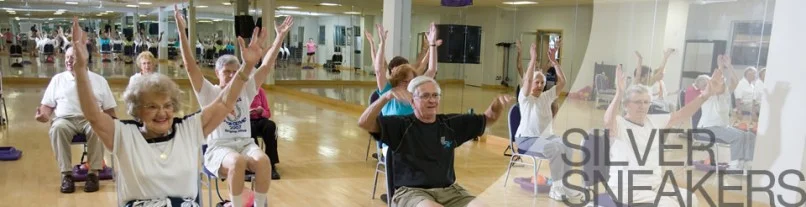
But many of the company's customers aren't happy that SilverSneakers, which offers group classes tailored to seniors in addition to gym access at 15,000 sites, is disappearing. And confusion about alternatives is widespread.

It's one of the "top topics" that seniors have been raising over the past few months when they call Ohio's Senior Health Insurance Information Program, said Chris Reeg, the OSHIIP program director.

Michael Chanak Jr., 69, of Wadsworth, Ohio, had problems getting through to UnitedHealthcare's customer relations department several times when he called with questions — a common complaint. "The way this is being implemented is a train wreck," said Chanak, who has a UnitedHealthcare Medicare supplemental policy and spends an hour every day exercising at his gym.

People are "extremely upset," wrote Margaret Lee of Arroyo Grande, Calif., in an email. "That's about the only topic of conversation at my water exercise class!"

AARP has also become a target of anger because it endorses UnitedHealthcare's Medigap and Medicare Advantage insurance policies — an arrangement that yields substantial royalties for the organization.

In an email, Mark Bagley, a spokesman for the organization, said "[UnitedHealthcare], not AARP, operates these plans and determines the benefits."

"I will be dropping my AARP membership when it is time to renew," wrote Shelley Holbrook, 67, of Yorba Linda, Calif., a UnitedHealthcare Medigap policyholder, in an email exchange about the loss of SilverSneakers. "I am a Parkinson's patient who has been prescribed this type of exercise program," she explained. "This program is under the guidance of certified instructors that make sure the exercise routines are performed correctly. ... An ordinary gym membership provides no instruction on how to use the equipment safely for seniors."

"A health coach is not what I need," Holbrook continued. "I have used the health coaches before, and have found them to be totally worthless."

For policyholders like Holbrook, the situation is complicated by another factor: Federal laws don't ensure that seniors can switch Medicare supplemental insurance plans without undergoing new medical evaluations after an initial "guarantee issue" period. (This period occurs six months following a person's enrollment in Medicare. Changes are allowed under a few specific circumstances and by laws in a few states.)

If seniors can meet medical standards, they'll find SilverSneakers available from other insurance operators. In 2019, Tivity Health is offering the program through more than 65 health plans covering more than 15 million older adults and introducing a new digital platform that emphasizes its social benefits: SilverSneakers Connect.

"There are people we've learned who are alone but don't want to go to the gym," and the new platform can help them connect with each other as well as activities in their communities, said Donato Tramuto, Tivity Health's CEO. Recent research suggests that SilverSneakers may help reduce isolation and loneliness in seniors who go to classes and form new relationships, he noted.

Whether UnitedHealthcare's health plans will be less appealing because of the shift away from SilverSneakers is yet to be determined. Several years ago, Humana, another giant insurer, also began reducing the number of plans that offered SilverSneakers, but it faced a backlash from members and sales representatives. "The membership perceives [SilverSneakers] as a valuable benefit despite the fact that not everyone uses it," said George Renaudin, Humana's senior vice president of Medicare.

Humana subsequently reversed course and is now making SilverSneakers broadly available to about 3.5 million Medicare Advantage and Medigap policyholders.

Ray Liss, who retired seven years ago, just changed over from UnitedHealthcare to a Humana Medicare supplemental policy with his wife. The loss of SilverSneakers precipitated the switch, which has an unexpected benefit: The couple will save almost $60 a month next year on their new policy.

In an email, Liss, who declined to say where he lives, was philosophical about the value of exploring his options, writing, "I was pretty mad at the time, but it worked out for the best."


See the original article at:
https://www.npr.org/sections/health-shots/2018/12/04/673249571/unitedhealthcare-customers-are-unhappy-about-cuts-to-silversneakers-fitness-prog?utm_source=npr_newsletter&utm_medium=email&utm_content=20190101&utm_campaign=npr_email_a_friend&utm_term=storyshare