Take and/or SHARE the survey about Coloradans 50+, and work

changingnarrative-01.jpg

We know the post pandemic economy will look different. Many of us age 50+ were already facing the challenge of ageism in the workplace before the onset of COVID-19.

As we enter the post COVID-19 economy, we want to understand:
• What your current work or job-seeking situation is, and what you would like it to be
• Challenges you’ve encountered in the workplace and when applying for jobs
• The strengths of older people in the workforce
• The kind of programs and training that might help all of us navigate this new world


So, if you are age 50+ in Colorado, can we count on you to take this less than 8-minute survey? It’s completely anonymous and you can enter to win one of five $100 gift cards.

You’ll be helping all Coloradans age 50+ for whom continued work is important—whether for meaning or money, or for that social connection we’ve all discovered is so important in this time.

The survey results will be used to inform state officials, county decision-makers, nonprofit organizations, and employers who are beginning to rehire as the state opens up. The goal is to help design policies and programs that best include older workers.
 

How to Clean and Disinfect Your Home

AARP Cleaning Guide.JPG

Learn the difference between cleaning and disinfecting, which household products to use, and which parts of your home to focus on.

We’ve heard a lot about the importance of wiping down surfaces in our homes during the pandemic, but how can we be sure we’re doing it right?

AARP put together a handy home cleaning guide with recommendations from the Centers for Disease Control and Prevention (CDC) to make it easier.

DOWNLOAD CLEANING GUIDE

Letters Against Isolation: Send Self-Isolating Seniors Letters to Brighten Their Days!

th (1).jpg

Two sisters wanted to lift lonely seniors’ spirits. Their organization has sent 14,000 letters.

Shreya and Saffron Patel usually FaceTime their grandparents in England every weekend, but during the novel coronavirus pandemic, they have typically reached out each day. Their grandmother on their mom’s side hasn’t left her apartment in nearly four months. She lives alone and can no longer socialize at the gym. Some of her younger friends have stopped by, and she leans out her kitchen window to chat. One friend sends handwritten letters.

When the Patel sisters, who live in Boston, spoke to their grandmother, they noticed her mood improve. She texted them about the cards and showed them to her teenage granddaughters during their video calls.

“We wanted to share that joy she was feeling with other seniors,” said Saffron, a 16-year-old who recently finished 10th grade.

They started Letters Against Isolation in early April with a plan to send cards to seniors at care centers, where residents have lost in-person contact with their family and friends because of the coronavirus. Shreya, 18, who will begin her freshman year at Washington University in St. Louis this fall, reached out to a few local nursing homes, expecting maybe one to respond and ask for 10 cards. Instead, several agreed and hoped to receive a combined 200 cards.

“We can't do that on our own,” Shreya said. “We can't do that on our kitchen table.”


The sisters reached out to others asking for help. As the network of volunteers continued to grow through the spring, so did the ability to connect with seniors. The organization has sent more than 14,000 cards and has partnered with 26 care centers across the country. It has become a sophisticated and well-organized operation, with about 1,400 volunteers around the world writing letters.

Early on, Shreya researched how people find volunteer work. She posted about Letters Against Isolation on a few volunteer boards and in a letter-writing forum on Reddit. About a week after the sisters began, the website had a sudden uptick in traffic and hundreds of people signed up. The form on the organization’s website asks how volunteers heard about this opportunity. Many referenced a Country Living article.

The sisters didn’t know a news story about them existed, so Saffron began searching. Nearly a month before Saffron’s school newspaper wrote about the letter-writing organization, Country Living published a list of five ways to volunteer virtually during the pandemic. The story included opportunities such as transcribing historical documents for the Smithsonian and helping the Library of Congress organize its digital archives. The article also explained Letters Against Isolation’s mission in two sentences and linked to the website.

With the base of volunteers growing each week, residents of every U.S. state except North Dakota have participated. Volunteers from 12 other countries, including Australia and Pakistan, have sent letters to these self-isolating seniors. Companies such as United Airlines and Pepsi have worked with Letters Against Isolation for internal volunteer events.

“You see all this stuff on the news and you want to do something,” Shreya said. “I think that’s why we had so many people sign up and say: ‘Yes, this is how I’m going to help. This is how I’m going to make a difference right now.’”

Shreya initially responded to hundreds of emails each day and matched volunteers to care centers. One week, the sisters assigned a group to a nursing home that had asked for about 40 cards. The group sent 400 letters, “so we decided we needed a better system,” Saffron said, laughing.

Saffron streamlined the process with a sign-up form on their website. Volunteers receive an automatic response with details about how it works. They gain access to a spreadsheet where they log the letters they send each week. A nursing home may receive 20 cards from one group and another 10 from a different family, but now the sisters can ensure the care center receives the correct number.

Volunteers choose the center to which they would like to send letters, so they can pick one nearby or in their home states. Some have even recommended the organization partner with facilities where their family members live.


Saffron keeps a blog on the website to give volunteers inspiration for their letters. She offers ideas for what they could include: Describe how the weather is changing in your town, or make a list of joyful moments you’ve had lately and ask the recipient to also reflect on recent days. Saffron interviews some of the seniors, then writes about them and their reaction to the letters.

“It's just lovely to talk with them and learn about their life story,” Saffron said.

The sisters still write a few letters and send a batch about once per month. But with the growth of their organization, their work has mostly focused on communicating with volunteers and care centers while keeping the system running smoothly.

They didn’t expect this project, briefly a two-person venture, to expand so much, but they see its future stretching beyond the pandemic. The coronavirus helped the Patels better understand the problem of senior loneliness, but they know that even after its risks have diminished, there will be residents at care centers across the country who would benefit from a cheerful letter.

“I think it’s still important to tell seniors that we’re thinking of them,” Saffron said, “and someone cares about them.”

To find out how to participate please visit their website:
https://www.lettersagainstisolation.com/

10 Myths About the American Flag

flag.jpg

Don't believe everything you've heard about the Stars and Stripes

The American flag has evolved over time along with nation. The first official red, white and blue flag bearing 13 stars and 13 stripes debuted in 1777. Today's familiar 50-star flag dates back to 1960, the year after Alaska and Hawaii became states. Legends and misconceptions about the flag have also evolved over time. Here's a closer look at 10 myths about the American flag and the truth behind each of them.


Myth #1: Betsy Ross created the first American flag
The familiar story of George Washington walking into a shop and asking Betsy Ross to sew a flag originated with William Canby, a grandson of Ross, said Peter Ansoff, president of the North American Vexillological Association, a group devoted to the study of flags. Canby presented his tale with little supporting evidence to the Pennsylvania Historical Society in 1870, nearly a century after the original flag was created. He claimed Ross told him the story right before her death in 1836, when he would have been around 11 years old.
"Obviously, he was still a youngster at the time, and he was writing this much later than that,” Ansoff said. “There are many discrepancies in the story — some things that just don't make sense."

Since Washington was out in the field commanding the army, for example, he didn't spend much time in Philadelphia, where Ross’ upholstery shop was located. Additionally, flags were first made not for ground troops but for naval forces, which Washington had little to do with, Ansoff said. The true creator of the first American flag is likely lost to history.

Myth #2: The flag has always had stars and stripes
America's earliest flags did not have stars and stripes. A flag used in 1775, for example, did have stripes, but it displayed the British Union Jack crosses in the canton, the top left corner of the flag that's also known as the union. The primary use of a national flag at that time was for naval ships to be able to recognize each other.

Congress didn't adopt the flag with 13 stars and 13 stripes as the official U.S. flag until 1777.

Myth #3: Americans have always flown the flag
Prior to the Civil War, flags were really only flown in an official capacity on ships, forts and government buildings. “In the antebellum period, if a citizen had flown his flag on his house or carriage, people would have thought that was strange. Why is he doing that? He's not the government,” Ansoff said.

The outbreak of war in 1861 quickly changed Americans’ attitudes about displaying the flag.

"At the beginning of the Civil War there was an outburst of patriotism,” Ansoff said, “and very soon, you saw people flying flags everywhere to show their support for the Union cause."

Myth #4: Red, white and blue have official meanings
The colors of the flag were not assigned any official meaning when the first flag was adopted in 1777. The traditional meanings assigned to the colors may have arisen five years later, in 1782, when Charles Thompson, the secretary of the Continental Congress, waxed poetic about the colors in the Great Seal of the United States, which he helped design. Thompson described the red in the seal as representing hardiness and valor; the white, purity and innocence; and the blue, vigilance, perseverance and justice.

As for the origin of the red-white-and-blue color scheme, it's likely no coincidence that the British flag bore the same three colors.

Myth #5: It's against the law to burn the American flag
In the landmark case Texas v. Johnson in 1989, the Supreme Court ruled that desecrating the American flag is a form of speech protected by the First Amendment. Defendant Gregory Lee Johnson had burned a flag in an act of protest at the 1984 Republican National Convention in Dallas. Prior to that ruling it was, indeed, illegal to burn the flag.

Subsequent efforts on the judicial and legislative fronts to make flag burning illegal again have failed.

Myth #6: It's illegal to wear clothing bearing the flag
The Flag Code is a set of flag etiquette guidelines developed in 1923 by the American Legion and other organizations. It was adopted as law by Congress in 1942. However, the Flag Code does not have an enforcement mechanism. There are no flag police.

Wearing clothing made from an actual American flag would be a breach of etiquette, according to the American Legion, but it said you wouldn't be breaking the law by wearing clothing bearing a flag design: “People are simply expressing their patriotism and love of country by wearing an article of clothing that happens to be red, white, and blue with stars and stripes. There is nothing illegal about the wearing or use of these items."

Myth #7: A flag that touches the ground must be destroyed
According to the Flag Code, the American flag should never touch anything beneath it, including the ground, the floor or the water. “People have taken that to mean that if it ever does that, then it should be destroyed,” said Jeff Hendricks, deputy director of Americanism at the American Legion.

However, that's not necessarily the case. Flags should be destroyed only when they are no longer in good enough condition to be displayed. If touching the ground didn't render the flag unfit for display, then it shouldn't be destroyed. Once a flag is unfit for display, burning it is the preferred method of destruction.

Myth #8: The flag should never be flown at night
Although it's customary to display the American flag from sunrise to sunset, the flag can be displayed 24 hours a day as long as it is illuminated through the night, according to the Flag Code.

"What we've taken that to mean is that it must have sufficient light that the average passerby can readily identify it as the flag of the United States,” Hendricks said.

Myth #9: Only a veteran's coffin can be draped with the American flag
"Nowhere in [the Flag Code] does it say that the flag may only cover the casket of a veteran,” said Hendricks, noting that the myth may stem from the fact that the Department of Veterans Affairs provides flags for the services of veterans and active-duty service members. “However, there's nothing in the language of the Flag Code that would prevent anyone else from having a flag that covers their casket."

When a flag is used to cover a coffin, it should be placed with the union — the blue field with stars — at the head and over the left shoulder. The flag should not be lowered into the grave or allowed to touch the ground.

Myth #10: The flag must always be folded into a triangle for storage
Folding a flag into a triangle for storage, with only the blue union and stars visible, is part of tradition, said Hendricks, not a requirement of the Flag Code. Flags on a staff are properly stored in an entirely different manner that doesn't involve folding.

"Flags that are affixed to a staff are typically rolled around the staff and then a burlap case is placed over the flag and staff,” he said. “So, at that point, you can handle it like luggage. It's been properly stored."


Have a Happy & Safe Holiday!

Supporting people with Dementia in safe Social Media use

IMG_lmt0y8.jpg

Social media gives people more opportunities to connect and socialize, something that’s especially important for preventing senior isolation. But there are risks and challenges.

Laurel McLaughlin, Memory Specialist at Alzheimer's Association, explains why social media can be dangerous for people with Alzheimer’s or dementia and shares 4 tips to keep them safe while supporting their independence.

Social media provides connection, but has a dark side
Social media networks like Facebook, Twitter, and Instagram are an ever-increasing presence in our lives. They allow us to connect with those living far away, reconnect with old friends and distant relatives, and even make new friends through common interest groups.

While this ability to stay connected has so many benefits, there is also a dark side to social media sites. It’s challenging for anyone to protect themselves from the dangers of the internet, but especially tough for people who are living with Alzheimer’s or dementia.

It is unfortunately common for accounts to be hacked, data to be shared, and viruses spread. Also, it’s common to see an overwhelming amount of upsetting or falsified news, since those stories spread rapidly on social media sites.


Seniors use social media to increase socialization and connection
Social media has the power to create community. According to a 2019 study by Pew Research Center, the percentage of people over age 65 who use Facebook more than doubled from 20% in 2012 to 46% in 2019. 

This is important because social media has the power to decrease isolation and increase connection for people who otherwise may not have many opportunities to socialize.

But now there’s an increasing need to make social media safer for everyone, especially people with Alzheimer’s, dementia, or other cognitive impairments.


Dementia and Social Media
As a person ages, so does their risk of developing some form of dementia or cognitive impairment.

On the internet, someone with dementia may be at a higher risk of falling for a scam, sharing private information, or viewing potentially upsetting information.

While supporting someone living with dementia, the goal is always to promote independence in every way possible, while also ensuring safety. But it can be challenging for any care partner to consistently monitor social media accounts. 

Difficulties include not knowing account passwords and not being able to track down all posts and interactions.So, how can we protect our loved ones with a memory impairment on the internet, while also allowing for socialization with true friends and family members? 


Here are 4 tips that may, at the very least, give family caregivers more insight into their loved one’s social media use.


1. Learn their passwords
Early on, talk with the person with dementia to see if they’re willing to share the account’s password. 

You might explain that you won’t interfere with their online activity and that having the password would allow you to help them in case they misplace their password or help them watch out for online fraudsters.

Then, if they’re willing to share it, keep the password stored in a safe offline location and use it to periodically check on their account.

2. Ensure that privacy settings are strong
Go through the account’s privacy settings and make sure that all settings are at their strongest, so that only accepted friends can see posted information.

3. Monitor their friend lists
Regularly check on their friends or accepted contacts list to keep tabs on any unrecognizable “friends.”

4. Connect with trusted friends and family
Identify a few trusted family members or friends who are also on the social media site and are aware of the dementia diagnosis and ask them to be an extra set of eyes. 

Often, a post or comment can be made and then be nearly impossible to find later. Having a few people looking out for unusual activity would increase the chances of seeing any unusual or suspicious activity.


*Also be sure to check out https://seniorplanet.org/ for local classes that are specially tailored to teach older adults safe online practices!


This article was published on DailyCaring.com
https://dailycaring.com/supporting-people-with-dementia-in-safe-social-media-use/?utm_source=DailyCaring&utm_campaign=1ec838d48e-DC_Email_2020-06-22&utm_medium=email&utm_term=0_57c250b62e-1ec838d48e-123200633
 

Gen Silent- Virtual Film Screening & Discussion

th (14).jpg

In honor of Pride month please join FCA for a special virtual screening of Gen Silent, followed by a discussion with the film's director Stu Maddux and Kiku Johnson, Executive Director of the Rainbow Community Center of Contra Costa County.

The generation that fought the hardest to come out, are going back into the closet to survive. Gen Silent, a critically acclaimed documentary, follows six LGBTQ seniors in Boston, MA, who struggle to safely navigate aging while LGBTQ. Oppression before Stonewall, modern prejudices, and life-long discrimination have left LGBTQ seniors afraid of seeking help and dangerously isolated.


Stu Maddux is an award winning producer and director of non-fiction media with international credits including PBS, Showtime, TLC, VH1, Spike, Logo, CMT and BBC. His work has been featured in The New York Times, The Atlantic, VICE and NPR’s Morning Edition among others. His honors include seven regional Emmy Awards as well as awards from film festivals on five continents. Maddux is an outspoken activist for the LGBTQ aging and LGBTQ history movements.


 June 30, 2020
1:00 PM - 3:00 PM PT

Location:
Online via Zoom

Registration URL: 
https://zoom.us/webinar/register/9015924200912/WN_r-k_flUiQxmKBXce4lImWg


Dear Friends:


June is Pride Month. FCA is honored to serve the LGBTQ community in the San Francisco Bay Area, and across the nation. As caregivers, LGBTQ individuals often face unique and daunting challenges. One of these, the fear of discrimination, abuse, and bullying in medical and long-term care settings, is featured in this month’s upcoming screening of Gen Silent.

FCA offers a number of resources for LGBTQ caregivers including fact sheets on 
special concerns for LGBTQ caregivers and legal issues as well as an online support group. This month we join with Americans of all walks of life to celebrate the contributions, struggles, and triumphs of the LGBTQ community.

Sincerely,


Calvin Hu
Education Coordinator
edprograms@caregiver.org

RainBow Logo.png

The Art of Stone Balancing- FREE online event: July 6th

20200221_102632-960x540.jpg

Everyone could use a little Zen in their lives right now. Senior Planet is hosting this FREE online event, so be sure to add it to your calendar then get out and collect some rocks!

The Art of Stone Balancing – Part 2
Lunch & Learn 

Date & Time

July 6 | 11:30am–1:00pm MDT


Location

Online

Description

Tom O’Dwyer, artist and SPCO member, will instruct us in the creation of four stone balances which we will produce while on the Zoom call!
Please listen to the RECORDING of Part 1 so you will be prepared for this workshop.

Handout:
The Art of Stone Balancing – Tom O’Dwyer

  1. Tower or True Balance

  2. Counter Balance

  3. Zig-Zag Balance

  4. Arch Balance

Supplies needed:
2 larger rocks a bit larger than your hands
2 rocks the size of your hand
6 to 8 small rocks (flat river rocks)
A handful of tiny rocks or shims
Foam pads or towels (for table/workstation protection)
Wood base (about 2 feet x 8 inches) a cutting board will work

Logistics:
Select a good workstation
You will need Wi-Fi & your computer, laptop, or tablet positioned so stones cannot fall on your device
Have your smartphone or camera at hand to photograph each of your creations but not close to your work area so the device will not be damaged

Click or tap to join this class by Zoom:
https://seniorplanet.zoom.us/j/165218752

OR

Call in by phone:
1-646-558-8656
Meeting ID: 165 218 752

Need help joining by Zoom? English instructions / Spanish instructions

Feedback Survey:
https://seniorplanet.org/survey/

Boulder County’s long-term care facility residents must celebrate Father’s Day at a distance

Driver Ted McArthur waves from his 1957 Chevy pickup truck during a car parade Saturday at The Bridge in Longmont.

Driver Ted McArthur waves from his 1957 Chevy pickup truck during a car parade Saturday at The Bridge in Longmont.

As Boulder County transitioned from its stay-at-home order to a safer-at-home order after May 8, many began to get some semblance of their normal lives back in wake of the coronavirus pandemic. Some residents were able to return to work, finally get a haircut or sit down at a table to eat a restaurant meal.

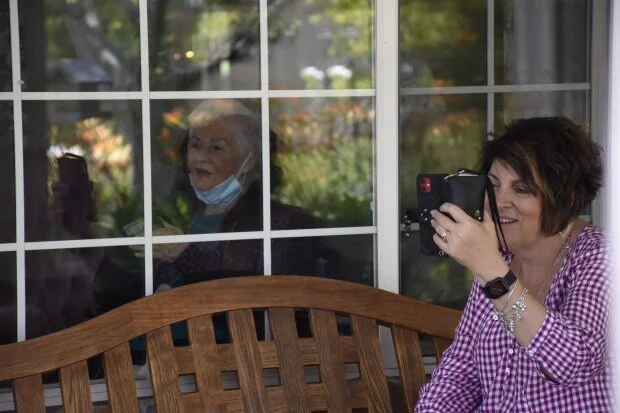
For people in long-term care however, the restrictions have remained in place. To keep them safe, many seniors, who are more vulnerable to serious illness from the disease, have remained isolated. With outside visitations too risky, many long-term care residents haven’t been able to hug their kids or grandkids, laugh face-to-face with friends outside the facility or eat a meal with someone else. With a spike in new cases seen in Boulder County within the last week, this Father’s Day is a reminder to family, residents and care workers that dangers of the virus remain prevalent. This year, instead of barbecues, large family gatherings and live music, dads in long-term care had to be recognized from a distance.

The Bridge at Longmont on Saturday was among the care facilities that wanted to do something special and safe for the holiday. That afternoon, in an early nod to Father’s Day, more than a dozen classic cars drove slow loops around the building on Pratt Street. The 39 seniors housed there were invited to peek from the safety of their windows and watch the vehicles drive by.

From her chair in the lobby Norma Arnold, a Bridge resident since November, caught sight of a white 1957 Chevy pickup truck. Sticking up from the bed of the truck was a sign that read, “U R on our minds and in our hearts.” The sentiment brought tears to Arnold’s eyes.

On the other side of the lobby window sat Arnold’s daughter, Debbi Gardner, who talked with her mom on the phone as the line of vehicles passed and drivers waved and smiled at residents.

“I think it’s amazing,” Gardner said of the parade. “This particular facility, they’re so caring. This put on a smile on their faces.”

Gardner drives once a week from Colorado Springs to see her mom through a window and chat over the phone. While Gardner said she’s glad she can still visit her mom, it’s not the same as meeting on the same side of the glass.

“It’s challenging,” Gardner said. “It’s hard because I know that she’s being protected, but you see them deteriorate because they’re not with their family.”

Shirley McNeff, the executive director of The Bridge, said normally the facility celebrates Father’s Day with a barbecue dinner and live entertainment. Residents and their families typically gather outside together under the facility’s west-side awning. This year, though, the care facility had to alter plans to keep residents safe from the coronavirus. McNeff assured that residents will still get their steak dinners, just delivered individually to their doors. McNeff said staff hoped the car parade brought some happiness to seniors.

“I think at this time, any interaction they are absolutely loving, because it’s been hard on everybody,” McNeff said.

Staff members at The Bridge are continuously thinking of new and safe ways to engage residents, such as hosting distanced exercise classes outside in the hallway with six people at a time. McNeff said the community has also stepped up to help. A mariachi band and church choir came and performed outside residents’ windows recently.

From a gleaming blue 1940s business coupe Saturday, Lonnie Garza, president of the Tri-Town Cruzers, said the car parade was the fourth since early May that he has participated in to benefit people in long-term care.

“I feel sad for the way seniors are (right now),” Garza said. “I want to do this to get a smile on their face.”

The Tri-Town Cruzers were joined in the parade Saturday by members of The Colorodans.

On Wednesday, Boulder County Public Health reported that 56 long-term care residents have died from the coronavirus. As of Saturday afternoon, a total of 71 deaths had been reported in Boulder County. Chana Goussetis, Boulder County Public Health spokesperson, said people whose fathers are over the age of 60 and who don’t live with their dads should be cautious if they choose to visit them in person.

“Take extra care to stay six feet away, wear a mask, and wash your hands if you plan to see him this Father’s Day,” Goussetis said.

Goussetis said last week that the increase in new cases poses a risk to those in long-term care.

“Although the precautions that each facility is taking are significant and aim to stop any opportunity for transmission, naturally the more people in the community with the virus, the more likely that the virus could be brought into a facility unknowingly,” Goussetis said in an earlier report.

Frasier, a long-term care facility on Ponca Place in Boulder, partnered with Pinkard Construction to create safe pods, where families and seniors can visit outside in three different tent structures divided by a plexiglass wall.

Julie Soltis, Frasier’s director of communications, said Friday that the pods are booked for Father’s Day.

“We have nine visits scheduled that day,” Soltis said. “That’s a lot of visits. The residents are enjoying them as much as the families.”

In neighboring Louisville, Balfour Senior Living staff are planning a Father’s Day car parade for Sunday.

Balfour resident Bill Reichenberg, a long-time car enthusiast, helped Nikole Bari, a Balfour life enrichment director, to track down contacts for the event.

From the safety of his residence in Balfour, Reichenberg on Friday afternoon said being stuck inside has been difficult.

“It’s awful,” Reichenberg said. “It’s sort of like being in prison.”

Reichenberg said he was looking forward to seeing the cars and his son, Scott Reichenberg, in the parade Sunday.

“I’m a car guy. I love every one of them. I wish I had a lot of them that I had sold,” Reichenberg said. “I’ve heard 100 or more cars (are participating Sunday) and that would be incredible.”

With the car parade in mind Sunday in Louisville, Bari said she hoped to take residents’ minds off the current situation.

“Hopefully they can just enjoy the moment as the cars cruise by,” Bari said. “It’s just really important right now to uplift their spirits as much as we can and hope that they can meet with family again other than through a window.”

Link to article written by KELSEY HAMMON
https://www.timescall.com/2020/06/20/boulder-countys-long-term-care-facility-residents-must-celebrate-fathers-day-at-a-distance/

Debbi Gardner, right, watches the car parade Saturday at The Bridge in Longmont with her mom, Norma Arnold. The mother and daughter have to visit through a window, due to the coronavirus pandemic. (Kelsey Hammon / Staff Writer)

Debbi Gardner, right, watches the car parade Saturday at The Bridge in Longmont with her mom, Norma Arnold. The mother and daughter have to visit through a window, due to the coronavirus pandemic. (Kelsey Hammon / Staff Writer)

Cheri Powers, lifestyle director at The Bridge, directs driver Lonnie Garza on Saturday during a safe-distanced car parade for Father’s Day. (Kelsey Hammon / Staff Writer)

Cheri Powers, lifestyle director at The Bridge, directs driver Lonnie Garza on Saturday during a safe-distanced car parade for Father’s Day. (Kelsey Hammon / Staff Writer)

Morgan Success Story: I feel like I am slowly drowning.

alzheimersblog-1024x585.jpg

I received a referral from a geriatric physician group that I work with frequently. They refer to me knowing that I have never told them no, even when things look dire or difficult.

This particular call was regarding a gentleman whose dementia symptoms were beginning to progress to aggression and violence directed at his wife,
his primary caregiver. 
This tragic reality can be a part of dementia, but this does not mean it is the person. It means the brain's damage has affected the central processing areas enough that acting out in frustration can lead to hitting, etc.


This lovely couple had been married 45 years, and his wife was clear, this is not my husband doing this. I assured her, you are correct.

In situations like this, the treatment is a combination of set and setting. This gentleman was trying to make his needs known, in this case, he wanted to go outside, and could not comprehend or process why it would not be safe: He could fall, he could become lost, he could be hit by a car. His family was telling him "no" that is all he knew, and it was frustrating him! Then he acted out. 

In a memory care setting, which is what was now needed, the staff are trained to redirect, they are trained to interpret the acting out as trying to make a need known, and they are a secured setting where they could allow him to safely exit into a yard that was equipped to keep him safe because it was secure. 

As a family member trying to do their best, they may or may not have these tools or even know where to find the answers. They may get frustrated as well, and have their own "acting out" moment of yelling or anger at the situation, and this only makes matters worse. No one is in the wrong in this situation! We are all just doing the best that we can. 

With my amazing community partners, we were able to find safe, affordable memory care within about 48 hours of receiving the referral. 

Incredible in this time of COVID and unknown! It would not have been possible without the technology to do a virtual assessment, the prompt support of the primary care physician, the willingness of the community to understand that the gentleman needed specialty care to address the behaviors and they were willing to give him the opportunity. 

With this referral, the wife was at the edge, she felt as though she might break. The next step after the call to primary care was to take her husband to the emergency room, she was worried about her own life and her dear husband. We were able to prevent her from losing her ground, keep this man out of the ER, and get them both the care they needed. 

Success. 

Morgan Leigh Jenkins
Transition Director 

(303) 847-6861
 Morgan@maintain-me.com

Decluttering and Downsizing: A Guide for Seniors and Their Loved Ones

downsize-image.png

Lexi Klinkenberg with Redfin real estate was kind enough to forward on a great article she put together to help guide you through the downsizing process.

Something that can be overwhelming and time consuming. Check out the great tips she has to offer!

There are all kinds of benefits to downsizing in your golden years — lower energy bills, a smaller space to clean and maintain, and the potential of moving closer to loved ones. It’s a wonderful way to open the door to the next stage of your life. Even so, decluttering and downsizing can be a difficult and sometimes painful experience for older adults. Saying goodbye to the home they’ve raised a family in doesn’t come easily.

This guide is designed to make the downsizing process as simple as possible for aging adults and their loved ones. It will help you prepare for the transition, as well as offer advice to loved ones on what they can do to help. Keep the lines of communication open, take it one step at a time, and don’t rush into anything before you’re ready.


Step One: Determine the Area and Size of the new Home

It’s important to establish exactly where your loved one is headed. Not only will it affect just how much they should (or must) declutter and downsize, it adds an exciting element to the process. So whether they want to move to Dallas, TX to live with loved ones, or downsize to a condo in Miami, instead of focusing on leaving their old home behind, your downsizing parent can look forward to the new one. 

Of course, where the older adult moves to will depend on any number of factors. Mobility and ability restrictions, caregiving needs, location of loved ones, and budget will all play a role. Your loved one’s preferences are also crucial to the equation and should be taken into consideration at each step. There will likely need to be compromises, especially if budget concerns are an issue, so be prepared to have multiple conversations to work out all the details. Keep in mind that the arrangements can look just about any way you want them to — many retirement communities and assisted living facilities offer personalized options to meet any need or comfort — so it’s important to make sure everyone feels comfortable with them.

There are five main options for seniors looking to downsize:

  • Buying a smaller house or condo

  • Renting a smaller home

  • Moving in with a loved one (adult child, sibling, etc.)

  • Moving into a retirement community

  • Entering assisted living

The sooner you discuss what decluttering and downsizing will actually look like, the more time everyone will have to evaluate all of the options. Don’t force the conversation if your loved one seems resistant to the idea; unless your aging parent or family member has had a recent medical or caregiving issue that could hinder their quality of life, there’s no need to rush into talking about it. Bring the topic up again at a later date, potentially with additional support from family or friends. It shouldn’t feel like an intervention or anyone trying to make decisions for your loved one, but a group of people who genuinely want to help figure out a positive solution to their living situation.


Step Two: Declutter and Organize

It’s amazing the number of things you can acquire over the course of a lifetime. From an endless array of dishes to closets full of linens to the many mementos and knickknacks of a life well-lived, addressing where all these items will go can be overwhelming. It’s also an incredibly emotional process for everyone involved. These aren’t just objects, they’re memories; they’re what’s made the house a home for all these years. It’s important to acknowledge and respect this loss. Go into the process prepared to part with plenty, but giving yourself room to keep the items that mean most.

The most straightforward way to sort through items is to ask yourself four questions about the item:

  • Do I need it or want it?

  • Does it have sentimental value?

  • Do I use it often?

  • Do I have another item that performs the same function?


Do I need it or want it?
You don’t have to throw away everything you could live without, but you should be pretty strict about your definition of need. If you have a bread maker that’s been sitting in the cabinet untouched for years, don’t feel like you “should” keep it just because it was a Hanukkah gift. Think realistically about the years ahead: will you use it more than a few times? Are you genuinely excited for the few times you’ll use it? Will it make an important difference in your life to hold onto the item? It’s okay to say yes, but it is also okay to decide you don’t need it. decluttering and downsizing is about simplifying, so make a decision and feel confident in sticking to it.


Does it have sentimental value?
The hardest items to part with will be the ones directly tied to beloved memories with your family and friends. Still, if you kept absolutely everything of sentimental value, decluttering and downsizing would be impossible. Use the packing and sorting process as a way to reflect and let go. As you and a loved one go through your things, talk about them and the memories they conjure up. 


Do I use this item often?
There are going to be some items you’re simply used to having around, but ultimately don’t use very much. Think about your day-to-day routine: which items do you use the most? When looking around your house, which objects have been merely functional décor? Additionally, consider whether where you’re going will have a valuable replacement — just because you’ve always used a traditional toaster doesn’t mean you can’t adapt to your daughter’s toaster oven, for instance. Continue to be realistic about the future, keeping in mind that there might be someone else who would get much more use out of the item than you might.


Do I have another item that performs the same function?
Whether it’s two blenders or a dozen winter coats, duplicate items are the easiest way to declutter and downsize. Choose the newest or best-functioning electronics, and a reasonable amount of more practical items like towels, blankets, outerwear, and other clothing. Use the opportunity to clean out your closet and embrace the opportunity to minimize. Hiring a senior move manager, professional organizer, or declutterer can make a world of difference during this process and make the transition much more simple. 


Step 3: Find new homes for the items you aren’t keeping

Moving expenses can become pricey. Yard sales are a great way to make some extra money to help fund the move, and a great way to find new homes for your things quickly. Choose a day that’s likely to be nice, even if it’s somewhat far in the future. Having your yard sale on a nice day is likely to draw in more customers who are looking for bargains. 

Donate any remaining items that did not sell during your yard sale. Many charities and organizations can even pick up boxes directly from your home. It can feel impersonal and somewhat distressing sometimes — even with a yard sale, your items tend to go to neighbors you’re familiar with — but it’s important to focus on the end result. Someone in need will truly benefit from your donation and appreciate it each and every day.


Step 4: Prepare for the move

After you have taken the time to declutter and get rid of unwanted items you can start to think about packing and making the move to your new home. Moving can be stressful and difficult. Hiring a senior move manager to assist you with this transition can be very beneficial. They can help make your move as stress-free as possible and will be there by your side throughout the entire process. 


Step 5: Say goodbye to the house

Just as aging adults have to say goodbye to their possessions, the time will come to say goodbye to the house, as well. It will be a difficult process, but one with plenty of love and support from family and friends.

The truth is, there’s not necessarily a right or wrong way to say goodbye to the family home. Discuss what will work best for your family in an open and honest setting; don’t feel ashamed if you’re having trouble. It’s vital that the entire family supports one another throughout the decluttering and downsizing process, so don’t be afraid to ask for or offer help.

However the goodbyes are said, make it a point to bid farewell. You’re closing a major, important chapter of your life. It’s OK to feel sad, even as if you’ve suffered a loss, but don’t lose sight of the exciting next step that lies ahead.


Step 6: Make the transition

No matter where you are headed, your new home won’t feel like home right away. Do what you can to bring in the most important items first, those that will make you feel especially comforted. Move-in day should be a family affair, even if you already have help from a senior move manager or movers. Any family member who is able to should stop by to help out, bring food and refreshments, troubleshoot issues, and simply make the occasion a happy one. Keep the mood as light and exciting as possible: focus on the fact that it’s a new beginning rather than an end.

You should check in on your loved ones regularly to discuss how things are going. You don’t have to stop by every day, but a nightly call for the first week or two can certainly make aging adults feel less lonely. It’s especially important if they’ve just moved to an assisted living facility or nursing home. Find the balance between hovering and checking-in, even rotating responsibility among family members.

Decluttering and downsizing is often one of the best choices an aging parent can make, but it’s their decision when and if they want to. Ease into the idea and keep the conversation ongoing. It will be painful, but the inevitable sting of leaving the family home should never stop anyone from simplified and happier living.


Published on June 16, 2020 by Lexi Klinkenberg


For the original link to Lexi's article visit
https://www.redfin.com/blog/seniors-guide-to-downsizing/
 

Friday, June 19, 2020 Lunch & Learn – Reverse Mortgage Myths

reversemortgage.jpg

Real Stories Behind The Loans
 12:00 PM – 1:00 PM *Virtual Zoom event

Confused about what a Reverse Mortgage is and whether or not it is a viable financial planning tool for yourself or your clients?  Join us as Don Opeka presents the basics of a Reverse Mortgage as well as explains how this one product may be the financial solution for borrowers in a wide variety of life situations.

Please RSVP to Amanda at 303-469-1254 or Amanda@OrionMortgage.net for a Zoom link


This seminar provides valuable information for professionals as well as prospective borrowers and their family / support system.  It has been approved as 1 hour of Continuing Education for Real Estate Agents as well as for Certified Senior Advisors.


Check out all the great FREE classes Senior Planet is offering!

Copy-of-Copy-of-DSC01387adj-1.jpg

We have featured Senior Planet before as an awesome company that enables older adults and people of all ages to come together and find ways to learn, work, create, and thrive in today’s digital age.

As it is still advised for older adults to stay home and limit contact as much as possible being able to use technology to connect, shop, and bank safely is more important than ever. Check out the lineup of classes offered by phone or online for June, and
they are all FREE!

JUNE 15 
Meeting the Challenges of Solo Aging – Lunch & Learn
Sara Zeff Geber, PhD will be with us to discuss the challenges faced by those over 60 who have no support person. Hosted by Senior Planet Colorado


JUNE 15
Online Shopping
Online shopping lets you buy products on the internet from your computer and have them shipped to your home or anywhere!

JUNE 15
Sending and Receiving Money with Zelle®
In this lecture, you’ll learn what P2P payments are and about Zelle, a P2P payment service that’s available in many online and mobile banking apps. Hosted by Senior Planet NYC

JUNE 16
iPhones – Lunch & Learn
You’ll learn about the latest iPhone, its features, and what to consider if you’re thinking of buying one. Hosted by Senior Planet Colorado

JUNE 17 
Job Search in the Digital Age – Lunch & Learn
This lecture will provide an overview of how to use social media in your job search, demonstrate digital job searching tools like LinkedIn, and offer tips and advice to job seekers. Hosted by Senior Planet Colorado

JUNE 17
“All Things Zoom” presented in collaboration with AARP
Learn how to use Zoom video conferencing software to chat with friends & family, and take virtual classes with Senior Planet!

JUNE 17
Shopping on Amazon
This hands-on workshop will provide a general introduction to shopping on the popular website Amazon.com.

JUNE 17 
Online Banking & Zelle®
In this interactive workshop, we’ll go over how to get the most out of online banking. Hosted by Senior Planet NYC

JUNE 18 
YouTube Science Tour – Lunch & Learn
We will explore fun science and technology channels. Hosted by Senior Planet Colorado

JUNE 18
Internet of Things: Wearables
From fitness trackers to smart glasses, wearable technology is here to stay!

JUNE 19
History of Senior Planet Colorado – Lunch & Learn
We will take a photo journey through the history of Senior Planet Colorado, from 2018 to the present. Hosted by Senior Planet Colorado


Visit https://seniorplanet.org/locations/colorado/events/ to sign up for classes and learn more about Senior Planet.


Does Medicare cover home health aide services?

5-truths-about-home-health-care.jpg

Medicare covers home health services. Depending on the circumstances, Part A or Part B provides coverage. However, beneficiaries must meet eligibility criteria.

Home health primarily involves helping a person receive care in their own home instead of the hospital when it is appropriate.

In many cases, home health costs less and is just as effective as care that a person may otherwise receive in a skilled nursing facility (SNF) or hospital.

For Medicare to pay for home healthcare, a Medicare-certified home health agency must provide the service. People who receive services from a noncertified home health agency will need to pay the costs out of pocket.

In this article, we explain the coverage of home health services under Medicare.


We may use a few terms in this piece that can be helpful to understand when selecting the best insurance plan:

Deductible: This is an annual amount that a person must spend out of pocket within a certain time period before an insurer starts to fund their treatments.

Coinsurance: This is a percentage of a treatment cost that a person will need to self-fund. For Medicare Part B, this comes to 20%.

Copayment: This is a fixed dollar amount that an insured person pays when receiving certain treatments. For Medicare, this usually applies to prescription drugs.


What home health services does Medicare cover?

Medicare covers a variety of home health services for as long as it is reasonable and deemed necessary to treat an injury or illness.

Medicare covers up to 8 hours of care a day for a maximum of 28 hours a week. For some people, the insurance program pays for up to 35 hours a week of home health. Medicare assesses the need for 35 weekly hours of care on a case-by-case basis.


Medicare covers the following services:

  • Rehabilitation therapy

  • Rehabilitation services help an individual regain daily function and improve their ability to live independently every day.


These services may include physical, occupational, and speech therapy.


Medical supplies and equipment
Medicare Part B covers certain medical supplies that are necessary for home health services. A doctor must prescribe the equipment for Medicare to provide coverage.

Medical supplies and equipment that Medicare covers may include:

  • canes

  • infusion pumps

  • walkers

  • wheelchairs

  • hospital beds

  • blood sugar testing strips and monitors

  • nebulizer equipment

  • traction equipment

  • wound dressings and supplies

  • Medicare covers the cost of medical equipment for home use in a few different ways, depending on the type of supplies or equipment.


For example, Medicare pays rental costs for certain types of equipment. Patients may choose to buy the equipment, in which case, Medicare also covers the cost.


Medical social services
These services involve assistance from a social worker or counselor. They can help people deal with emotional issues that may be presenting barriers to recovery from an illness or injury.


Skilled nursing care
Medicare Part A also covers the provision of skilled nursing care through home health if it is intermittent or part-time.

Intermittent nursing involves under 8 hours of care a day for 21 days or, in some circumstances, up to 35 days. It can also refer to nursing care that a person receives on fewer than 7 days of the week.

Medicare does not cover skilled nursing care that requires more than 8 hours a day or is not intermittent.

A registered nurse or licensed practical nurse must provide skilled nursing during home health services for Medicare to pay. Home health skilled nursing care may include:

  • wound care and dressing changes

  • tube feedings

  • administering intravenous (IV) drugs

  • education in disease management


Home health personal care
Home health aides provide personal care, such as help dressing and bathing.

Medicare only pays for a home health personal care aide when an individual also receives skilled nursing care or rehabilitation services through home health. Medicare does not cover home health personal care aides as a stand-alone service.


Exclusions
Medicare does not cover all home health services. Exclusions include:

  • meal delivery

  • household services, such as cleaning and shopping

  • personal care, such as bathing, without the need for skilled nursing care

  • 24-hour care in the home

  • Medicare also does not cover certain services, such as foot care, regardless of whether they involve home healthcare.


Eligibility criteria
Medicare beneficiaries qualify for home healthcare under Medicare Part A and Part B, as long as they meet certain criteria.

To qualify for services, requirements include the following:

  • Individuals must qualify for Medicare parts A and B.

  • The treating doctor must certify that the beneficiary needs one or more of the following: physical therapy, occupational therapy, speech therapy, or intermittent nursing care.

  • A Medicare-approved home health agency must provide the care.

  • Skilled nursing care is only intermittent or part-time.

  • The beneficiary cannot leave their home.

  • The treating doctor certifies that the beneficiary is homebound. The criteria for being homebound include not being able to leave home without a wheelchair, walker, or special transportation due to an injury or illness.


If a doctor recommends that a person remain home due to a medical condition, Medicare will also consider a person homebound.


Out-of-pocket expenses
People with Original Medicare pay $0 for home health services. Unlike inpatient hospital stays, there are no copayments or deductibles for home healthcare.

However, one exception applies. People with Medicare pay 20% of the Medicare-approved cost for necessary medical equipment and supplies, such as a wheelchair, cane, or walker.

Medicare only covers care from one Medicare-approved home health agency at a time. It does not cover care that a person receives from two or more home health agencies at the same time.

Usually, before the start of care, a home health agency informs the beneficiary of how much Medicare will cover and the remaining costs that they will need to pay.

This way, Medicare recipients understand their out-of-pocket expenses and responsibilities before any services start.

The home health agency provides a verbal and written explanation of costs called the Advance Beneficiary Notice. In some states, a home health agency may request a review by Medicare to confirm the coverage of services.

This notice allows both the agency and Medicare beneficiary to confirm coverage and set expectations early on in the process.


Summary

Medicare Part A and Part B cover different aspects of home healthcare. Part A covers rehabilitation therapy and skilled nursing care. Part B covers medical equipment and necessary supplies.

People who qualify for parts A and B may receive home health coverage. However, they must also meet certain criteria, including needing rehabilitation therapy or skilled nursing care on a short-term basis to treat an illness or injury and being homebound.

A 20% coinsurance applies to necessary medical equipment. The care provider will alert the person receiving these services to any outstanding costs before treatment starts.


This information was last medically reviewed on June 9, 2020
https://www.medicalnewstoday.com/articles/does-medicare-cover-home-health-aide-services#summary

Douglas County: COVID-19 and Older Adults- Live Town Hall

douglas county town hall.JPG

Our recent town hall for older adults was such a success we are doing it again!

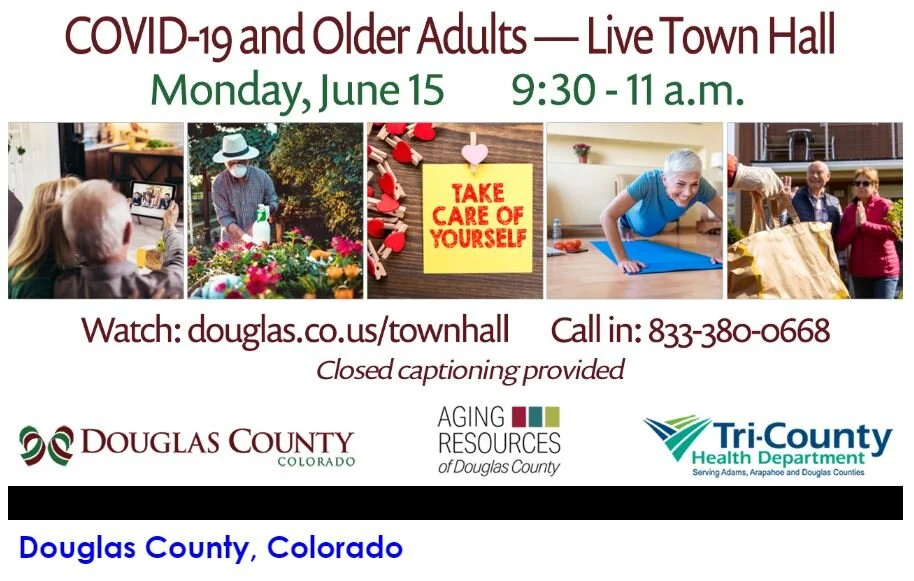
Douglas County older adults, their families and caregivers are invited to an expanded live town hall on Monday, June 15 at 9:30 a.m. Join us as the County Commissioners, Dr. Douglas from Tri-County Health, Gabrielle Fischer from Douglas County Human Services and Karie Erickson, Executive Director at Aging Resources of Douglas County spend a full 90 minutes answering your questions about staying healthy during safer-at-home
and as we reopen our economy.

Some residents will receive a call just before the event begins from
720-759-2333 with a caller ID displaying “DOUGLAS COUNTY.”

If you miss that call, just dial 833-380-0668 to participate. You can also watch on our Facebook page.
Closed captioning will be provided.

Sign up to receive information regarding telephone town halls, upcoming events, or other opportunities via live, automated or prerecorded calls, text messages, or emails https://www.douglas.co.us/townhall/
 

Our Customer Reviews speak for us!

th (9).jpg

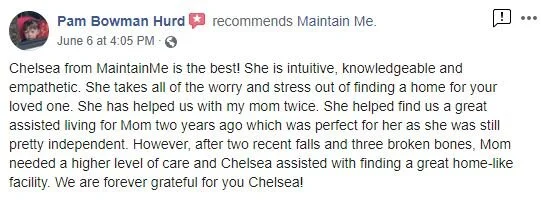
Not only do we assist families in a time of transition but we stay connected and continue to help as their journey continues.


 Thank you for your review Pam and your continued trust in us to assist your mother in finding a place where she is happy and her care needs are being met.  

Pam Bowman Hurd 6.6.20.JPG

Teens start free no-contact delivery service for the elderly during the pandemic

200414170100-iyw-teens-helping-trnd-exlarge-169.jpg

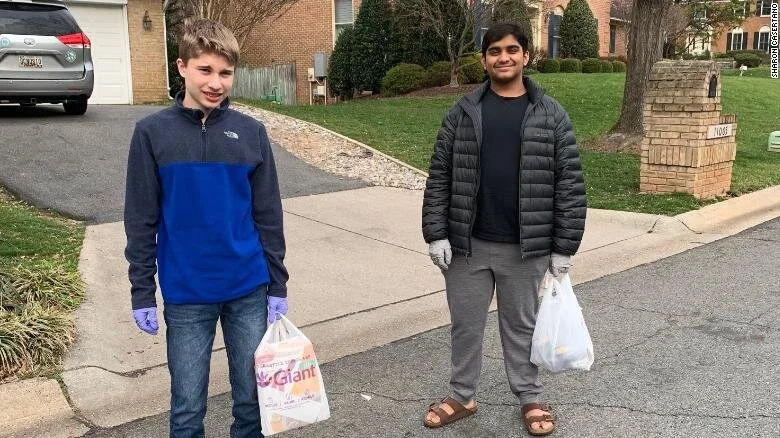
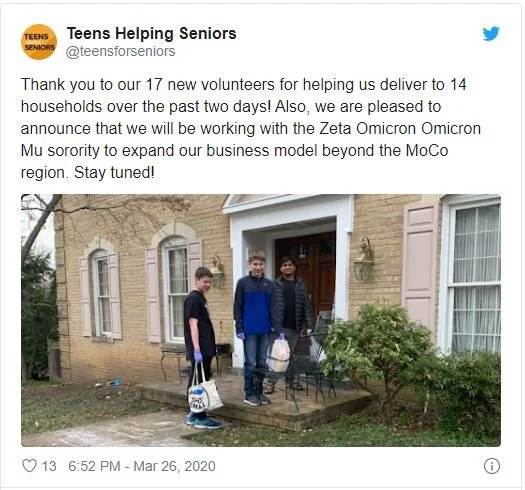
It started with two Maryland teenagers volunteering to help get groceries for elderly neighbors. Now their free delivery service, called "Teens Helping Seniors," is rapidly scaling up to match an increasing number of requests with their growing network of teenage volunteers.

Best friends make a pact to help others. Like many teenagers, 16-year-old Dhruv Pai and 15-year-old Matt Casertano have been out of school for weeks.

"We were both helping out our families, delivering groceries to our grandparents, and we thought 'what about the people who do not have family in the area?'" Casertano told CNN. "'What if we started some organization to connect teens to the senior citizens and anyone who has a compromised immune system, where going outside is a substantial risk to them?'"

The two high school sophomores designed a no-contact delivery service. Senior citizens email their grocery list and are then connected with a volunteer teenager living nearby.
"The teen will have the proper sanitation equipment, and they will wipe down all the surfaces, following CDC guidelines," explained Pai. There's no face-to-face contact. The volunteers leave the groceries at the front door and pick up the cash or check left for them to cover costs.
Payment can also be made through online services such as Venmo. The volunteers follow up on the phone with their "customer" to make sure they delivered everything that was ordered.


Bridging the generational divide
As word of mouth about their service quickly spread, Pai and Casertano were inundated with delivery requests. But they were also hearing from a lot of teenagers who wanted to help. They now have 65 volunteers with more joining each day.
"There is a negative portrayal of teens and I think our organization is reversing that stereotype, and people are seeing that teens can really benefit the community," Pai told CNN. "I think there is still altruism in this generation, and we can spread that. Spreading kindness is a good message."
The teens' calls often go beyond just groceries.
"A lot of these seniors need someone to talk to and the opportunity to connect for a bit," explained Pai. "It inspires me that we might be able to bridge the generational gap."

A kindness that's spreading
Teens Helping Seniors has made over 80 deliveries, with many seniors signed up for a weekly service.
"What caught us by surprise, after one delivery to a senior, they would tell 10 of their friends who would then reach out to us," explained Casertano. "We have had 20 deliveries in the last 24 hours, so we are having pretty steep growth."
They have also heard from teens from other states who want to start their own service.

"So if a teenager wants to start a similar project in their area, they can email us at TeensHelpingSeniors@gmail.com. We have a lot of resources to manage volunteers, deliveries, we even have a website that they can use. We will give it all to someone who wants to do this." Casertano told CNN. "You will be surprised, just like we were, at how many of your peers will join you on something like this."
 

Link to original story:
https://www.cnn.com/2020/04/15/us/iyw-teens-delivery-service-for-the-elderly-trnd/index.html

Captureteenshelpingseniors.JPG

Summer activities to keep you busy at Home

p1060646.jpg

As mandatory Stay at Home orders are lifting in Colorado it is still advised that Older adults and immunocompromised people should continue to practice social distancing and avoid densely populated crowds to avoid picking up any potential new germs. 

So we've come up with some great ideas to enjoy summer while staying safe!

The Benefits of Getting Outside
A main advantage of heading outdoors, even for a short period of time, is being able to soak up some sunlight. Sun exposure generates vitamin D, which is necessary for a healthy brain, bones and muscles, says Dr. Michael Raab, a geriatrician with Lee Health System in Fort Myers, Florida. Some doctors even prescribe sunlight as a source of vitamin D, which research has shown can improve cognitive function and mood. In addition to the physical benefits of natural sunlight and fresh air, being outside provides
mental and emotional benefits. 


Ideas for Outdoor Activities

  • Fish for fun. You can cast a rod from a dock, pier, or other location, even if someone has mobility problems or uses a wheelchair. Check your state’s tourism or state park websites to see if they provide listings of accessible fishing locations. Many areas across the country have also started offering all-terrain wheelchairs for check out or rental that can help a loved one with mobility issues get closer to the water.

  • Stroll around. If a walk is possible, start slow and work up to longer outings. Either keep the first few walks short, or bring along a walker or wheelchair in case your loved one gets tired and needs to rest along the way or requires help getting back.

  • Be an animal lover. This could be as simple as encouraging a loved one to sit outside and enjoy the sights and sounds of a birdhouse, bird feeder or bird bath in the yard. There are plenty of options for seniors who enjoy animals to get outside and either interact with or observe nature.

  • Picnic outdoors. Picnics are another flexible activity that you can plan at a park, in your own backyard, or on the surrounding grounds of a long-term care facility. At the park, seniors can watch children run around and enjoy the buzz of outdoor activity. Make sure to locate an area with comfortable seating and plenty of shade in advance, or remember to bring your own.

  • Go out for a treat. Most seniors have a favorite snack or restaurant that picks their spirits right up. Instead of limiting this indulgence to special occasions or the post-doctor’s appointment routine, make an outing out of it just because. This could consist of picking up an ice cream cone from the local Dairy Queen, a coffee and pastry from a favorite breakfast spot, or a lunch special from the diner around the corner. If the weather is nice, enjoy your goodies at a patio table.

  • Plant a Garden. A yard isn't necessary either. Lots of herbs grow great in containers such as Basil, Rosemary and Thyme. Cherry Tomatoes are another great option. Digging in the dirt is very therapeutic and the results are super rewarding!


Ideas for Indoor Activities

  • Spend time reading. Reading is a fantastic activity for older adults. It’s a fun way to spend time and keep the brain engaged. It can also improve memory, reduce stress, improve sleep, and delay cognitive decline. Whether your older adult likes reading physical books, magazines, using an e-reader, or listening to audiobooks, they can immerse themselves in a well-told story, look at photographs, or learn about an interesting new topic. Organizing a book club among their friends is another way for seniors to enjoy reading and socializing.


  • Get creative. Getting in touch with their creative side is another fun way for seniors to spend time. Drawing, coloring, painting, and sculpture are all wonderful ways to be creative. Fun projects might include creating scrapbooks, organizing family photo albums, or making a family recipe book. As a plus, being creative also comes with health benefits. Research has found creative activities can help people who are battling chronic illness to decrease negative emotions and increase positive ones, reduce stress and anxiety, and improve medical outcomes.


For more info check out:
https://dailycaring.com/9-enjoyable-activities-for-seniors-with-limited-mobility/
https://www.agingcare.com/Articles/summer-activities-to-do-with-seniors-150881.htm

How Coronavirus could forever change Home Health care

1e533a35ee34bd056ed6a818c697a4a2.jpg

Leaving vulnerable older adults without care and overburdening caregivers.

Physicians, health care experts and the media spent considerable time focused on hospital capacity since the start of the COVID-19 crisis. Nursing homes received less attention, until thousands of deaths revealed a shocking risk for older adults and those who care for them.

Another sector receiving little attention are home care services – direct care workers, including personal care assistants and home health aides, nurses and therapists – those who render treatment in the patient’s home. Over 5 million people in the U.S. currently receive paid home care. And now, not only must home care continue for older adults, and for those with disabilities, but many people with COVID-19 will need it too.

We are geriatricians who have worked in acute and post-acute care settings. We have all witnessed the stress COVID-19 is placing on our health care system. And we appreciate the incredible need for home care workers. But how can workers, and those they care for, stay safe? COVID-19 could complicate and compromise care for millions of people whose care already was imperiled.


An increased demand for home care
Even before COVID-19, there weren’t enough home care workers. Thousands of people with COVID-19 who don’t require hospitalization may need home care, and those who are hospitalized with the virus will need home care post-discharge. Some older adults, less willing to move into nursing homes in view of the tens of thousands of deaths in nursing homes, may opt for home care. And people with underlying medical conditions, perhaps now less inclined to go to the hospital, may choose home care too.

The immediate expansion of home care services will lessen the stress on our health system during the pandemic – and also let us envision what health care might look like after the pandemic is over.

One thing to consider is the health of the home care workers themselves.

Those caring for vulnerable older adults are often themselves vulnerable. About 90% of the home care workforce are women who have not completed college. Nearly 60% belong to racial or ethnic minority groups with a disproportionately high rate of illness and death from COVID-19. One in five lacks health insurance. And only one-third of home care workers are employed full-time. The median age for home care workers is 49 years of age; they are paid a median of US$12 an hour; and more than 1 in 4 have no health coverage themselves.

Consequently, many workers travel to multiple homes to piece together full-time work. That increases the risk of bringing the virus into the homes of frail older adults. At the same time, these essential workers are themselves at risk because of their exposure to multiple individuals. These factors limit the number of workers willing and able to provide home care.


The 10 recommendations
It’s crucial to care for the health of these workers as well as the recipients of their care. Until this is fixed, there clearly is a public health problem. Based on our research, here are 10 recommendations we think could help:

  1. Home care workers need access to personal protective equipment (PPE).

  2. Home care workers and their clientele need regular COVID-19 testing.

  3. Home care workers need full-time positions with paid sick leave. Federal funds are needed, because most home care agencies can’t cover these costs.

  4. Particularly during a pandemic, more flexibility is needed as to how care is given. Already, there have been changes: Telehealth is now allowed for home health agencies. Non-physician practitioners can now order home health services. Allowing virtual training for home health aides would go further.

  5. The Centers for Medicare and Medicaid Services (CMS) could expand the definition of “home health” to include “personal care.” This would help clients who are socially isolated and perhaps free up the overcrowding in nursing homes. Right now, Medicare does not currently pay home care workers if they provide only personal care (e.g., bathing, dressing).

  6. CMS could expand its definition of “homebound” so more could qualify for home care services.

  7. Federal funding for community health workers (CHWs) should be implemented.

  8. More home care workers need to be recruited, perhaps from industries experiencing significant layoffs such as retail and food services. These individuals would need to be trained for their new roles.

  9. With the needs of an aging population becoming more complex, home care workers are doing more complex tasks once reserved for RNs (registered nurses) and LPNs (licensed practical nurses). As they perform these tasks, home care workers need to be trained, authorized and compensated.

  10. Overall, there is a profound deficit in training for home care workers. With our new normal upon us, this new workforce needs a career ladder with growth opportunities. For example, these workers can obtain baseline training with additional expertise and competencies, such as how to care for a COVID-19 patient or one recovering from it, that can then be compensated.


The quality of patient lives depends on the quality of the caregiving they receive. We cannot return to past ways of doing business. The pandemic offers us the opportunity to expand the home care workforce to benefit those they serve. After all, a crucial part of valuing our older adults is to value those who care for them.


This article is republished from The Conversation, a nonprofit news site dedicated to
sharing ideasfrom academic experts.
https://news.yahoo.com/coronavirus-could-forever-change-home-121813650.html

Summer Menu Ideas for Elderly Adults

meal-prep-22.jpg

The temperatures are getting warmer and it’s important now more than ever to stay hydrated. However, heat can reduce appetite and older adults feel less thirsty than young people.
Furthermore, seniors lose more water as their muscle mass and their kidney function decreases. In this post, we will review ways to stay healthy during warmer climates.

 Tips for Summer Nutrition

  • Hit your local grocery store to purchase fresh fruits and vegetables. Slice them up and store them in a container for a quick snack, when needed.

  • If your loved one prefers dried fruit, pair it with high-fiber cereal and milk.

  • Purchase pre-cut cheese or a whole block for an easy, protein-rich snack.

  • Make sandwiches on high-fiber bread and cut them into finger foods for added ease.

  • Put a pitcher of water in the fridge with slices of lemons or other alternatives for a refreshing alternative to coffee or soda. Seniors over age 65 should drink about nine 8oz glasses per day.

  • Crackers, pretzels, and prepackaged nuts are an excellent alternative to potato chips.

  • Prep ingredients or full meals for the week to make it easier during the hustle and bustle of day-to-day activities.

  • Add spices and sauces to meals for flavorful touches and medicinal benefits. Ingredients such as cinnamon are great for controlling blood sugar and cholesterol while curcumin has been known to fight diseases such as Alzheimer’s, Parkinson’s, and cancer.

In the next few sections, we will go over a few summer menu ideas for elderly adults. A quick Google search can provide you with recipes and ideas for making the following breakfast, lunch, and dinner options.
 

Breakfast

  • Eggs

    • Eggs of any variety can provide an egg-celent source vitamin B2 and protein

    • Eating egg whites can provide the same nutritional benefits while eliminating the risk of high cholesterol

  • Oatmeal

    • Lowers cholesterol

    • Adding fruit can provide sources of vitamin C, fiber, and antioxidants

  • French toast

    • Depending on the bread you use, French toast can be rich in fiber and protein

    • Improves digestive system


Lunch

  • Coleslaw

    • A rich source of vitamin C, vitamin K, and cancer-fighting antioxidants

    • Reduces body inflammation

    • Try experimenting with apples, broccoli, radishes, red cabbage, jicama, and bell peppers

  • Salads

    • A salad with tuna, beans, or chopped eggs on top can provide a source of protein

    • Leftover vegetables and brown rice combined with cheese and vinaigrette can provide a fast and tasty lunch

  • Sandwiches

    • Peanut butter on whole-grain bread offers a rich source of fiber and protein, while the addition of a chopped banana can add extra nutrients

    • Make sandwiches with meats and cheeses for protein and calcium


Dinner

  • Pasta salad

    • A great source of fruits, vegetables, and grains

    • Provides a rich assortment of vitamins and fiber

  • Crab cakes

    • Low in fat

    • Contains chromium, which helps enhance the action of insulin

  • Leftovers/pre-cooked dinners

    • Pre-cooked dinners or meals that can be reheated can also help your aging loved one, making it so they will not have to cook during hot temperatures

    • Your loved one can cook double the amount of food they would eat in one sitting in anticipation of a future meal


Snacks

  • Watermelon

    • Low in fat

    • Filled with lycopene, an antioxidant shown to fight heart disease and certain forms of cancer

    • Packed with potassium and vitamins A, C, and B6

  • Popcorn

    • Contains beneficial antioxidants

    • Made of whole grain and an excellent source of dietary fiber

  • Frozen treats

    • Ice cream, when eaten sparingly, can be a great source of calcium

    • Frozen fruit pops or bars can also provide the same benefits as fruits eaten on their own


Link to original article:
https://www.griswoldhomecare.com/blog/summer-menu-ideas-elderly-adults


How does isolation affect mental health?

elderly shutterstock_249281488.jpg

Although physical distancing is an effective way to slow the spread of many viruses, it can also lead to feelings of loneliness and isolation, especially in older adults.

 People are distancing themselves from others to help prevent the spread of SARS-CoV-2, which causes COVID-19. However, isolation has a significant impact on health, contributing to conditions such as depression, anxiety, and dementia.

For this reason, the World Health Organization (WHO) encourage people to continue socializing at a distance, such as by phone or via online platforms.

This article discusses how isolation and mental health affect each other. It also explores who is most at risk, some signs and symptoms that suggest a person may need support, and how people can deal with loneliness and isolation.

Isolation and mental health
According to the WHO, social support networks can have a significant positive effect on health. In fact, many countries are now treating loneliness as a health priority.

Social connection is crucial for both mental and physical health. Some researchers even believe that relationships are a biological need and vital to our well-being and survival.

Some of the mental health risks associated with loneliness and isolation may include:

  • depression

  • anxiety

  • schizophrenia

  • suicide

  • dementia

  • Alzheimer’s disease

Researchers have also identified links between loneliness and some physical conditions, such as heart disease and breast cancer.

Who is at risk?
The world is currently dealing with the COVID-19 pandemic, and health organizations around the globe are urging people to practice physical distancing. Physical distancing is an effective method for preventing the spread of SARS-CoV-2, but it may lead to loneliness.

Older adults are especially likely to feel isolated. Before the COVID-19 pandemic, researchers estimated that isolation affected more than 8 million older adults.

One of the reasons that older adults are more at risk of loneliness is that they often experience important life changes, such as:

  • retirement

  • widowhood

  • children leaving home

  • age-related health problems

These changes can break social ties, making it more difficult to socialize. People with disabilities or health conditions that limit physical activity may also find it more difficult to socialize outside the home.

Age and underlying health conditions are also risk factors for developing severe COVID-19 symptoms. The best way to protect vulnerable people is to practice physical distancing, but this can also exacerbate loneliness in people who already feel isolated.

The rate of loneliness in the United States is also increasing. Some experts suggest that a growing number of people in the U.S. experience isolation regularly. Other nations — including Germany, Australia, and the United Kingdom — say that they are facing a loneliness epidemic.

Some societal trends may also cause social disconnection. For example, the average household size has decreased, and many more couples are deciding not to have children.

Researchers have also recorded lower attendance in social groups, lower participation in religious groups, and a decline in the average size of social groups in the U.S.

Other lifestyle factors that make it more likely that someone will experience loneliness include:

  • divorce

  • living alone

  • being single


Signs and symptoms to look out for
Some signs and symptoms that suggest that isolation is affecting a person’s mental health may include:

  • feelings of depression and anxiety

  • aggressive behavior

  • passive attitude

  • poor sleep quality

  • cognitive decline

  • altered memory

  • poor self-care or self-neglect

Researchers believe that the consequences of loneliness and isolation are different depending on a person’s age.

For example, people aged 18–49 years old may struggle to focus, or they may eat more frequently. Meanwhile, children and young adolescents may experience more cognitive, behavioral, and emotional difficulties.

How to stay connected
Finding ways to connect with others can reduce the effect of loneliness on people’s mental health as they shelter in place.

Reaching out to loved ones, friends, and those in need takes many forms today. With multiple platforms to choose from, people can connect via:

  • mail

  • phone and text

  • email

  • social media

  • video chat platforms


How to look after others
With physical distancing protocols in place around the world, the WHO recommend helping people in need during the COVID-19 pandemic. It is a good idea to contact members of the community who may be at risk of isolation, loneliness, and health complications.

Knocking on a neighbor’s door and staying a safe distance away, or calling them on the telephone, can remind them that they have nearby support. Setting up regular phone calls or video chats can also help decrease feelings of loneliness.

Sending someone care packages is another way to stay connected. People looking after vulnerable individuals can pick up medications or drop off groceries and other essentials at their doorstep.

Also, although many businesses are closed during the COVID-19 pandemic, it is possible to find exercise programs, beauty and grooming videos, and courses online. Participating in online activities with other people can promote a feeling of connection and decrease loneliness.

When to seek help
People experiencing loneliness should seek help from a doctor or therapist if they notice any signs or symptoms of anxiety or depression. These may include:

  • restlessness or irritability

  • persistent worry

  • sleeping too much or too little

  • an inability to concentrate

  • suicidal thoughts

When checking in on someone else, it is worth checking if they are eating, sleeping, and taking care of themselves. If they are struggling, they may benefit from support.

Summary
The COVID-19 pandemic has forced people to self-isolate to prevent the spread of SARS-CoV-2. However, loneliness may have serious health consequences and can exacerbate conditions such as depression, anxiety, and dementia.

Socializing from a distance, such as via online platforms, can help ease feelings of loneliness and prevent its complications, especially for people who are vulnerable.

Anyone experiencing changes in their mental or physical health due to isolation should speak to a doctor.


Link to original article:
https://www.medicalnewstoday.com/articles/isolation-and-mental-health#summary